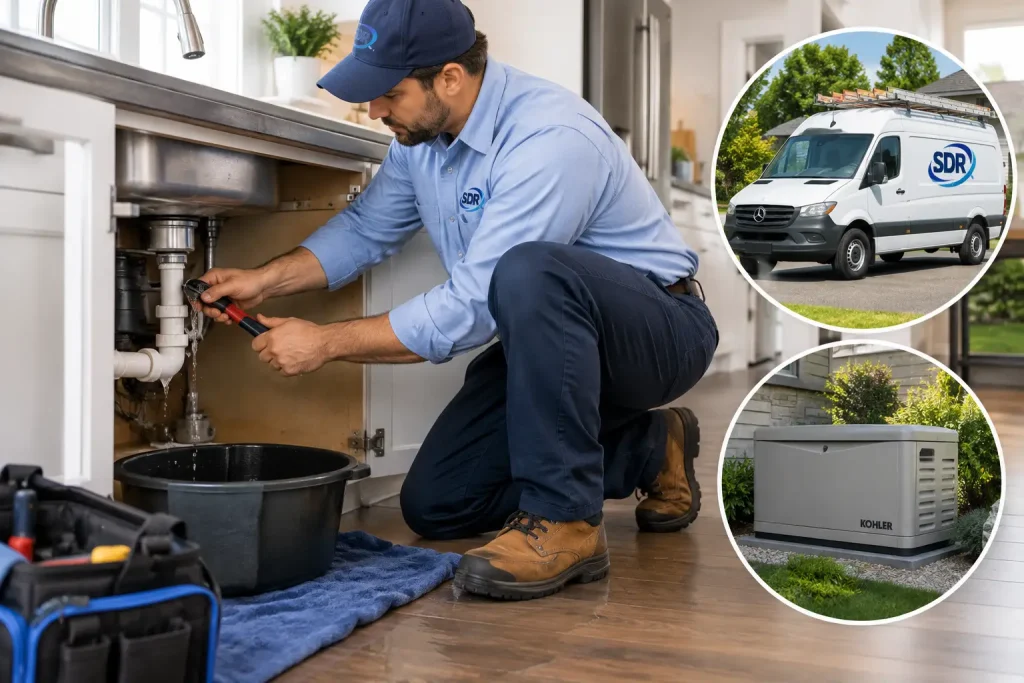
A burst supply line under a sink can release a surprising amount of water in minutes. A failed sump pump during heavy rain can put a finished basement at risk just as quickly. In an emergency plumbing situation, the goal is not to make a permanent repair yourself. It is to stop the immediate damage, keep people safe, and get qualified help on the way.
For homeowners and property owners, the first few decisions matter. Knowing where your shutoff valves are and when an issue involves electrical risk can prevent a difficult plumbing failure from becoming a much larger property problem.
What Counts as an Emergency Plumbing Problem?
Not every dripping faucet needs an after-hours response. A fixture that is leaking slowly into a bucket can often wait for a scheduled repair, provided the leak is contained and there is no risk to electrical equipment, ceilings, or finished surfaces.
An emergency is generally a plumbing issue that is actively causing damage, creating an unsafe condition, or leaving the property without an essential service. Common examples include a burst pipe, a major leak behind a wall, sewage backing up through a drain, no water from a well system, a failed sump pump during wet conditions, or a water heater that is leaking heavily.
A sewer backup deserves immediate attention even when the water level appears manageable. Wastewater can carry contaminants, damage flooring and drywall, and affect occupied areas of the property. Keep people and pets away from the affected space until the source can be assessed.
No water can also be urgent, particularly for homes supplied by a well. The issue may involve a well pump, pressure tank, pressure switch, plumbing connection, electrical supply, or a combination of these systems. Because water and electrical components may be involved, this is not a situation to troubleshoot by bypassing controls or opening electrical panels.
First Steps During a Plumbing Emergency
Start by taking a breath and locating the source. If water is spraying, flowing continuously, or spreading across floors, shutting off the water is the priority. Use the small fixture shutoff valve if the problem is isolated to a toilet, sink, dishwasher, washing machine, or similar appliance. Turn the valve clockwise until it stops, but do not force a corroded valve.
If the leak cannot be isolated, use the main water shutoff for the building. Homeowners should know its location before an emergency happens. It is often near the water meter, pressure tank, or where the main water line enters the home. In some properties, it may be located in a utility room, basement, crawlspace, or mechanical area.
Once the water is off, take these practical steps:
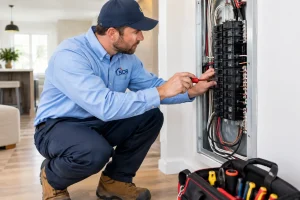
- Protect electrical safety. Do not stand in water near outlets, extension cords, appliances, electrical panels, or equipment. If water is close to electrical components, avoid the area and arrange for qualified service. A plumbing failure may require electrical assessment as well.
- Move what can be moved safely. Lift rugs, boxes, furniture, and valuables away from the wet area. Avoid carrying wet items through clean parts of the home if sewage is involved.
- Contain and document the damage. Use towels, buckets, or pans only when it is safe to do so. Take photos of the source and affected areas before cleanup begins, especially if ceilings, walls, or flooring have been damaged.
- Call for professional help. Explain what happened, where the water is coming from, whether the main water is off, and whether electrical equipment or sewage is involved.
- Keep the area clear. A clear path to the mechanical room, water shutoff, sump pit, or affected fixture helps the technician diagnose and repair the issue without delay.
These steps are simple, but they can reduce water damage while a licensed plumber is on the way.
When Water and Electricity Meet
Plumbing emergencies do not always stay within the plumbing system. Water can reach furnaces, air handlers, electrical panels, outlets, sump pump receptacles, and generator equipment. A leak near a mechanical room may affect several systems at once.
Never touch electrical equipment while standing in water or if the equipment is wet. Do not reset a tripped breaker repeatedly in an attempt to get a sump pump or well pump running. The trip may be signaling a pump failure, damaged wiring, moisture intrusion, or another fault that needs proper diagnosis.
This is where a coordinated local contractor can make a real difference. SDR Electric, Plumbing & Heating Inc. can address plumbing concerns while recognizing when electrical, heating, or pump-system service is also needed. That coordination is especially useful in homes with well water, sump systems, finished basements, or integrated mechanical rooms.
Emergency Plumbing Problems That Need Professional Diagnosis
Some failures look straightforward but have causes that are hidden from view. A pipe may burst because it froze, but the repair also requires checking for other frozen sections and determining whether insulation, heat loss, or an exterior air leak contributed to the problem.
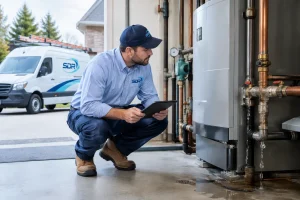
A leaking water heater may be caused by a failed connection or relief valve, which can sometimes be repaired. Water pooling under the tank, however, may indicate internal tank failure and require replacement planning. Turning off the water supply to the heater can limit the damage, but do not attempt to cap, plug, or alter a temperature-and-pressure relief valve.
Drain backups also require careful troubleshooting. A clogged sink may be isolated to one fixture. Multiple slow drains, water coming up through a floor drain, or backups after toilets are flushed can indicate a larger drain-line blockage. Chemical drain cleaners are rarely a good answer during an emergency. They can damage certain piping, create a hazard for anyone working on the drain, and do not resolve a collapsed, blocked, or root-affected sewer line.
For a failed sump pump, check only the safe basics: confirm that the pump is plugged into a working, dry receptacle and that the discharge line is not visibly blocked by ice or debris. If the pump is not operating, the pit is rising, or the circuit is tripping, call for service. Do not enter a flooded basement where electrical hazards may be present.
What Not to Do While Waiting for Help
Temporary fixes can be useful when they are limited to containing water. A bucket under a drip or a towel around a small connection may buy time. Trying to force a repair under pressure can make the failure worse.
Avoid using duct tape on a pressurized pipe, overtightening supply connections, or using unfamiliar sealants on plumbing fittings. Do not remove a toilet, open a wall, or disconnect a water heater unless you understand the system and can work safely. These actions can turn a contained leak into uncontrolled water damage or create a drain-gas, scalding, or electrical hazard.
If sewage is present, do not run additional water in the home. Avoid flushing toilets, starting laundry, running the dishwasher, or taking showers until the drain issue has been assessed. More water can increase the backup and spread contamination.
Preparing Your Property Before the Next Emergency
Most emergency calls cannot be predicted, but preparation makes the response faster and safer. Every adult occupant should know where the main water shutoff is located and how to operate it. If the valve is difficult to turn, corroded, or inaccessible, arrange to have it inspected before you need it.
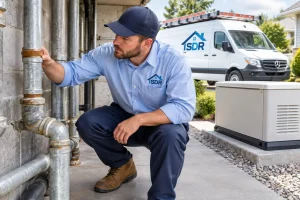
For properties with a sump pump, test the pump periodically by slowly adding water to the pit and confirming that it starts, discharges properly, and shuts off. This should be done only when the electrical connection and surrounding area are dry and in good condition. Consider backup power or battery backup options where basement flooding is a concern, particularly in areas that experience storm-related outages.
Well systems also benefit from regular attention. Changes in pressure, cycling pumps, unusual noises, discolored water, or intermittent water loss are reasons to schedule an assessment before a complete failure occurs. Small symptoms often provide an opportunity to correct a developing issue on your terms.
Keep the area around mechanical equipment organized and accessible. A technician should be able to reach shutoffs, pressure tanks, water heaters, floor drains, and electrical equipment without moving stored belongings. It is a practical step that helps during urgent repairs and routine maintenance alike.
When a plumbing failure happens, act early, protect the space, and do not take risks around water or electricity. A clear description of the problem and a safe, accessible work area give your service team the best starting point for restoring your property.