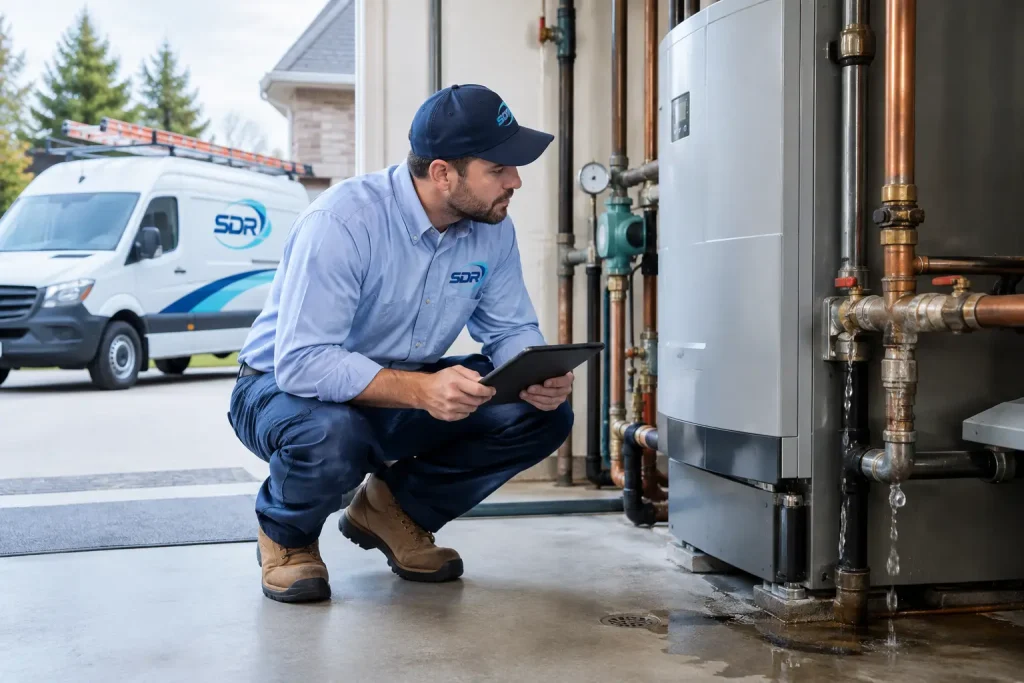
A boiler leak can start as a small damp spot beneath the unit and quickly become a bigger concern: loss of heat, declining system pressure, water damage, or a safety issue. Understanding why boiler leaks happen helps you respond calmly and avoid the common mistake of repeatedly adding water or ignoring a pressure problem until the system stops working.
Not every drop of water means the boiler itself has failed. Condensation, a loose fitting, a leaking circulator pump, or a discharge from the pressure relief valve can all leave water near the equipment. The source matters, and so does the timing. If you see active leaking, water around electrical components, or a sudden loss of heat, turn the boiler off if it is safe to do so and arrange for qualified service.
Why Boiler Leaks Occur
Boilers operate by heating water and circulating it through radiators, baseboards, in-floor piping, or other hydronic heating equipment. That process involves heat, pressure, valves, pumps, piping, and connections. A problem in any one of these areas can create a leak.
Worn seals, valves, and pipe connections
Over time, gaskets and seals can harden, fittings can loosen slightly, and valves can begin to seep. Small leaks often appear around circulator pumps, drain valves, air vents, pipe joints, or isolation valves. Because a boiler room can be warm and dry, a slow leak may evaporate before it forms a puddle. You might instead notice white mineral residue, rust staining, or greenish corrosion on copper piping.
A minor connection leak is often repairable, but it still deserves attention. Each time the system loses water, it may need fresh makeup water. That introduces oxygen and minerals into the system, which can accelerate internal corrosion over time.
Excess boiler pressure
Many home heating boilers are designed to operate within a specific pressure range. When pressure rises too high, the pressure relief valve opens to protect the system. Water may then drip or discharge from a pipe near the boiler, often directed toward the floor.
The relief valve is doing an important safety job. The issue is not simply the water coming from the pipe, but the reason the system pressure became excessive. A failed expansion tank is a frequent cause. Expansion tanks absorb the normal increase in water volume as the boiler heats up. If the tank loses its air charge or its internal diaphragm fails, pressure can climb sharply during a heating cycle.
Other possible causes include a malfunctioning pressure-reducing valve, a boiler that has been overfilled, or a control issue. Do not cap, plug, or block a relief valve discharge line. That can create a dangerous condition.
Corrosion inside the boiler or heating system
Corrosion is one of the more serious reasons for a boiler leak. It can affect the boiler heat exchanger, steel components, fittings, radiators, or older system piping. Corrosion may develop slowly from age, repeated introduction of fresh water, poor water quality, oxygen entering the system, or long-standing moisture around equipment.
If the boiler tank or heat exchanger has corroded through, repairs may be limited or impractical. The right path depends on the boiler’s condition, its age, the availability of parts, and whether other parts of the heating system are also deteriorating. A proper assessment looks beyond the visible leak so the repair addresses the actual source.
Condensate drain issues on high-efficiency boilers
High-efficiency condensing boilers create condensate as part of normal operation. This water should flow through a condensate trap and drain line to an approved drain or pump. If the trap is blocked, the drain line is frozen, a condensate pump fails, or a connection comes loose, water can collect around the boiler.
This is particularly relevant during an Eastern Ontario cold spell. A condensate line routed through an unheated area can freeze, causing water to back up. The boiler may shut down on a safety code, or water may escape from a fitting or trap. The solution is not always as simple as thawing a line. The routing, insulation, slope, and termination may need to be reviewed to prevent a repeat problem.
A leaking pump, air separator, or accessory
The boiler is only one part of a heating system. Circulator pumps, zone valves, air separators, automatic air vents, mixing valves, and manifold connections can all leak. Water may run along a pipe or cabinet panel before reaching the floor, making the origin difficult to spot.
This is why a visual check at the bottom of the boiler is not enough. A technician will inspect the surrounding components, look for pressure changes, and identify whether the leak happens continuously or only while the system is heating.
What to Do When You Find a Boiler Leak
Start by checking whether the leak is active and whether it is near electrical wiring, controls, or an outlet. Keep the area clear and do not place towels or containers where they could interfere with venting, drainage, or access to safety controls.
If water is actively flowing, the boiler pressure is unusually high, the unit is making unusual noises, or you smell gas or combustion fumes, shut the system down if you can do so safely. Leave the area and seek urgent professional assistance for a gas smell or suspected combustion issue. Water and electrical equipment also require caution, especially in a utility room where several building systems may be located together.
For a slow drip with no immediate safety concern, take a few useful notes before service arrives. Note where the water appears, whether the boiler is running, what the pressure gauge reads, and whether the leak worsens when the heat turns on. A clear photo of the affected area can also help. Avoid repeatedly opening the fill valve to restore pressure unless a qualified technician has specifically instructed you to do so.
Signs the Leak May Be More Than a Simple Repair
Some leaks are limited to a serviceable valve or connection. Others point to a system that needs broader attention. Call for an assessment promptly if you notice recurring pressure loss, pressure that rises toward the relief setting, rusty water, repeated boiler lockouts, visible corrosion on the boiler cabinet, or water appearing from inside the unit.
A boiler that needs frequent refilling is not behaving normally. It may have a hidden leak in the heating loop, an issue with an automatic vent, or an internal component problem. Adding water may restore heat temporarily, but it does not correct the cause and can contribute to further corrosion.
It also matters whether the leak is from the heating system or another nearby source. A plumbing line, water heater, humidifier, water softener, or condensate pump can create water in the same mechanical area. In homes with integrated equipment, identifying the source accurately prevents unnecessary repairs and helps protect every connected system.
Can You Keep Using a Leaking Boiler?
It depends on where the leak is coming from and how severe it is. A small external seep may allow the boiler to operate briefly while service is arranged, but it should not be treated as a long-term condition. An active leak, a relief valve that is discharging, a pressure problem, or water near electrical parts warrants shutting the system down and getting help.
Never attempt to tighten internal boiler components, remove panels, bypass safety controls, or repair gas-related equipment yourself. Boilers combine hot water, pressurized components, combustion equipment, venting, and electrical controls. A repair that appears simple from the outside can involve risks that are not visible.
Preventing Future Boiler Leaks
Regular maintenance is the most practical way to catch developing problems before they become a no-heat call or a water-damage event. During service, a qualified heating technician can inspect connections, test system pressure, assess the expansion tank, check pumps and valves, review condensate drainage, and look for early corrosion.
Homeowners can help by keeping the area around the boiler accessible and dry. Check occasionally for staining, corrosion, or changes in the pressure gauge. If the boiler is installed in a cold utility space, pay attention to exposed condensate piping during freezing weather. Do not store boxes, chemicals, or household items against the boiler or block access to shutoffs and service panels.
For older systems, the best recommendation may involve more than stopping the immediate drip. SDR Electric, Plumbing & Heating can assess the boiler alongside the piping, controls, drainage, and other mechanical equipment so the next decision is based on the condition of the full system.
A boiler leak is easier to manage when it is treated as an early warning rather than an inconvenience to work around. Acting while the leak is small can protect your heat, your home, and the equipment you depend on when winter weather arrives.