A house can feel clean and still have poor indoor air. Condensation on windows, lingering cooking odors, humid bathrooms, dusty rooms, and uneven temperatures are often signs that air is not moving as it should. This home ventilation system guide explains what homeowners need to know before adding equipment, renovating ductwork, or trying to solve an ongoing comfort problem.
Ventilation is not simply about bringing in outdoor air. A properly planned system removes moisture and contaminants, introduces fresh air in a controlled way, and avoids creating new issues such as drafts, pressure imbalance, or heat loss. In Eastern Ontario homes, that balance matters through humid summers and long heating seasons.
What a Home Ventilation System Does
Your home needs a controlled exchange of indoor and outdoor air. Everyday activities add moisture, odors, and airborne particles to the space. Cooking releases steam and grease. Showers create humidity. Laundry, cleaning products, pets, building materials, and even normal occupancy affect air quality.
Older homes may rely heavily on natural leakage through gaps around windows, doors, attic penetrations, and foundations. That is not dependable ventilation. It can be excessive on a windy winter day and inadequate when the house is closed up. Newer or recently renovated homes are usually tighter, which improves energy efficiency but makes mechanical ventilation more necessary.
A complete approach typically includes localized exhaust in bathrooms and kitchens, a method of supplying or exchanging fresh air, and ductwork or pathways that move air where it is needed. The right combination depends on the home’s size, layout, heating and cooling equipment, and how the space is used.
Signs Your Home May Need Better Ventilation
Some problems are easy to see, while others show up as comfort complaints. Repeated window condensation in cold weather is a common warning sign. A small amount can occur during extreme conditions, but persistent moisture may contribute to damaged finishes or mold growth around windows and exterior walls.
Pay attention when bathroom mirrors stay fogged long after a shower, kitchen smells travel into bedrooms, or one area of the home feels stuffy despite a working furnace or air conditioner. Basement odors, visible mildew, peeling paint, and humidity that remains high through the summer also deserve attention.
These symptoms do not always point to ventilation alone. A plumbing leak, poor attic insulation, an oversized air conditioner, blocked ducts, or a building-envelope problem can create similar conditions. A proper assessment looks at the whole system rather than replacing a fan based on one symptom.
The Main Types of Home Ventilation Equipment
Bathroom and kitchen exhaust fans
Spot exhaust is the first line of defense against moisture and pollutants at their source. Bathroom fans should vent outdoors, not into an attic, soffit, or other enclosed space. They need to be sized and ducted correctly, with a short, well-supported duct run wherever practical.
A kitchen range hood serves a different purpose. It captures steam, combustion byproducts from gas cooking, grease, and odors before they spread through the home. Recirculating hoods can filter some particles and odors, but they do not remove moisture or air contaminants outdoors. An exterior-vented range hood is generally the more effective option when installation conditions allow.
Heat recovery ventilators
A heat recovery ventilator, or HRV, brings in fresh outdoor air while exhausting stale indoor air. During the heating season, it transfers much of the heat from outgoing air to incoming air without mixing the two air streams. This helps reduce energy loss compared with opening windows for ventilation.
HRVs are commonly well suited to colder climates and tighter homes. They can serve selected rooms through dedicated ducts or connect to an existing forced-air system when the system design supports it. Placement, balancing, controls, and maintenance all affect performance.
Energy recovery ventilators
An energy recovery ventilator, or ERV, works similarly but also transfers some moisture. That can be useful where summer humidity is a frequent concern or where the home tends to become overly dry during the heating season. Whether an HRV or ERV is the better fit depends on local conditions, occupancy, heating and cooling equipment, and the home’s moisture profile.
Neither unit is a substitute for fixing a wet basement, unvented combustion appliance, or leaking plumbing fixture. Ventilation equipment manages normal indoor conditions. It should not be expected to overcome a major moisture source.
Whole-home and integrated systems
Some homes use ventilation equipment that operates alongside the furnace or air handler. Others require dedicated ductwork, especially in renovations, additions, or homes with hydronic heat and no central forced-air ducts. The best arrangement is the one that delivers measured airflow to the right locations without compromising heating, cooling, or combustion safety.
This is where coordination matters. Electrical power, controls, duct routing, drainage, insulation, and access for service all need to be considered before walls and ceilings are closed.
Choosing the Right System for Your Home
Start with the problem you are trying to solve. If moisture is isolated to one bathroom, the answer may be an improved exhaust fan, a timer switch, and corrected ducting. If the entire home feels stale or has recurring condensation, a balanced ventilation system may be more appropriate.
A qualified contractor should consider the home’s floor plan, number of occupants, insulation levels, air tightness, existing HVAC equipment, fuel-burning appliances, and room-by-room use. Bedrooms, bathrooms, kitchens, laundry rooms, basements, and finished additions often have different ventilation needs.
Do not choose equipment by square footage alone. A large open-concept house with two occupants has different demands than a smaller house with a busy family, frequent cooking, pets, and multiple bathrooms. Homes with fireplaces, wood stoves, gas appliances, or powerful range hoods also require careful pressure management. Excessive exhaust can pull air down a chimney or affect combustion appliance venting, creating a safety concern.
Installation Details That Affect Results
Ventilation performance depends on details that are easy to miss. Ducts should be appropriately sized, sealed, insulated where required, and routed to minimize unnecessary bends and restrictions. Exterior hoods need to prevent pest entry and should not discharge near doors, windows, or other air intakes.
Airflow balancing is equally critical for HRVs and ERVs. If supply and exhaust are not balanced, the home can be placed under positive or negative pressure. That may increase drafts, draw in moisture-laden outdoor air, or interfere with appliance venting. Proper commissioning verifies that the installed system is doing what the design intended.
Controls should be simple enough that people will use them. A wall control, humidity setting, boost switch, or timer can help match ventilation to real activities. Running a bathroom fan longer after a shower, for example, is often more effective than turning it off as soon as the room feels comfortable.
Maintenance Keeps Air Moving Safely
Even a well-designed system needs regular attention. Clean or replace filters according to the manufacturer’s instructions. Check exterior vents for snow, leaves, lint, nests, or damaged covers. Clean bathroom fan grilles, and make sure the fan actually moves air rather than only making noise.
HRV and ERV systems usually need seasonal inspection of filters, cores, drains, and condensate components. A blocked drain or neglected filter can reduce airflow and create water issues. If the unit is noisy, icing up, cycling strangely, or leaving rooms uncomfortable, have it checked rather than assuming it is operating normally.
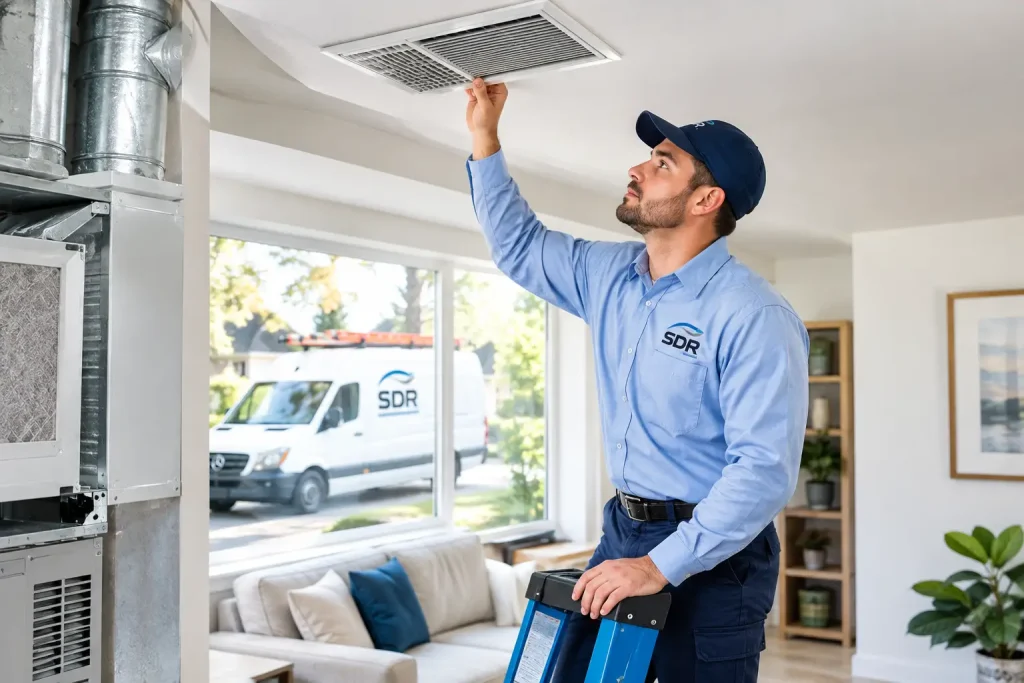
For homeowners planning a renovation, ventilation should be discussed early. SDR Electric, Plumbing & Heating can coordinate ventilation work with electrical, HVAC, plumbing, and broader mechanical upgrades so the finished system is safe, accessible, and suited to the property.
A home should not force you to choose between fresh air, comfort, and energy efficiency. When moisture, odors, or stale air become recurring problems, a practical assessment can identify whether the solution is a better exhaust fan, balanced ventilation, duct improvements, or a repair elsewhere in the home.