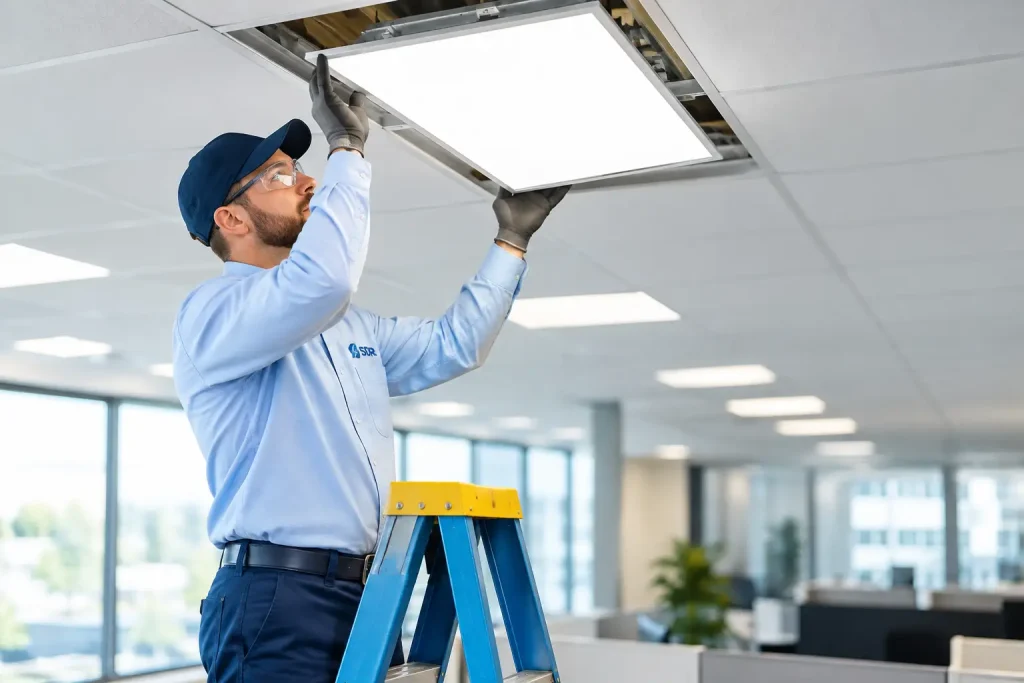
A dim stockroom, shadowed parking area, or office full of flickering fixtures is more than an inconvenience. It can affect safety, employee comfort, security, and the way customers experience your property. The best commercial lighting upgrades address those daily problems while giving your electrical system a more efficient, manageable lighting plan.
For business owners, landlords, and property managers, the right project is rarely as simple as replacing every bulb. Fixture type, ceiling height, operating hours, control requirements, emergency lighting, and the condition of the existing wiring all matter. A licensed electrical contractor can assess the full installation and recommend upgrades that make sense for how the building is actually used.
Start With the Problems Your Lighting Needs to Solve
Commercial lighting should support the work taking place below it. A warehouse aisle needs a different lighting layout than a reception area, medical office, restaurant kitchen, retail floor, or exterior loading zone. Before selecting products, identify where the current system falls short.
Look for recurring concerns such as dark corners, glare on computer screens, uneven light over work surfaces, frequent lamp or ballast failures, and lights that remain on long after a space is empty. Exterior concerns may include poorly lit walkways, entrances, stairways, and parking areas. These are not only maintenance issues. In the wrong setting, inadequate lighting can create trip hazards, reduce visibility, and make staff or visitors feel less secure.
It also helps to review when each part of the building is occupied. A space used from early morning until late evening may benefit from different controls than an area used only occasionally. This assessment prevents a common mistake: installing efficient fixtures but operating them exactly like the old system.
Best Commercial Lighting Upgrades to Consider
LED fixture replacements
Replacing older fluorescent, metal halide, high-intensity discharge, or incandescent fixtures with commercial-grade LED fixtures is often the most practical starting point. LEDs use less energy than many older technologies, last longer, and provide more consistent light output over their service life.
The fixture itself matters. In some buildings, an LED retrofit kit can work well with an existing housing. In others, a complete fixture replacement is the safer, cleaner choice, especially when housings, lenses, sockets, or wiring show age or damage. A full replacement can also improve light distribution and reduce future maintenance concerns.
Choose the light level and color temperature for the task. Cooler white light can support visibility in workshops, utility areas, and storage spaces. Warmer light may be better suited to customer-facing areas where a more comfortable appearance is desired. Brighter is not always better. Excessive brightness or poorly directed fixtures can create glare and make work harder.
High-bay lighting for tall spaces
Warehouses, garages, manufacturing areas, gymnasiums, and other high-ceiling spaces need fixtures designed to project light effectively from above. High-bay LED lighting can deliver better coverage across floors, shelving, aisles, and workstations than aging high-intensity fixtures.
Layout is especially important in these buildings. Fixture placement should account for racking, equipment, mezzanines, loading doors, and areas where staff perform detailed tasks. Simply matching the old fixture locations may leave shadows where work has changed over time. A proper lighting plan considers the actual floor layout, not just the ceiling grid.
Occupancy and vacancy sensors
Lighting controls are one of the most useful upgrades for spaces with irregular use. Occupancy sensors turn lights on when motion is detected and turn them off after a set period. Vacancy sensors require someone to turn the lights on manually, then switch them off automatically once the area is empty.
These controls work well in washrooms, meeting rooms, storage rooms, staff areas, utility rooms, and back-of-house spaces. The right sensor location and time delay are important. A sensor that shuts lights off while someone is quietly working at a desk or in a confined area quickly becomes a frustration rather than an improvement.
Daylight harvesting controls
Rooms with skylights, large windows, or overhead doors may receive significant natural light at certain times of day. Daylight harvesting uses sensors and dimmable lighting controls to reduce artificial light when daylight is available.
This approach can be effective in offices, showrooms, schools, and open commercial areas, but it depends on the room layout. Deep interior zones may still need steady light even when perimeter windows are bright. Controls should be set up and tested so daylight supplements the fixtures rather than causing noticeable shifts in light levels throughout the day.
Exterior LED and security lighting
Exterior lighting helps people move safely around a property after dark. Upgrades may include wall packs, canopy fixtures, pole lights, floodlights, illuminated building entrances, pathway lights, and loading dock lighting. LED fixtures are well suited to these applications because they offer dependable output and reduce the need for frequent lamp changes in hard-to-reach locations.
Aim light where it is needed. A well-lit entrance, sidewalk, or loading area is more useful than a fixture that throws light into neighboring properties or directly into drivers’ eyes. Photocells, timers, and motion controls can help exterior lighting respond to changing conditions without relying on staff to switch fixtures manually.
Emergency and exit lighting
Emergency lighting is easy to overlook because it is not used under normal conditions. It becomes essential when normal power is lost, helping occupants locate exits and move through the building safely. Exit signs, emergency heads, battery units, and connected emergency lighting need regular inspection and testing.
An upgrade is a good time to confirm that fixtures are installed in the right locations, batteries are functioning, and signage remains clearly visible. Building renovations, changed floor plans, and new partitions can affect the path to an exit. The emergency lighting system should keep pace with those changes.
Plan the Electrical Work Before Ordering Fixtures
A lighting project can expose issues that have been hidden by an older system. Existing circuits may be overloaded, branch wiring may not be suitable for the planned fixtures or controls, and outdated panels may have limited capacity for expansions. In some cases, the lighting controls, fire alarm equipment, backup power system, and building automation equipment also need to work together.
This is why a site assessment should come before a major upgrade. A qualified electrician can review panel capacity, circuit loading, fixture mounting, control wiring, switching locations, and any code requirements that apply to the space. For tenant improvements or larger renovations, coordinating electrical work with HVAC, ceiling changes, and other trades avoids rework later.
SDR Electric, Plumbing & Heating Inc. can help commercial property owners plan electrical upgrades as part of a wider renovation or building-system project. One coordinated team is particularly helpful when lighting work affects mechanical rooms, backup power, ceilings, exterior areas, or the schedule of other trades.
Avoid Common Lighting Upgrade Mistakes
The lowest-maintenance option is not always the correct fixture for every room. For example, a high-output fixture may seem appealing in a workshop, but poor placement can cast shadows on benches or cause glare on machinery. In an office, a fixture with the wrong lens or color temperature can make screens uncomfortable to use.
Another mistake is treating controls as an afterthought. Dimming, occupancy sensing, scheduling, and daylight response need compatible fixtures, drivers, switches, and controls. A clear sequence of operation should be established before installation: what turns on, what dims, what switches off, and what remains powered for safety.
Finally, do not ignore access for future service. Fixtures installed over equipment, racks, or tall stairwells need a maintenance plan. Long-life LEDs reduce service frequency, but they do not eliminate the need for inspection, cleaning, driver replacement, or testing of emergency components.
A Better Lighting Plan Supports the Whole Property
The most effective commercial lighting upgrade is one that improves the way people use the building every day. It should help employees see their work clearly, give visitors confidence when entering the property, reduce unnecessary run time, and support safe movement during normal operation and an outage.
Start with the areas causing the most trouble, then build a plan around the building’s use, electrical condition, and future renovations. A well-planned installation gives you more than new fixtures. It gives your property dependable light where it counts.