A baseboard heater that is hot at one end and cool at the other is often dealing with trapped air. Knowing how to bleed baseboard radiators can restore more even heat, reduce gurgling noises, and help your boiler system operate as intended. But first, make sure you have a hot-water baseboard system. Electric baseboard heaters do not contain water and cannot be bled.
Hydronic baseboard heating uses a boiler to circulate hot water through pipes and finned baseboard units. Air can enter the system after repairs, pressure changes, or water loss, then collect at high points in the piping. A small air pocket can keep hot water from moving through a section of baseboard, leaving rooms uncomfortable even while the boiler is running.
Confirm That Air Is the Problem
Before opening any valve, look for signs that point to trapped air rather than a different heating problem. Gurgling, bubbling, or rushing-water sounds are common clues. You may also notice that a baseboard unit stays cold near the top or far end while the supply pipe entering it is warm.
Other issues can create similar symptoms. A thermostat may not be calling for heat, a circulator pump may not be moving water, a zone valve may be stuck, or the boiler may have low pressure. A baseboard cover can also make a unit seem cold when dust, furniture, or drapes are blocking airflow over the fins.
If several zones are cold, the boiler pressure gauge is unusually low, or you see water around the boiler or piping, do not assume bleeding is the answer. Those conditions may indicate a leak, failed component, or system-pressure issue that needs heating service.
Where Baseboard Heating Systems Are Bled
The name can be misleading. Many baseboard units do not have a bleeder valve directly on the unit. Instead, the air vent or bleed point may be located at a high point in the piping, near the boiler, on a manifold, or at the end of a heating loop.
Some systems have a small manual bleeder screw. Others use automatic air vents that release small amounts of air on their own. Zoned systems may have purge valves near the boiler that allow a technician to flush air from one loop at a time. The correct method depends on how the system was installed.
Do not remove a plug or loosen an unfamiliar fitting just because it is located near the baseboard. A plumbing connection is not necessarily a bleed valve, and opening the wrong fitting can release hot water under pressure.
What You Will Need
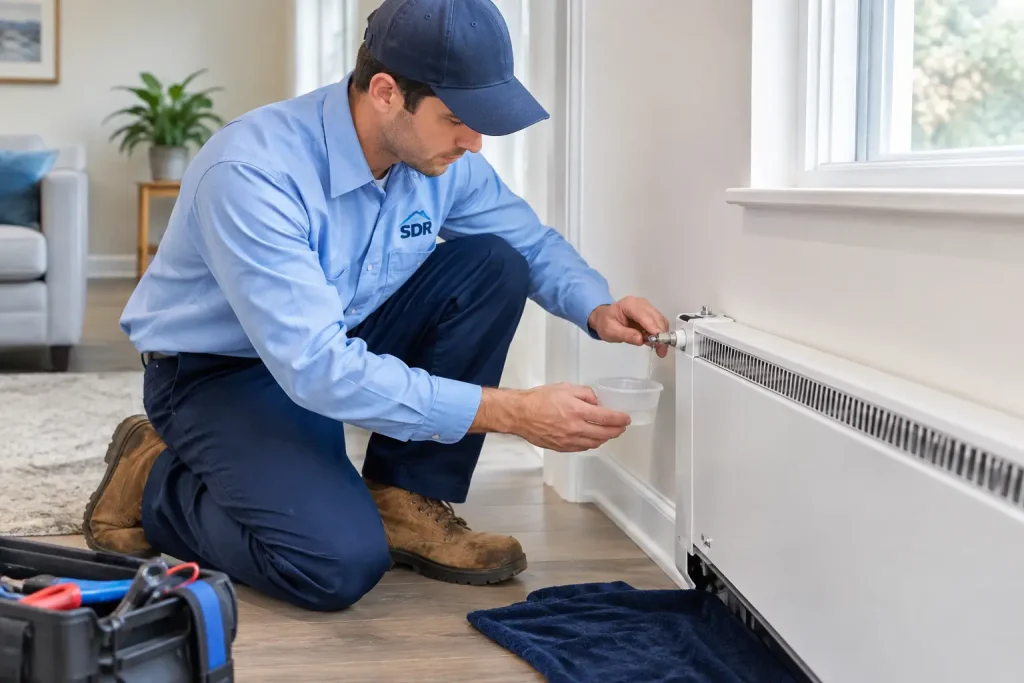
For a system with an accessible manual bleed valve, keep a small container, an old towel, and a flat screwdriver or radiator key nearby, depending on the valve style. Gloves and eye protection are also sensible precautions because heating water can be hot.
If the valve is located close to finished walls, flooring, or electrical equipment, protect the area with towels before you begin. Even a properly bled system can release a small amount of water.
How to Bleed Baseboard Radiators Step by Step
1. Turn the heat down and let the system cool
Set the thermostat below the room temperature so the boiler is not actively heating while you work. Give the system time to cool. Bleeding a hot, pressurized loop can send out very hot water and steam, creating a burn risk.
You do not always need the system completely cold, but it should be cool enough to work around safely. If you are unsure whether a pipe or valve is too hot to handle, wait longer.
2. Find the correct bleed valve
Look for a small valve at the highest accessible point of the heating loop or on the end of the baseboard piping. In some homes, it may be behind a removable baseboard end cap or access panel. Near the boiler, the correct valve may be part of a zone manifold or purge arrangement.
A manual bleeder is usually small and designed to be opened slightly. It is not a large drain valve, boiler relief valve, or threaded cap. If the valve does not clearly look like a bleeder, stop and have the system identified before proceeding.
3. Place a towel and container below the valve
Hold the container directly under the outlet and place a towel beneath it. This step matters because the first thing released may be air, but water will follow once the air pocket has cleared.
Keep your face and hands away from the valve outlet. Even after the boiler has been turned down, residual heat can remain in the water and piping.
4. Open the valve slowly
Use the proper tool to turn the bleeder screw slightly counterclockwise. Usually, a quarter turn is enough to start. You should hear air hissing if trapped air is present.
Do not remove the screw completely. Opening it too far can make it difficult to close quickly and may cause more water to escape than necessary.
5. Wait for a steady stream of water
Allow air to escape until water flows in a consistent stream without sputtering. The goal is not to drain the loop. You are only releasing the trapped air at that point in the system.
Once the water stream is steady, close the valve gently. Tightening it excessively can damage the fitting or make future servicing harder.
6. Check boiler pressure before restarting
Bleeding can lower system pressure, particularly if more than one bleed point was opened. Check the boiler gauge after the system has cooled. Many residential hot-water systems operate around 12 to 15 psi when cool, but the correct pressure depends on the height and design of your home’s heating system.
If the pressure is low, adding water may be necessary. This is where homeowners should be cautious. Repeatedly adding water without finding the reason for pressure loss can introduce more air and may point to a leak or an expansion-tank problem.
7. Restore heat and test the zone
Turn the thermostat back to its normal setting and let the heating zone run. Check whether the baseboard warms more evenly and whether the gurgling noise is gone. It may take one complete heating cycle to notice the full improvement.
Look again at the bleed valve and surrounding pipes after the system warms up. Any drip should be addressed promptly. A small leak can reduce pressure over time and allow air back into the system.
When Bleeding Is Not a DIY Job
A simple, clearly identified manual bleeder can be manageable for a homeowner. Boiler-side purging is different. It often requires opening and closing isolation valves in the correct order while using the system’s water supply to push air through an entire zone. A mistake can leave a zone without circulation, create excessive pressure, or cause water damage.
Call for professional heating service when the baseboard remains cold after bleeding, the boiler pressure keeps dropping, water is leaking, or the system makes frequent banging or gurgling sounds. You should also call if your system has no obvious manual bleed valve, uses automatic vents that are leaking, or needs repeated bleeding every heating season.
In older homes, recurring air problems can come from a failing automatic air vent, a leaking circulator flange, a faulty expansion tank, or an incorrectly operating pressure-reducing valve. Bleeding the system may relieve the symptom temporarily, but it will not correct the source of the problem.
Keep Air Out of the System
Once the heat is working properly, avoid unnecessary draining or refilling. Every time fresh water enters a hydronic heating system, it can carry dissolved oxygen that later forms air pockets. If you need to shut off water for a repair, restore system pressure carefully and check for leaks afterward.
Keep baseboard covers clean and clear of furniture, curtains, and stored items. This will not remove trapped air, but it allows the unit to deliver the heat that is already circulating through it. During cold Eastern Ontario weather, catching an uneven-heating issue early can prevent a minor comfort problem from becoming an urgent no-heat call.
If your system needs more than a straightforward bleed, SDR Electric, Plumbing & Heating can assess the boiler, controls, valves, and piping together. The right repair starts with identifying why air entered the system, so your baseboard heat stays dependable when you need it most.