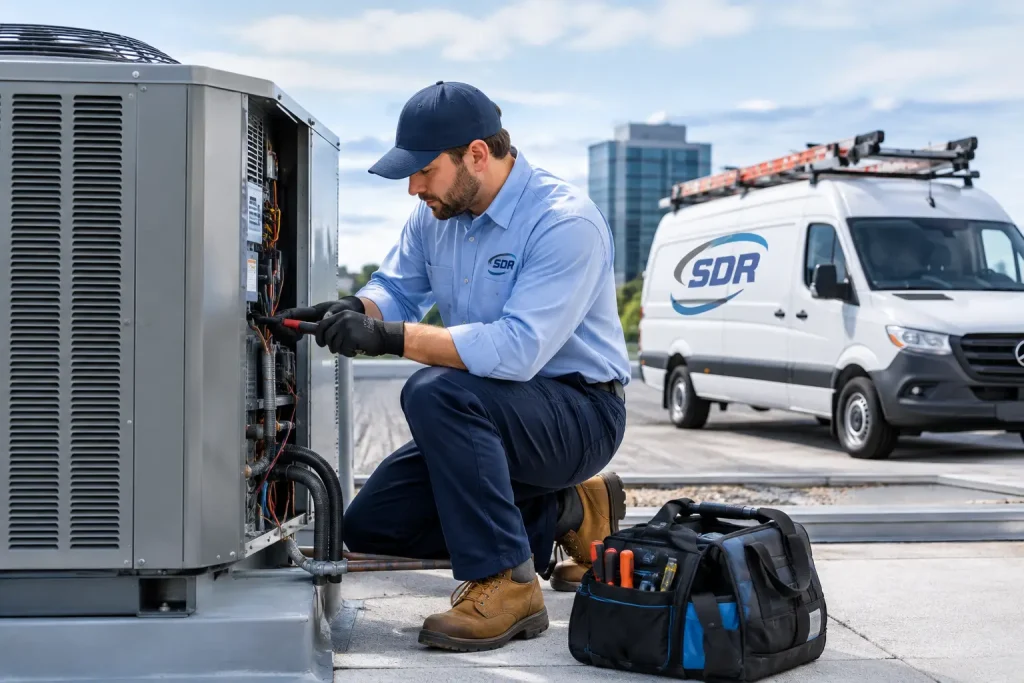
A rooftop unit that fails on the first hot day can quickly become a business problem, not just a comfort problem. Employees lose focus, customers leave, inventory may be affected, and a small fault can turn into an urgent repair. This commercial HVAC maintenance guide helps property owners and facility managers plan practical care that reduces avoidable disruptions.
Commercial heating and cooling equipment works harder than most people realize. It manages changing occupancy, outdoor weather, ventilation requirements, kitchen or process loads, and sometimes multiple tenant spaces with different comfort needs. A maintenance plan gives your contractor a chance to find wear, airflow restrictions, electrical concerns, and drainage problems before the system is under peak demand.
Why Commercial HVAC Maintenance Matters
Preventive maintenance is not simply a filter change and a quick look at the thermostat. A properly maintained commercial system operates more predictably, maintains better indoor air quality, and is less likely to suffer an unexpected shutdown during heating or cooling season.
It also helps protect the parts that carry the greatest strain. Dirty coils make equipment work longer to move heat. Loose electrical connections can create excess heat and component damage. A blocked condensate drain can lead to water damage or microbial growth. Worn belts, bearings, and motors may start as minor issues but can stop airflow completely if ignored.
The right service schedule depends on the building and equipment. A small office with limited hours has different needs than a restaurant, medical office, retail space, warehouse, or multi-tenant commercial property. Buildings with high foot traffic, dusty operations, extended operating hours, or sensitive equipment often need more frequent attention.
Build a Commercial HVAC Maintenance Plan Around Your Building
A useful maintenance plan starts with an accurate picture of what is on site. Record each unit’s location, age, model information, service history, controls, and the areas it serves. This makes future troubleshooting faster and helps identify equipment that may be nearing the point where repairs become less practical than planning a replacement.
Your plan should also account for related building systems. HVAC performance can be affected by electrical capacity, roof penetrations, plumbing drains, exhaust equipment, and building automation controls. On renovation and tenant-improvement projects, coordinating these systems early helps avoid undersized equipment, poor access for service, or conflicts between trades.
Schedule Service Before Peak Seasons
For most commercial properties, heating equipment should be inspected before sustained cold weather, while cooling equipment should be checked before the warmest part of the year. Seasonal visits allow a technician to test operation under the conditions the equipment will soon face.
Spring service typically focuses on cooling readiness: condenser coil condition, refrigerant performance, condensate drainage, fans, motors, electrical connections, and controls. Fall service focuses on heating components, combustion safety where applicable, heat exchangers, ignition systems, venting, and carbon monoxide protection.
Some equipment requires more than two visits per year. High-use systems, make-up air units, commercial kitchens, and properties with demanding ventilation requirements may benefit from quarterly inspections. The goal is not to follow a generic calendar. It is to match service frequency to operating conditions and manufacturer requirements.
Keep Filters and Airflow at the Center of the Plan
Restricted airflow is one of the most common causes of poor HVAC performance. Dirty filters reduce the air reaching the equipment, increase energy use, and can contribute to frozen cooling coils or overheated heating components.
Filter replacement intervals vary. A clean office may need less frequent changes than a retail storefront, shop, warehouse, or building near construction activity. Rather than relying only on a set date, have filters inspected regularly and changed when loading or pressure drop indicates it is time.
Airflow checks should go beyond filters. A technician should assess supply and return grilles, dampers, blower assemblies, belts, fan motors, and outdoor air components. Rooms that are consistently too hot, too cold, stuffy, or noisy may point to a balancing issue, a failed damper, duct leakage, or a control problem rather than a simple thermostat adjustment.
What a Professional Commercial HVAC Visit Should Cover
A thorough maintenance visit combines inspection, cleaning, testing, and documentation. The exact scope depends on the equipment type, but the technician should be checking the condition of parts that affect safety, reliability, and efficiency.
For cooling equipment, this commonly includes cleaning coils, checking refrigerant circuit performance, inspecting contactors and capacitors, testing motors and fans, clearing condensate drains, and verifying that controls respond correctly. For heating equipment, the work may include inspecting burners, ignition, gas connections where present, venting, safeties, heat exchangers, and combustion performance.
Electrical inspection is especially important in commercial systems. Disconnects, breakers, wiring, relays, terminals, and control components are exposed to vibration, weather, and repeated cycling. Signs of overheating, corrosion, or loose connections should be corrected promptly by qualified personnel.
The visit should end with a clear report. Good documentation identifies work completed, observations, recommended repairs, filter condition, readings taken, and any equipment concerns to monitor. This record supports better planning and gives property owners a reliable history when making repair or replacement decisions.
Warning Signs That Need Attention Between Visits
Scheduled maintenance does not eliminate the need to watch for changes in daily operation. Staff and tenants are often the first to notice a developing issue, so give them a simple way to report comfort or equipment concerns.
Call for service when you notice repeated thermostat complaints, weak airflow, unusual sounds, water around indoor equipment, frequent breaker trips, ice on cooling lines, burning odors, short cycling, or a significant change in utility use. A unit that runs constantly without reaching the set temperature should not be left to “catch up.” It may have an airflow restriction, control issue, refrigerant concern, or equipment failure that will worsen with continued operation.
For gas-fired equipment, treat possible combustion concerns seriously. Shut down the affected equipment if instructed, keep occupants safe, and arrange qualified inspection. Carbon monoxide alarms and properly maintained detection equipment are an essential part of building safety, but they do not replace regular heating-system service.
Assign Clear Responsibilities
Maintenance works best when routine observations do not get lost between tenants, staff, owners, and service providers. Designate one person to maintain records, approve access, receive service reports, and track recommended work.
On-site staff can handle basic tasks such as keeping mechanical-room access clear, reporting water leaks, watching for unusual noise, and avoiding blocked supply or return grilles. They should not attempt electrical, refrigerant, combustion, or complex control repairs. Those tasks require trained, qualified technicians and proper safety procedures.
Property owners should also consider access when planning repairs or upgrades. Rooftop equipment needs safe access. Mechanical rooms need lighting, drainage, working clearance, and clear identification of disconnects and controls. Better access makes routine service safer and more efficient while reducing delays during an urgent call.
Use Maintenance Findings to Plan Ahead
Not every service recommendation needs immediate action, but every finding deserves context. A minor worn component may be monitored. A damaged heat exchanger, failed safety device, recurring refrigerant leak, or compromised electrical connection may require more urgent action. Your contractor should explain what was found, what risk it creates, and what can reasonably wait.
Repeated repairs are also useful information. If the same unit continues to fail, has trouble meeting demand, or requires hard-to-source components, begin planning before it becomes an emergency replacement. Planned upgrades allow time to review equipment sizing, controls, ventilation, electrical requirements, and the needs of the space.
For commercial properties in Eastern Ontario, dependable heating is especially critical during winter conditions. A documented maintenance schedule, responsive repair support, and coordination between HVAC and electrical systems can make a significant difference when equipment is under stress.
A well-maintained HVAC system should not demand constant attention from your team. Set the schedule, keep clear records, respond early to warning signs, and work with qualified technicians who can explain the condition of your equipment in plain language. That approach keeps the focus where it belongs: on running your property and business with fewer surprises.