A heating system that works well in a mild climate can struggle during an Eastern Ontario cold snap. The best heating systems for homes are not determined by one feature or one fuel source. They depend on your home’s heat loss, insulation, existing ductwork or piping, electrical capacity, comfort expectations, and plans for the property.
For some homeowners, a high-efficiency furnace is the most practical replacement. For others, a cold-climate heat pump paired with backup heat creates a more flexible setup. A home with radiators or in-floor heating may be better served by a modern boiler. The right answer starts with the building, not a one-size-fits-all recommendation.
What Makes a Heating System a Good Fit?
A properly selected heating system should keep every occupied area comfortable, operate safely, and be sized for real winter conditions. Oversized equipment can cycle on and off too often, which can reduce comfort and place unnecessary strain on components. Undersized equipment may run constantly and still leave rooms cold when temperatures drop.
A qualified assessment looks beyond the existing unit. Older equipment may have been selected when insulation levels, windows, additions, or household needs were different. A renovation can change heat requirements significantly, especially when walls are opened, basements are finished, or an addition is built.
The condition of the distribution system matters just as much. Duct leaks, poorly balanced airflow, uninsulated pipes, aging radiators, or inadequate return-air paths can limit the performance of otherwise reliable equipment. Correcting those issues can be part of a heating upgrade rather than an afterthought.
Best Heating Systems for Homes: Main Options
Forced-Air Furnaces
A furnace heats air and moves it through ductwork to supply registers throughout the home. It remains a practical choice for homes that already have a well-designed duct system, particularly when one system is expected to provide both heating and central air conditioning.
Modern furnaces can offer efficient, steady heating and dependable output in very cold weather. They also work well with programmable or smart thermostats and can be paired with air filtration, humidification, and ventilation improvements. The trade-off is that ductwork must be in good condition and properly sized. Rooms at the end of long duct runs, second floors, or additions may need airflow adjustments to receive even heat.
A furnace can also serve as backup heat in a dual-fuel arrangement with a heat pump. That setup allows the heat pump to handle much of the season while the furnace takes over when outdoor conditions make supplemental heat the better choice.
Cold-Climate Heat Pumps
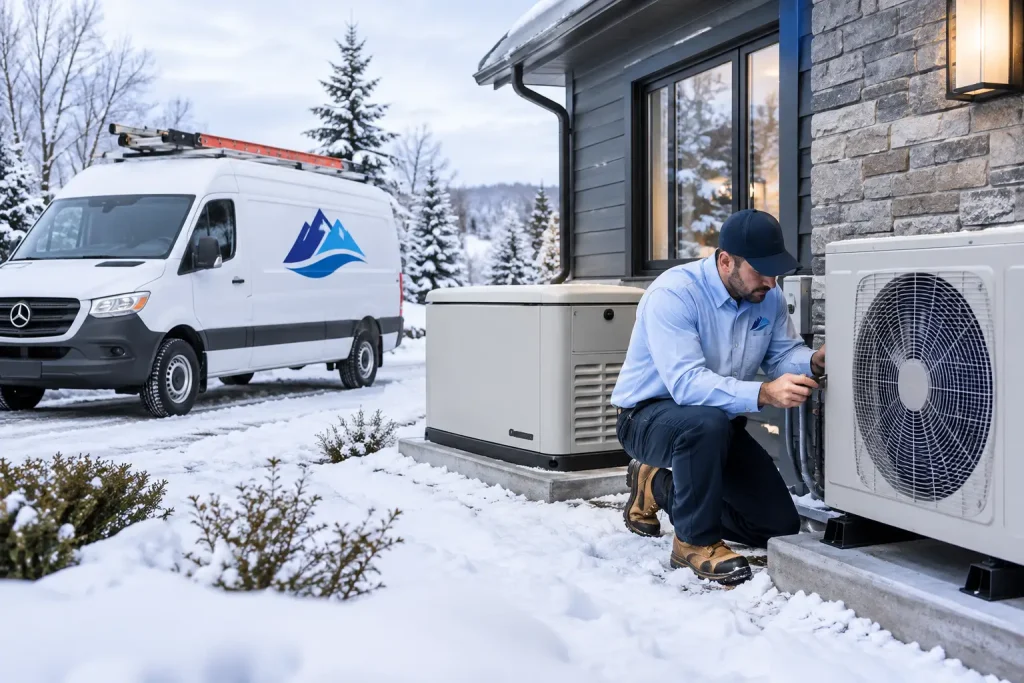
Air-source heat pumps move heat rather than creating it through combustion. In heating mode, they draw available heat from outdoor air and transfer it indoors. Current cold-climate models are designed to operate in lower temperatures than older heat pumps, making them an increasingly useful option for homes in this region.
Heat pumps can provide heating and cooling from the same equipment. They are especially attractive for homes currently using electric resistance heat, aging baseboards, or inefficient window units for summer cooling. Ducted heat pumps use existing or new ductwork, while ductless units use indoor wall-mounted heads or other compact indoor equipment.
However, heat pump planning must account for winter design temperatures and backup heat. Depending on the system and home, that backup may be electric heat, a furnace, or a boiler. Electrical capacity is also a major consideration. A panel assessment may be necessary before adding electric backup, a heat pump, or other major loads.
Ductless heat pumps can be an effective solution for additions, detached spaces, difficult-to-heat rooms, and homes without ducts. They are not always the best stand-alone answer for every room in a larger, older house. Thoughtful placement and a whole-home heating plan are essential.
Boilers and Hydronic Heating
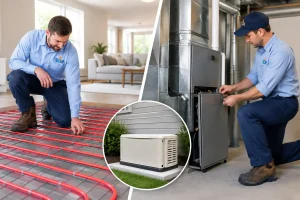
Boilers heat water and circulate it through radiators, baseboards, or in-floor tubing. Hydronic heat is known for even, quiet comfort, and it is a natural fit for homes already equipped with radiators or radiant systems.
A modern boiler can be a strong long-term choice when the piping network is sound and the home benefits from room-by-room heating control. Radiant in-floor heating is particularly comfortable in bathrooms, basements, and new additions because it warms surfaces from the floor up.
The limitation is that a boiler does not provide central cooling on its own. If air conditioning is part of the project, the property may need a separate cooling solution, such as a ductless heat pump or a dedicated ducted system. Boilers also require correct water pressure, safe venting, and regular professional service to protect the equipment and the home.
Electric Baseboard and Electric Resistance Heat
Electric baseboards, wall heaters, and electric furnaces are straightforward and can be useful in smaller spaces, seasonal properties, additions, or rooms that need independent temperature control. They have relatively simple equipment requirements and no combustion venting.
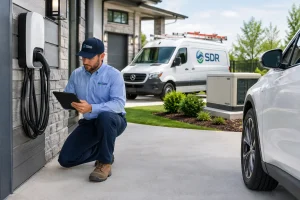
For a full home, however, electric resistance heat may place a substantial demand on the electrical system during the coldest weather. Before replacing or expanding it, homeowners should have the panel, service capacity, wiring, and any planned electrical loads reviewed. This is particularly important if the property may also add a heat pump, electric vehicle charger, well pump, workshop equipment, or generator connection.
Wood, Pellet, and Supplemental Heating
Wood stoves, pellet appliances, and similar systems can supplement a primary heating system and provide a sense of security during winter weather. They should not be treated as a simple add-on. Safe clearances, chimney condition, venting, combustion air, insurance requirements, and local rules all need attention.
Supplemental heating works best when it is part of a safe overall plan. A stove in one area may make that room very warm while leaving bedrooms or remote areas cool. It also does not replace the need to protect plumbing and maintain reliable background heat throughout the house.
Do Not Choose Before Checking These Building Details
Heating equipment should be selected after reviewing the home itself. A professional load calculation considers square footage, ceiling height, insulation, air leakage, window area, orientation, and local winter temperatures. This is more reliable than choosing a replacement based only on the capacity of the old equipment.
Pay close attention to the electrical and mechanical connections around the system. A heat pump installation may involve a new outdoor circuit, disconnect, panel work, thermostat wiring, condensate drainage, and coordination with existing backup heat. A boiler replacement may involve venting changes, pumps, zoning controls, expansion equipment, and safety devices. These are connected building systems, not isolated appliances.
If the project includes a renovation or new addition, planning heating, cooling, plumbing, and electrical work together can prevent expensive rework. For example, it is far easier to place ducts, piping, drains, and electrical feeds before walls and ceilings are closed.
When a Hybrid System Makes Sense
Many homes do not need to choose between a heat pump and a furnace or boiler. A hybrid approach combines equipment so each system handles the conditions where it performs best.
A ducted heat pump with a furnace backup is common in homes with existing ducts. The heat pump can provide efficient heating through much of the season and cooling in summer, while the furnace provides dependable capacity in severe cold. A ductless heat pump can also supplement a boiler-heated home by cooling and conditioning high-use areas while the boiler continues to handle deep-winter heating.
The controls matter in these arrangements. Thermostats and system settings need to be configured so equipment does not work against itself. Proper commissioning after installation is what turns a collection of components into a dependable heating plan.
Plan for Reliability, Not Just Installation Day
The best heating choice should be serviceable and safe for the life of the equipment. Keep outdoor heat pump units clear of snow, leaves, and drifting debris. Replace or clean furnace filters as recommended. Watch for uneven heating, unusual sounds, repeated breaker trips, water around mechanical equipment, or a thermostat that cannot maintain the set temperature.
Annual maintenance is a practical way to identify worn electrical connections, venting concerns, combustion issues, drainage problems, and control faults before they become a no-heat call. It is also a good time to confirm that carbon monoxide alarms are installed and functioning where required.
For homes with well pumps, sump pumps, or other critical electrical equipment, consider how a prolonged outage would affect the property. Heating reliability may be part of a broader backup-power plan, especially for rural homes and properties exposed to winter storm outages.
Before committing to a replacement, ask for a recommendation based on a heat-loss assessment, your existing distribution system, electrical capacity, and how you use the home. A practical plan will keep your family comfortable through winter while leaving room for future cooling, renovation, and backup-power needs.