A bedroom that stays cold while the living room feels overheated is a common reason homeowners start weighing electric baseboard versus heat pump options. Both systems use electricity, but they heat a home in very different ways. The better choice depends on your home’s layout, insulation, existing equipment, electrical capacity, and how you want each room to feel during an Eastern Ontario winter.
A careful assessment matters before replacing equipment. Heating choices often connect to other parts of the property, including the electrical panel, backup power plan, ductwork, ventilation, and renovation scope.
Electric Baseboard Versus Heat Pump: The Core Difference
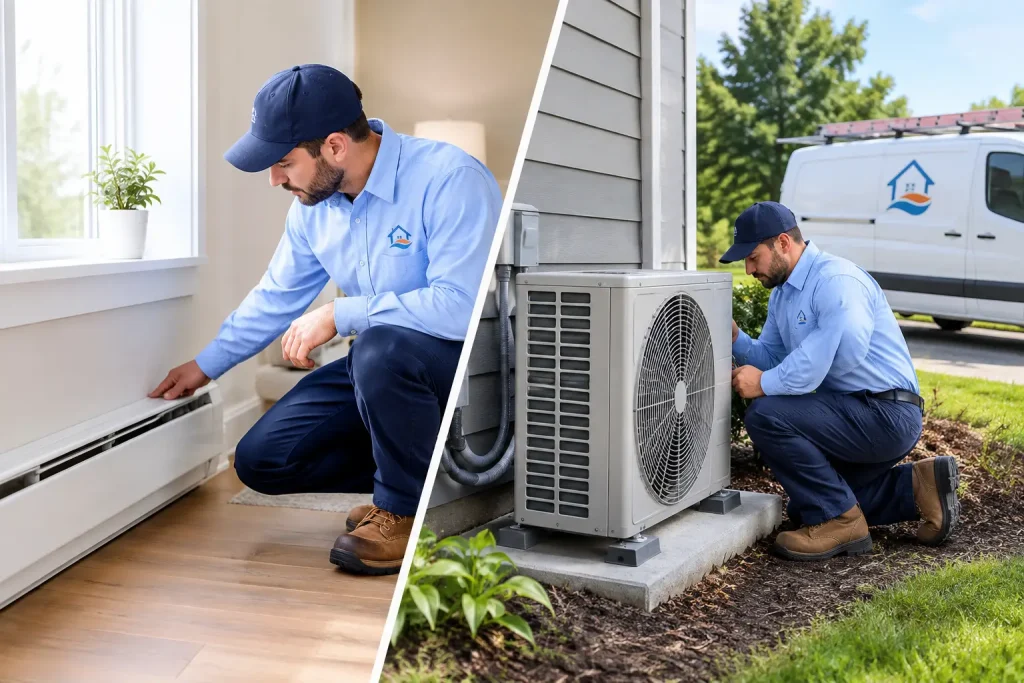
Electric baseboard heaters create heat directly. Electricity passes through an element inside the unit, and the heater warms the air near the floor. Each unit is normally controlled by its own thermostat, giving you room-by-room control.
A heat pump works differently. Instead of generating all of its heat directly, it transfers heat from outdoor air into the home. Even cold outdoor air contains usable heat energy. A properly selected cold-climate heat pump can collect that energy and move it indoors, using less electricity than direct-resistance heat for much of the heating season.
This difference affects efficiency, comfort, installation requirements, and operating behavior. It also explains why a heat pump may be a strong long-term upgrade for one home but not the right stand-alone answer for another.
When Electric Baseboard Heat Makes Sense
Electric baseboards are simple systems with few moving parts. If a heater fails, the issue is often limited to one room rather than the entire house. This can be useful in smaller homes, apartments, additions, seasonal spaces, or properties where independent room control is a priority.
They also work well for spaces that need occasional heat. A bathroom, guest room, enclosed porch, or workshop may not need the same heating solution as the main living area. Turning down the thermostat in unused rooms can help limit unnecessary energy use, provided the space remains warm enough to protect plumbing and prevent condensation concerns.
Baseboards may be the practical option when a home already has a well-maintained electric heating layout and there is no suitable location for indoor and outdoor heat pump equipment. They can also serve as reliable supplemental heat in rooms where a heat pump has difficulty distributing warmth.
The trade-off is that baseboard heating is direct electric resistance heat. One unit of electricity generally produces about one unit of heat. That is dependable, but it is not as efficient as a heat pump under favorable outdoor conditions.
Baseboards also heat slowly and primarily from the perimeter of a room. Furniture, drapes, and rugs should be kept clear of units. Dust buildup, damaged covers, loose wiring, and aging thermostats should be addressed by a qualified technician, especially where heaters are producing odors, tripping breakers, or heating inconsistently.
Where a Heat Pump Can Be a Better Fit
A heat pump is often a good choice for homeowners who want heating and cooling from one system. In summer, it reverses direction and moves indoor heat outdoors, providing air conditioning without a separate cooling unit.
Because it transfers heat instead of producing it all through an electric element, a heat pump can reduce electricity use for heating compared with baseboards. Its actual performance depends on outdoor temperature, equipment selection, installation quality, thermostat settings, and the home’s ability to hold heat.
Ductless mini-split heat pumps are common in homes without forced-air ductwork. An indoor wall-mounted unit, floor console, or concealed unit serves a defined area, while an outdoor unit handles heat transfer. They are often well suited to open living areas, additions, and homes where adding ducts would be disruptive.
Ducted heat pumps distribute conditioned air through a central duct system. They can provide more even coverage throughout the home, but the ducts must be correctly designed, sealed, and sized. Poor airflow can reduce comfort and limit the system’s performance.
A heat pump does not automatically solve every comfort problem. If upper bedrooms are closed off from the main indoor unit, they may still need baseboard heat or another dedicated solution. Large, drafty rooms and older homes with weak insulation can also require a broader plan than simply installing new equipment.
Cold Weather Performance Matters
Modern cold-climate heat pumps can operate at low temperatures, but heating capacity and efficiency decrease as outdoor temperatures fall. During the coldest stretches of winter, a heat pump may need supplemental heat to maintain the indoor temperature set point.
That supplemental heat may be existing baseboards, electric duct heaters, or another properly designed backup source. Keeping baseboards in place is not necessarily a compromise. In many homes, a heat pump handles most of the seasonal heating load while baseboards support distant rooms or operate during extreme weather.
The key is proper load calculation and equipment selection. Oversized equipment can cycle on and off too frequently, while undersized equipment may struggle to keep up. A contractor should assess square footage, ceiling height, windows, insulation, air leakage, room use, and the home’s existing heating system before recommending a capacity.
Comfort and Control Are Different With Each System
Baseboard heat offers highly specific room control. If one person likes a cooler bedroom and another needs a warmer home office, separate thermostats make that straightforward. The downside is that homeowners must manage several controls, and different thermostat settings can create uneven temperatures from room to room.
Heat pumps are especially effective at maintaining a steady temperature in the spaces they serve. Rather than making large thermostat setbacks and then asking the system to recover quickly, many heat pump systems perform best with consistent settings. The air movement from an indoor unit also helps distribute warmth, although some homeowners notice more airflow than they are used to with baseboards.
Noise is another consideration. Baseboards are nearly silent aside from occasional expansion sounds. Heat pumps have indoor fans and an outdoor unit, so equipment location and installation details matter. A qualified installation plan considers bedroom walls, patios, walkways, snow accumulation, drainage, service access, and outdoor-unit clearances.
Electrical Capacity and Backup Power Planning
Whether you choose baseboards, a heat pump, or a combination of both, electrical capacity needs to be reviewed. Electric baseboard systems can represent a significant heating load because multiple units may operate at the same time. A heat pump also needs a dedicated electrical circuit, and some systems include supplemental electric heat that adds to the demand.
This is particularly important during renovations, panel upgrades, additions, and generator planning. A generator that can support essential circuits may not be sized to operate every baseboard heater or a full heat pump system during an outage. Priorities should be clearly defined before equipment is installed.
Electrical work should be completed by licensed professionals who can verify panel space, circuit sizing, disconnect requirements, grounding, and code compliance. Heating equipment, wiring, and controls need to work together safely.
Installation and Maintenance Considerations
Baseboard heaters require comparatively little maintenance, but they should be kept clean and unobstructed. Thermostats should be accurate, and any heater that shows signs of overheating, damaged wiring, persistent clicking, or breaker trips needs prompt attention.
Heat pumps require regular filter cleaning or replacement, clear airflow around indoor and outdoor equipment, and professional seasonal service. The outdoor unit must remain clear of leaves, ice, and snow without being enclosed in a way that restricts airflow. Drainage must also be managed correctly so defrost water does not create ice near the unit or building entrance.
For either option, the home itself affects results. Air sealing, attic insulation, window condition, and balanced airflow can have as much impact on comfort as the heating equipment. Addressing obvious drafts and insulation gaps may allow a smaller, more effective heating solution.
Which Heating Approach Fits Your Property?
Choose baseboard heat when individual room control, simple equipment, or limited-use spaces are the main priorities. Consider a heat pump when you want efficient primary heating for larger living areas plus air conditioning, especially if your home has a layout that allows good air distribution.
For many properties, the practical answer is a hybrid approach. A heat pump can carry the main living space through much of the season while existing baseboards support bedrooms, isolated rooms, and periods of severe cold. This approach can improve comfort without forcing one piece of equipment to do every job.
Before making a decision, have the home’s heating load, electrical system, room layout, and backup-heating needs reviewed together. SDR Electric, Plumbing & Heating can help property owners plan heating upgrades with the electrical and mechanical details considered from the start. The right system is the one that keeps your home safely comfortable in the rooms you use, not simply the one with the most appealing label.