A holiday outage can turn from inconvenient to serious quickly when the furnace stops, the well pump cannot run, and a winter storm makes travel difficult. Holiday power outage preparation for Ontario homeowners should account for more than lights and phone chargers. Your heat, water supply, sump pump, refrigeration, and electrical safety all need a plan before the forecast changes.
For homes across Eastern Ontario, the right preparation depends on how the property is built and what systems it relies on. A home on municipal water has different concerns than a rural home with a well pump. A finished basement with a sump pit needs a different backup plan than a slab-on-grade home. Start with the systems that protect your household and property first.
Holiday power outage preparation for Ontario homeowners
The most useful outage plan is simple enough to use under pressure. Write down the essentials, store key supplies in one known location, and make sure every adult in the household understands what to do if the power goes out overnight or while guests are visiting.
Begin by identifying what stops working when utility power is lost. Most forced-air furnaces, boilers, heat pumps, pellet stoves, well pumps, sump pumps, septic pumps, garage door openers, and water treatment equipment need electricity. Even a gas-fired furnace cannot operate without power for its controls and blower motor.
Walk through your home and ask practical questions. How will you stay warm? Can you flush toilets and access drinking water? What happens if melting snow or heavy rain reaches the sump pit? Do you have medical equipment, a refrigerator full of food, or a home business that depends on power? The answers will help you decide whether basic emergency supplies are enough or whether backup power should be part of your long-term plan.
Protect heat before the outage
Keep your heating equipment maintained before the holiday season. A furnace or boiler that is already struggling, short-cycling, making unusual noises, or failing to maintain temperature may not be ready for a winter storm. Replace or clean filters as required, keep supply and return vents open, and make sure exterior fuel or venting areas are clear of snow and debris.
If the power goes out, close curtains and blinds after dark, limit opening exterior doors, and gather household members in one safely heated area if needed. Dress in layers and use blankets rather than trying to heat the whole house with an unsuitable device.
Never use an oven, barbecue, camp stove, or fuel-burning portable heater indoors for heat. These devices create fire and carbon monoxide risks. Carbon monoxide alarms and smoke alarms should be installed, tested regularly, and equipped with fresh batteries or battery backup. If an alarm sounds, get everyone outside and call for emergency assistance.
If you leave the home during an extended outage, do not assume the plumbing will be safe just because the building is locked. Frozen pipes can burst when indoor temperatures drop. In some situations, shutting off water and draining vulnerable plumbing may be the sensible choice. This depends on the property, its heating condition, and how long power may be unavailable, so get guidance before a storm if your home has a history of freezing.
Plan for water, wells, and sump pumps
Many rural and semi-rural homes depend on an electric well pump. When the power is off, the pump cannot refill the pressure tank. You may still have a limited amount of water available, but it can disappear sooner than expected with showers, laundry, dishwashing, or repeated toilet flushing.
Keep clean drinking water on hand, and fill a bathtub or clean containers with non-drinking water before a major storm if you may need water for toilet flushing. Avoid running appliances that use significant water once an outage begins. If your home has a water softener, treatment system, or booster pump, know whether it needs to be placed in bypass or reset after power is restored.
Sump pumps deserve special attention during winter thaws and heavy rain. A standard sump pump cannot protect the basement without electricity. A battery backup sump pump can provide short-term protection, while a properly sized generator can support longer outages if it is installed and operated correctly. The best choice depends on the frequency of outages, water volume, battery condition, and whether the property has room and fuel capacity for a generator.
Do not wait until water is rising in the pit to test the system. Confirm that the main pump activates, the discharge line is clear, the check valve works, and any battery backup is charged and functional. A backup system is only useful when it has been maintained.
Choose backup power based on real needs
A generator can make an outage far more manageable, but it is not a plug-and-play solution. The safest installations are planned around the circuits and equipment you actually need to operate.
A portable generator may be suitable for selected loads, such as a refrigerator, a few lights, a well pump, or a sump pump. It must remain outdoors in a dry, well-ventilated location away from doors, windows, and vents. Never run one in a garage, basement, shed, or enclosed porch, even with doors open. Carbon monoxide can enter the home quickly and without warning.
A standby generator is designed to supply selected circuits or broader household loads automatically when utility power fails. It can be a practical option for homes with well pumps, sump systems, medical needs, frequent outages, or extended winter travel. Proper sizing matters. A generator that is too small may not start motors or support key heating and pumping equipment, while an oversized system may add unnecessary complexity.
Whether portable or standby, backup power must be connected safely. Never plug a generator into a regular wall outlet or attempt to feed power backward through the home wiring. This can energize utility lines, endanger line workers, damage equipment, and create a serious fire hazard. A licensed electrical professional can install the correct transfer equipment and identify which circuits should receive backup power.
Keep enough approved fuel on hand for a portable unit, following safe storage requirements. Fuel should be rotated as recommended by its manufacturer and kept away from ignition sources. Test the generator before storm season, not during the first outage of the year.
Keep food, lighting, and communications manageable
During an outage, keep refrigerator and freezer doors closed as much as possible. A full freezer holds its temperature longer than a partially filled one, so consider freezing containers of water ahead of time to help fill open space. If you are unsure whether refrigerated food remained at a safe temperature, treat food safety seriously rather than relying on smell or appearance.
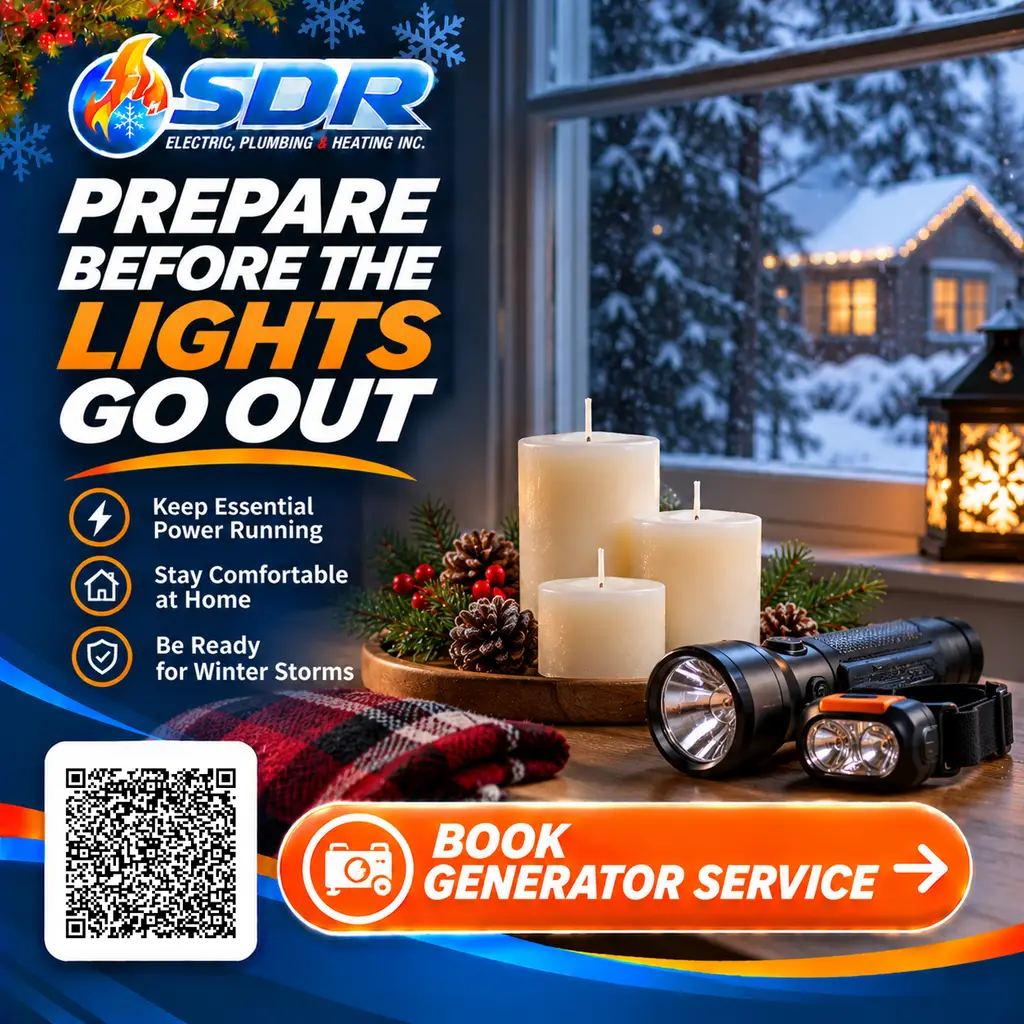
Use flashlights or battery-powered lanterns instead of candles whenever possible. Candles are easy to forget during a busy holiday gathering, especially around children, pets, decorations, and dry greenery. Keep spare batteries with your lights, along with a battery bank for phones.
Charge phones before a storm and keep a printed list of important contacts in case devices lose power. A battery-powered radio can provide updates when mobile service is unreliable or phone batteries are limited. Let family members know where you will be if road conditions make travel unsafe.
It also helps to keep a small outage kit where everyone can find it. Include flashlights, batteries, a radio, first-aid supplies, bottled water, medications, warm blankets, basic tools, and copies of important information. If someone in the household relies on powered medical equipment, speak with their care provider and electrician well before winter about an appropriate emergency power plan.
When power returns, restore systems carefully
A sudden return of power can place a heavy demand on household systems. Turn off or unplug sensitive electronics during the outage if practical, then bring equipment back online gradually. Check the furnace or boiler, well pump, sump pump, refrigerator, and water treatment equipment to confirm normal operation.
Look around the property for signs of trouble: water near the sump area, unusual plumbing leaks, a furnace that will not restart, tripped breakers, damaged extension cords, or a generator that is still connected incorrectly. If you used a portable generator, shut it down according to the manufacturer instructions and allow it to cool before refueling.
If a breaker continues to trip, a pump does not restart, or you smell burning, do not keep resetting equipment. Those are signs to stop and have the system assessed safely.
A holiday outage is easier to handle when the plan is already in place. For homeowners who want to protect heating, well water, sump pumping, and essential electrical circuits together, SDR Electric, Plumbing & Heating can help assess how those systems interact and plan dependable backup power before the next storm arrives.