A heat pump works through every season. It cools your home in summer, provides efficient heat through much of the winter, and often runs longer hours than a traditional furnace or air conditioner. Knowing how to maintain heat pumps helps prevent avoidable breakdowns, protects indoor comfort, and gives small issues a chance to be corrected before they become a no-heat call.
For homeowners in Eastern Ontario, maintenance matters even more. A heat pump may face humid summer weather, falling leaves, freezing rain, drifting snow, and long cold spells in the same year. Most routine care is straightforward, but electrical components, refrigerant systems, and performance concerns should always be handled by a qualified HVAC technician.
How to Maintain Heat Pumps at Home
Start with the parts you can safely see and access. A clean, unobstructed system moves air properly. Poor airflow is one of the most common reasons a heat pump loses capacity, runs longer than it should, or produces uneven temperatures from room to room.
Check or replace the indoor air filter
Your indoor air filter is a simple part with a major effect on heat pump operation. Check it monthly, especially during periods of heavy heating or cooling use. Replace disposable filters when they look dirty, or clean reusable filters according to the manufacturer’s instructions.
A clogged filter restricts airflow across the indoor coil. That can reduce comfort, increase energy use, and put unnecessary strain on the equipment. If you have pets, a busy household, construction dust from a renovation, or a home near gravel roads and agricultural areas, your filter may need attention more often.
Use the filter type and size specified for your system. A filter that is too restrictive can create airflow problems just as a dirty filter can. When in doubt, a technician can recommend an appropriate option for your equipment and indoor air quality needs.
Keep the outdoor unit clear
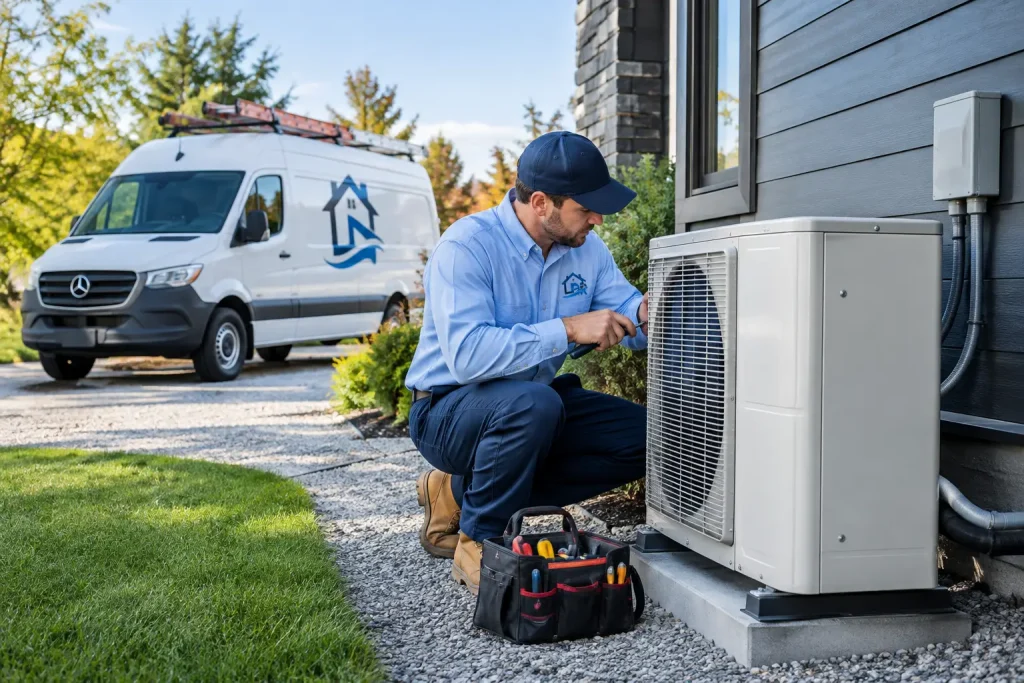
The outdoor heat pump unit needs open space to transfer heat effectively. In cooling mode, it releases heat outside. In heating mode, it draws available heat from outdoor air. Either way, blocked airflow affects performance.
Keep leaves, grass clippings, branches, mulch, and stored items away from the unit. Maintain clear space around all sides and above it. Avoid building a tight enclosure or placing decorative screening too close to the cabinet.
During winter, remove loose snow from around the unit and make sure meltwater has somewhere to drain. Do not chip ice from coil fins or use sharp tools on the unit. Those fins bend easily, and damage can limit airflow. Do not cover a heat pump while it is operating. It must remain able to draw and discharge air, even in cold weather.
Watch the condensate drain
When a heat pump runs in cooling mode, it removes moisture from indoor air. That water exits through a condensate drain line. In heating mode, the outdoor unit also creates water during defrost cycles.
Check the indoor drain area for standing water, staining, musty odors, or signs of a leak. A blocked drain can cause water damage near the air handler or furnace, and it can lead to system shutdowns in some installations. Outside, make sure the unit’s base and drainage path are not buried in ice, leaves, or debris.
If you see repeated leaking, do not keep resetting the system and hoping it resolves. A service technician can clear the drain safely and identify whether there is a pump, trap, slope, or installation issue contributing to the problem.
What Normal Winter Operation Looks Like
Heat pumps can look unusual in winter if you are used to a furnace. Understanding normal operation helps you recognize when there is a real problem.
Frost can form on the outdoor coil during cold, damp weather. The system should periodically enter a defrost cycle to clear it. During defrost, you may hear a change in sound, see water draining from the unit, or notice steam rising outdoors. These are usually normal signs that the equipment is protecting itself from ice buildup.
What is not normal is a unit that remains heavily encased in ice, makes loud grinding or banging sounds, repeatedly trips a breaker, or provides little to no heat indoors. Turn the system off if you suspect damage or an electrical issue, and arrange professional service. Do not pour hot water over the unit or attempt to force the fan blades free.
Many homes use a heat pump with backup heat, such as electric heat strips, a furnace, or a boiler. The balance between heat pump operation and backup heat depends on the equipment, controls, insulation levels, and outdoor temperature. If backup heat seems to run constantly or your home struggles to hold the thermostat setting, it is worth having the system assessed rather than assuming that is normal for winter.
Clean Gently, Not Aggressively
Homeowners can clean loose debris from the exterior cabinet after turning off power at the disconnect, if they can do so safely. A soft brush or a garden hose on a gentle setting can remove surface dirt from the outer coil area. Keep water away from electrical compartments and do not use a pressure washer.
The coil fins are thin aluminum and bend easily. Bent fins, compacted dirt deeper in the coil, or visible oil residue call for professional attention. Oil can indicate a refrigerant leak, while deep coil cleaning may require specialized cleaners and careful rinsing to avoid damaging components.
Inside, keep supply and return vents open and free of furniture, rugs, or drapes. Closing multiple vents does not usually save energy. It can restrict airflow and create pressure issues within the duct system.
Set Up Seasonal Professional Service
Home care supports heat pump performance, but it does not replace a complete maintenance visit. Schedule professional service at least once each year. For systems that provide both heating and cooling, a check before the heavy-use season is particularly helpful. Some homes benefit from two visits each year, especially where the heat pump runs year-round or the property has demanding comfort needs.
A qualified technician should inspect more than the filter and outdoor cabinet. Professional heat pump maintenance typically includes:
- Checking electrical connections, wiring condition, contactors, and safety controls
- Measuring system operation and verifying refrigerant performance
- Inspecting and cleaning indoor and outdoor coils as needed
- Confirming proper airflow, blower operation, and thermostat response
- Testing the condensate drain and inspecting for water-management concerns
- Reviewing defrost operation, backup heat, and unusual noise or vibration
This work helps catch issues that are not obvious from the thermostat. A weak capacitor, worn electrical connection, failing fan motor, dirty coil, or drainage problem may still allow the unit to operate, but often at reduced efficiency and with a higher risk of failure during extreme weather.
Pay Attention to Changes in Comfort
A heat pump rarely fails without giving some warning. The key is noticing a change from its normal operation. Call for service if rooms become unevenly heated or cooled, airflow drops, the system runs continuously without reaching the setting, or utility use rises without a clear weather-related reason.
Other warning signs include clicking, screeching, rattling, burning odors, recurring error messages, water leaks, or a breaker that trips. Refrigerant concerns may show up as weak heating or cooling, ice buildup, or a hissing sound. Refrigerant is not a homeowner maintenance item. It must be handled by a licensed professional.
If your heat pump is part of a larger renovation or mechanical upgrade, consider the full system rather than the outdoor unit alone. Ductwork, electrical capacity, thermostat controls, insulation, drainage, and backup heat all affect performance. Coordinated planning is especially useful when a home is adding a panel upgrade, generator, finished basement, or other interconnected work.
A Simple Maintenance Routine That Works
The best routine is one you can keep. Check the filter monthly, keep the outdoor unit clear as seasons change, and look for drainage or comfort issues before they become urgent. Book annual professional service and mention any unusual noises, icing, or thermostat behavior you have noticed. Those details help the technician diagnose the system efficiently.
Heat pumps are designed to provide dependable comfort, but they need clear airflow, clean components, safe electrical connections, and regular inspection to do their job well. A little attention throughout the year gives your equipment its best chance to carry your home through the next hot afternoon or cold snap without interruption.