A heating system replacement usually starts with a practical question: what will keep your home reliably comfortable through an Eastern Ontario winter? When weighing a heat pump versus furnace, the right answer depends on your home’s heat loss, existing fuel source, electrical capacity, ductwork, and how you want the system to operate on the coldest days.
A heat pump and a furnace can both be dependable choices. They simply produce heat differently, and each has requirements that should be reviewed before equipment is selected. The best decision is based on a proper assessment of the property, not a one-size-fits-all recommendation.
Heat Pump Versus Furnace: The Core Difference
A furnace creates heat by burning fuel, commonly natural gas or propane, or by using electricity. The system warms air and sends it through ductwork to the rooms of the house. Furnaces are built to deliver strong, consistent heat even when outdoor temperatures fall well below freezing.
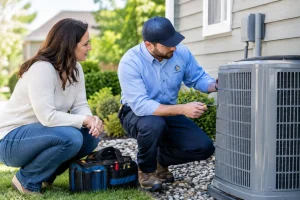
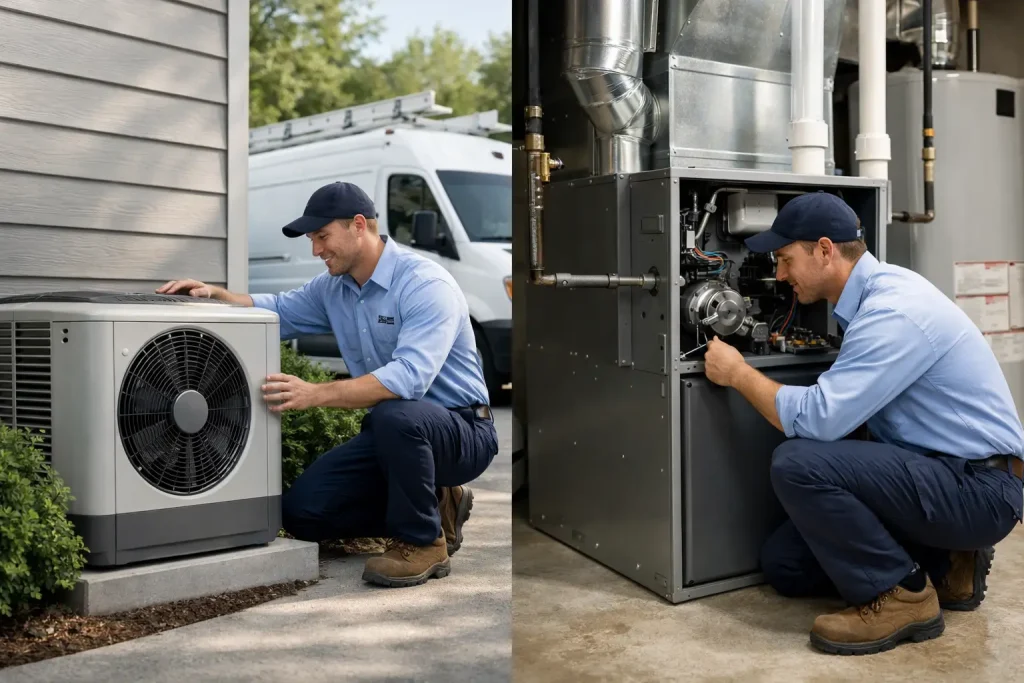
An air-source heat pump does not create heat in the same way. It moves available heat from outdoors into the home during heating season. In summer, it reverses direction to move heat out of the house, providing central air conditioning. Modern cold-climate heat pumps are designed to operate effectively in low temperatures, but their capacity and efficiency change as the outdoor temperature drops.
That difference matters in this region. A system that performs well during a mild fall day must also be planned for extended winter cold, wind exposure, and the heat loss of an older or poorly insulated home.
When a Heat Pump Makes Sense
A heat pump can be an excellent option for homeowners who want one system for heating and cooling. It is especially worth considering during a central air replacement, an all-electric new build, or a renovation where the building envelope is being improved.
Because it transfers heat rather than generating it directly, a properly selected heat pump can use electricity efficiently during much of the heating season. It generally provides longer, lower-output heating cycles than a furnace. That can create even temperatures throughout the home, though the air coming from supply registers may feel less hot than furnace air.
Cold-climate models can continue heating in winter conditions, but the equipment must be sized and configured for the property. Depending on the system design, a heat pump may use electric auxiliary heat during more severe weather. That backup heat needs to be considered during equipment selection and electrical planning.
Heat pumps can be installed as central ducted systems or as ductless mini-splits. Ductless equipment can help solve specific comfort problems, such as a finished addition, a room over a garage, or an area that existing ductwork does not heat evenly. It is not automatically the right choice for every room or every layout, but it can be a useful part of a larger comfort plan.
Electrical Planning Is Part of the Job
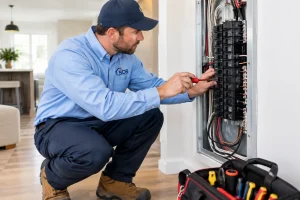
A heat pump installation may require changes beyond the outdoor unit and indoor equipment. The home may need a suitable electrical circuit, disconnect, wiring upgrades, or panel capacity review. If electric backup heat is included, the electrical demand can be significant during periods of extreme cold.
This is where coordinated HVAC and electrical planning helps prevent surprises. The heating equipment, panel capacity, and any major electrical loads should be reviewed as one system, particularly in renovations and new construction.
When a Furnace Is the Better Fit
A furnace remains a strong choice for homes with an established natural gas or propane heating system, particularly where the existing ductwork is in good condition. It supplies high-temperature air quickly and maintains output through very cold weather without relying on outdoor air as its heat source.
For homeowners who prefer the familiar feel of fast, powerful forced-air heating, a furnace may be the more comfortable option. It can also be a straightforward replacement when the house already has compatible venting, fuel piping, ductwork, and cooling equipment.
A furnace does need a separate air conditioner if you want whole-home cooling. That means the indoor coil, outdoor cooling unit, controls, and related components should be evaluated together. Replacing only the failed piece of an aging heating and cooling system can leave a homeowner with mismatched equipment or another major service need soon after.
Fuel-fired furnaces also require correct combustion venting, gas or propane piping, drainage for high-efficiency equipment, and safety testing. These are not details to leave to assumption. Licensed installation and commissioning help confirm the unit is operating safely and as intended.
A Dual-Fuel System Can Offer a Practical Middle Ground
For some homes, the answer is not heat pump or furnace. A dual-fuel system pairs an electric heat pump with a gas or propane furnace. The heat pump handles heating through milder and moderately cold conditions, while the furnace takes over when outdoor temperatures reach a selected point or when the home needs additional capacity.
This arrangement can provide central cooling, efficient heat pump operation during much of the year, and furnace performance during colder weather. The switchover point should be based on the equipment, the home’s heating load, local conditions, and the owner’s comfort priorities. It should not be guessed at during installation.
Dual-fuel systems require careful controls and proper setup. If the thermostat and equipment are not configured correctly, the system may not use the intended heat source at the intended time.
What Should Be Checked Before You Choose?
The existing equipment is only one part of the decision. A professional assessment should start with the house itself. Square footage is useful, but it does not tell the full story. Ceiling height, insulation levels, window condition, air leakage, sun exposure, basement construction, and room layout all affect heating demand.
A proper load calculation helps determine how much heating and cooling capacity the home actually needs. Oversized equipment can short-cycle, create uneven comfort, and add unnecessary wear. Undersized equipment may struggle to recover on the coldest days. The goal is not the biggest unit. It is a correctly matched system.
Ductwork deserves the same attention. Leaky, undersized, poorly routed, or unbalanced ducts can make even high-quality equipment perform poorly. Before replacing a furnace or adding a ducted heat pump, it is sensible to check airflow, return-air paths, filter access, and the condition of supply runs.
For homes with oil, propane, or electric baseboard heat, the review may also include fuel storage or delivery arrangements, electrical service capacity, available installation space, and whether a ducted or ductless layout is more appropriate.
Cold Weather, Power Outages, and Real-World Reliability
Neither a modern furnace nor a central heat pump should be assumed to run during a power outage. A gas or propane furnace still needs electricity for its controls, ignition, and blower motor. Heat pumps also depend on electrical power.
If backup power is part of your household plan, discuss it early. Generator sizing and transfer equipment should account for the specific heating system, essential circuits, well pumps, sump pumps, refrigeration, and other loads that matter to the property. Not every generator setup is designed to carry all-electric auxiliary heat, so the heating plan and backup-power plan need to work together.
Regular maintenance also supports reliability. Filters, condensate drains, electrical connections, refrigerant performance, combustion components, and safety controls all need attention at appropriate intervals. A system that appears to be heating may still be operating inefficiently or developing a problem that becomes more noticeable during the first cold snap.
Common Questions About Heat Pumps and Furnaces
Will a heat pump keep my home warm in winter?
A cold-climate heat pump can provide dependable winter heat when it is properly selected and installed. However, the home’s heat loss and the system’s low-temperature capacity determine whether it can operate alone or should be paired with backup heat.
Can I replace my furnace but keep my existing air conditioner?
Sometimes, but the compatibility, age, condition, and refrigerant requirements of the full system should be checked first. A coordinated assessment can help avoid performance or control issues.
Is a heat pump always better for energy use?
Not always. Heat pump performance depends on outdoor temperatures, equipment design, home efficiency, controls, and the need for auxiliary heat. A furnace may be the more practical option in certain homes, while a dual-fuel design may suit others.
The most useful next step is a room-by-room, property-specific conversation before equipment is ordered. SDR Electric, Plumbing & Heating can assess the heating, cooling, electrical, and backup-power pieces together, so the system chosen for your home is planned for the conditions it will actually face.