A faucet can look perfectly normal while the pipe feeding it is slowly closing in from the inside. If you need to replace galvanized pipes, the issue is usually not one isolated leak. It is often an aging plumbing system that is affecting water pressure, water appearance, fixture performance, and the reliability of the home as a whole.
Galvanized steel piping was widely used in older homes because its zinc coating helped resist rust. That protection does not last forever. As the coating breaks down, corrosion can develop inside the pipe, reducing its usable diameter and creating rough surfaces where mineral buildup collects. For homeowners, the practical question is not whether galvanized piping can last for a while longer. It is whether waiting creates more disruption than planning the replacement properly.
Signs It Is Time to Replace Galvanized Pipes
A single plumbing issue does not automatically mean every galvanized pipe needs to come out. A licensed plumbing assessment can determine whether the concern is a fixture, a shutoff valve, a water heater connection, a well-system component, or the piping itself. Still, several symptoms often point to aging galvanized lines.
Low water pressure is one of the most common. If flow has gradually weakened at several fixtures, especially when more than one tap is running, internal corrosion may be restricting the pipes. Replacing a faucet or showerhead might improve the feel at one location, but it will not remove buildup farther back in the supply line.
Discolored water is another warning sign. Brown, yellow, or reddish water that appears after the tap has been off for a period can indicate rust or sediment in the piping. Water color can also come from a water heater, a private well, or mineral content, so the source should be identified before work is planned. If the discoloration is isolated to hot water, the water heater may deserve attention first.
Other signs include recurring pinhole leaks, rusty staining around fixtures, clogged faucet aerators, and frequent repairs to old shutoff valves. A metallic taste or visible particles can also justify a closer look. Galvanized pipe itself is not proof of a lead issue, but older plumbing systems may include lead service components, solder, or fittings. Where water quality is a concern, testing and a full material assessment provide clearer answers than assumptions.
Why Galvanized Piping Fails From the Inside
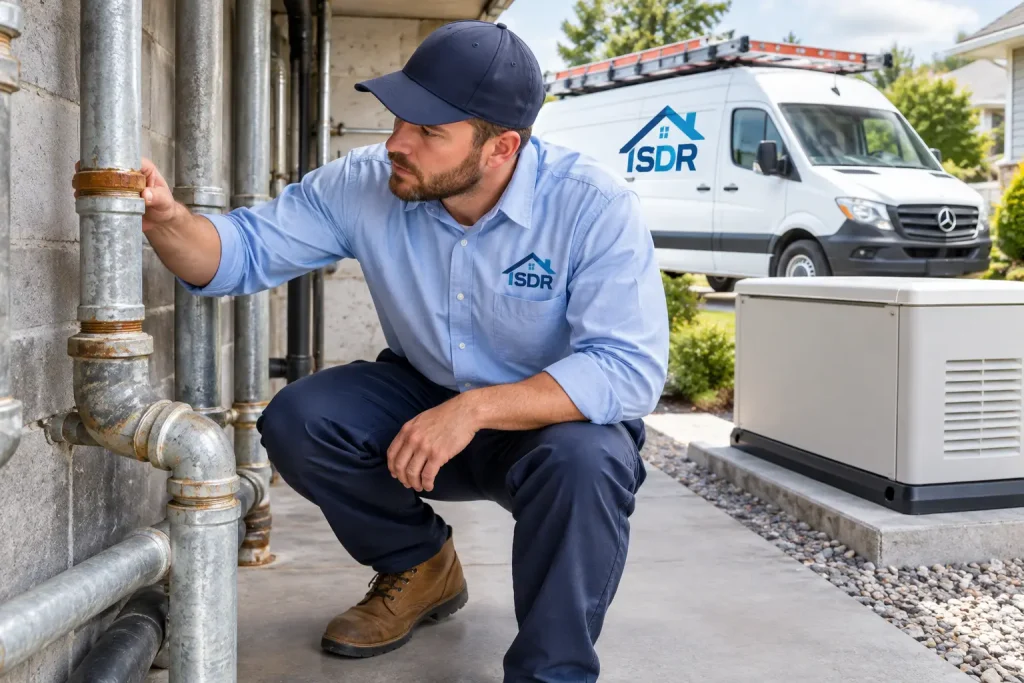
The difficult part of galvanized pipe is that the worst deterioration is often hidden. A pipe can appear sound in a basement or utility room while its interior passage has narrowed substantially. In areas with mineral-rich water, scale can build up along with corrosion, making the restriction worse.
Galvanized steel can also create problems where it connects to other metals. When dissimilar metals are joined without appropriate fittings, galvanic corrosion can accelerate at the connection. This is often seen around transitions, repairs, and older additions where plumbing materials changed over time.
For homes on private wells, water chemistry matters. Iron, hardness, acidity, and sediment can affect pipes, pumps, pressure tanks, and treatment equipment differently. A plumbing replacement may be the right step, but it should be coordinated with the well and water-treatment system so the new piping is properly protected and sized for the home.
When Partial Replacement Makes Sense
Not every project requires opening every wall and replacing every pipe at once. A partial replacement can be a reasonable solution when there is a clearly isolated problem, such as a corroded section serving one bathroom or a damaged run in an accessible basement ceiling.
However, partial repairs have limits. Connecting new pipe to a larger network of heavily corroded galvanized lines does not restore flow through the remaining old sections. It can also leave the homeowner dealing with additional leaks or pressure problems later. If several branches show deterioration, if the home has repeated plumbing repairs, or if a renovation will expose walls and ceilings anyway, a more complete repipe is often the more practical long-term plan.
The best approach depends on the pipe condition, accessibility, renovation plans, water source, and the parts of the home that have already been updated. A good contractor should explain what is urgent, what can be planned, and what work will prevent repeat disruption.
What Happens When You Replace Galvanized Pipes
A planned repipe starts with identifying the existing plumbing layout and materials. This includes locating accessible piping, checking shutoffs and connections, reviewing the water heater and main supply, and looking for issues that could affect the work. In older properties, the visible pipe is not always the full story, so careful investigation matters.
The replacement material is then selected for the property and application. Copper remains a durable option in many homes. PEX is also widely used for residential water distribution because it is flexible, efficient to install, and resistant to internal corrosion. The right choice depends on local code requirements, system design, accessibility, and the specific needs of the building.
During installation, plumbers isolate the water supply, remove or abandon old sections as appropriate, and install new hot and cold water lines. New shutoff valves are commonly included where needed, making future fixture service easier. The system is pressure-tested before walls or ceilings are closed, and fixtures are checked for proper flow and leaks.
A repipe may involve carefully opening selected drywall, ceilings, or access panels. The goal is to make the least disruptive openings possible while still completing safe, serviceable work. In a renovation, this work is often easier to coordinate before finishes, cabinetry, or flooring are installed.
Plan Around Other Home Systems
Replacing old plumbing is a good opportunity to look at connected systems rather than treating each issue separately. If a water heater is nearing the end of its service life, its connections and shutoffs can be reviewed during the piping work. If the home has a water softener, filtration equipment, a well pressure tank, or a booster pump, the new plumbing should be arranged to support those components correctly.
Mechanical rooms also benefit from planning. Clean pipe routing, accessible shutoffs, properly supported lines, and room for future service make a difference long after installation day. For larger renovations and additions, plumbing may need coordination with electrical work, heating and cooling equipment, framing, and finish schedules. Managing those intersections early helps avoid unnecessary rework.
For property owners in older Eastern Ontario homes, SDR Electric, Plumbing & Heating Inc. can assess the plumbing system in the context of the entire property, including water treatment, well equipment, and related mechanical work. That coordinated approach is especially useful when a repipe is part of a broader renovation or reliability upgrade.
Do Not Wait for a Major Leak
A major pipe failure is not the only reason to act. Slow leaks inside walls or ceilings can damage insulation, framing, flooring, and finished spaces before they become obvious. A planned replacement gives you more control over access, scheduling, material selection, and any related upgrades.
Call for an assessment sooner if you see active leaking, water staining, sudden drops in pressure, persistent discoloration, or water that will not run clear after normal flushing. If there is a concern about possible lead components or water safety, avoid guessing. Have the system inspected and use water testing where appropriate.
Old galvanized piping does not always demand an immediate whole-home project, but it deserves a clear, honest evaluation. Knowing what is behind the walls allows you to make a sound decision before a small plumbing problem turns into an urgent repair.