A heating or cooling problem rarely starts with a complete shutdown. More often, it begins with a room that never reaches the thermostat setting, a furnace that cycles on and off too often, or an air conditioner that suddenly sounds louder than usual. Prompt HVAC repair can prevent a small mechanical or electrical issue from becoming a no-heat, no-cooling, or safety concern.
For homeowners, landlords, and property managers, the goal is not to diagnose every component yourself. It is to recognize when a system is behaving differently, take a few safe basic steps, and call a qualified technician before the problem affects the whole property.
Signs You May Need HVAC Repair
Your HVAC system should heat or cool your space steadily, respond to thermostat changes, and operate without persistent odors, unusual noises, or moisture where it does not belong. A temporary change during extreme weather can happen. Ongoing performance issues deserve attention.
Uneven temperatures throughout the building
If one bedroom is always too warm in summer or a main living area stays cold in winter, the cause may be more than a thermostat setting. Restricted airflow, duct issues, a failing blower motor, a dirty indoor coil, or equipment that is not sized or operating correctly can all create uneven temperatures.
Start by confirming that supply vents are open and not blocked by furniture or rugs. If the issue continues, a technician can test airflow and inspect the equipment rather than treating one uncomfortable room as an isolated problem.
Short cycling or nonstop operation
Short cycling occurs when a furnace, heat pump, or air conditioner starts, stops, and starts again within short intervals. Continuous operation is different, but it can be equally concerning when the system cannot reach the selected temperature.
Both patterns place extra strain on equipment. Causes can range from a clogged air filter or thermostat issue to refrigerant concerns, overheating, electrical faults, or airflow restrictions. Changing a dirty filter is a reasonable homeowner task. Repeated cycling after that check calls for professional service.
New sounds, smells, or visible water
A system that develops banging, grinding, screeching, rattling, or loud humming needs attention. Some sounds point to loose panels or vibration. Others can indicate a failing motor, worn moving parts, electrical trouble, or an issue inside the compressor.
Musty odors may be connected to moisture around the indoor equipment or ductwork. A burning smell, hot electrical smell, or signs of smoke require a more urgent response. Turn the system off if it is safe to do so and arrange service. Water near a furnace, air handler, indoor coil, or condensate drain should also be investigated before it damages finishes or affects electrical components.
Weak airflow or poor air quality
Air coming from vents should feel consistent and move with reasonable force. Weak airflow can result from a blocked filter, blower problem, duct restriction, or dirty coil. Excess dust, persistent stuffiness, or a sudden increase in humidity can also suggest that the system is not managing airflow properly.
Indoor air quality concerns are not always caused by HVAC equipment alone. Plumbing leaks, basement moisture, poor ventilation, and building-envelope issues may contribute. A practical assessment looks at the whole property rather than replacing a part based on one symptom.
Safe Checks Before Calling for HVAC Repair
A few simple checks can sometimes resolve an avoidable interruption. They should never involve opening electrical panels, bypassing safety controls, handling refrigerant lines, or taking apart fuel-burning equipment.
First, check the thermostat. Confirm it is set to heat or cool, the temperature setting is appropriate, and batteries are working if the model uses them. Then inspect the air filter. A heavily loaded filter restricts airflow and can contribute to overheating or frozen cooling equipment. Replace it with the correct size and type for your system.
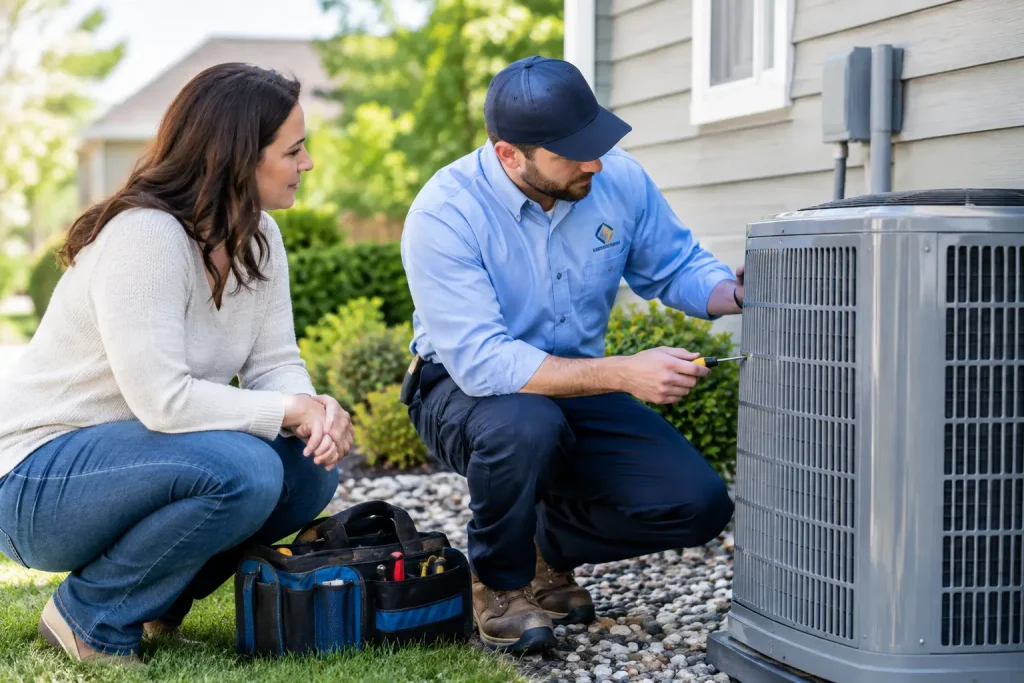
Next, make sure exterior air-conditioning or heat-pump equipment is clear of leaves, grass clippings, snow, and other debris. Maintain clear space around the unit without attempting to clean internal components yourself. Finally, check whether a breaker has tripped. If it trips again after being reset once, leave it off and call a licensed professional. Repeated tripping is a warning that should not be ignored.
If you have a gas furnace and smell gas, leave the area, avoid switches and open flames, and follow your gas utility’s emergency instructions. Do not attempt to restart the appliance.
What a Professional HVAC Service Visit Should Address
Good HVAC repair is more than getting the system running for the moment. The technician should identify the source of the failure, inspect related components, and explain the condition in clear terms.
For a heating issue, that may include checking the thermostat, electrical connections, safety switches, ignition components, blower operation, venting, and fuel-burning performance where applicable. For air conditioning or heat-pump concerns, the work may involve testing controls, inspecting coils and drains, verifying airflow, examining electrical components, and checking refrigerant performance with the proper tools.
The right repair depends on the equipment type, its age, maintenance history, and the condition of the installation. A loose electrical connection and a failed blower motor can create similar comfort complaints, but they require very different work. This is why a careful diagnosis matters.
For properties with interconnected systems, coordination can also make a difference. A renovation may affect duct routes, electrical capacity, drainage, ventilation, or the placement of new equipment. SDR Electric, Plumbing & Heating Inc. can coordinate HVAC, electrical, and plumbing work when a project calls for more than one trade, helping reduce gaps between scopes of work.
Repair, Maintenance, or Replacement: How to Think It Through
Not every service call means the equipment needs to be replaced. Many common issues can be repaired when the system is otherwise in sound condition. Regular maintenance also catches problems such as worn electrical components, drainage issues, dirty coils, and declining airflow before they interrupt comfort.
Replacement becomes a more reasonable conversation when failures are recurring, equipment performance is consistently poor, parts are no longer practical to obtain, or the system no longer suits the building’s needs. A home addition, finished basement, major renovation, or change in occupancy can alter heating and cooling demands enough that the existing setup no longer performs well.
The decision should consider more than whether the system starts today. Ask whether it heats and cools evenly, whether repairs are becoming frequent, whether indoor humidity is controlled, and whether the equipment can support planned changes to the property. A qualified contractor can explain the options and the trade-offs without pushing a one-size-fits-all answer.
Reducing Future HVAC Problems
Most HVAC systems benefit from consistent attention rather than waiting for a failure. Keep filters on a regular replacement schedule, leave vents and return grilles unobstructed, and keep outdoor equipment clear. Schedule professional maintenance before the season when the system will work hardest.
It also helps to pay attention to changes early. A new rattle, a damp area near equipment, or a room that slowly becomes harder to heat is easier to assess before it turns into an after-hours emergency. For landlords and commercial property owners, documenting service history can make recurring issues easier to identify across units or buildings.
Reliable heating and cooling support the safety, comfort, and day-to-day function of a property. When your system starts sending warning signs, acting early gives you more control over the repair and helps protect the equipment that keeps your space livable through Eastern Ontario’s changing seasons.