A finished basement can be damaged in a few hours when water has nowhere else to go. Effective basement flood prevention is not one repair or one piece of equipment. It is a planned approach that manages rainwater, snowmelt, groundwater, plumbing failures, and power outages before they become an emergency.
In Eastern Ontario, spring thaw, frozen ground, summer downpours, and aging drainage systems can all put pressure on a home’s foundation. The good news is that many basement flooding problems show warning signs early. Addressing them promptly can protect flooring, drywall, stored belongings, electrical equipment, and the structure itself.
1. Start With Water Outside the Foundation
The first goal is simple: keep as much water as possible away from the house. If roof runoff, melting snow, or surface water collects beside the foundation, it can eventually find its way through cracks, window wells, joints, or below-grade openings.
Check that the soil around the home slopes away from the foundation. Settling soil, landscaping changes, and previous excavation can create shallow low spots that direct water toward the basement wall. Regrading may be needed if water consistently pools near the house after rain.
Pay attention to patios, walkways, and driveways as well. Hard surfaces should not direct runoff toward the home. A small drainage issue at grade can become a significant water issue below grade, especially during a long rainfall when the surrounding soil is already saturated.
2. Keep Gutters and Downspouts Working
Clogged eavestroughs can send a surprising amount of water directly over the edge and down beside a foundation. Clean gutters regularly, particularly after heavy leaf fall, and make sure they are securely fastened and properly pitched toward the downspouts.
Downspouts need to carry water well away from the house. A short extension that releases water beside the foundation does not solve the problem. The discharge should flow onto ground that slopes away from the building and should not create a hazard on walkways or neighboring properties.
During winter, ice buildup can also affect roof drainage. If you see recurring ice dams, overflowing gutters, or large icicles in one area, have the roof drainage and insulation conditions assessed. Water that backs up under roofing can create damage far beyond the basement.
3. Treat Your Sump Pump as Essential Equipment
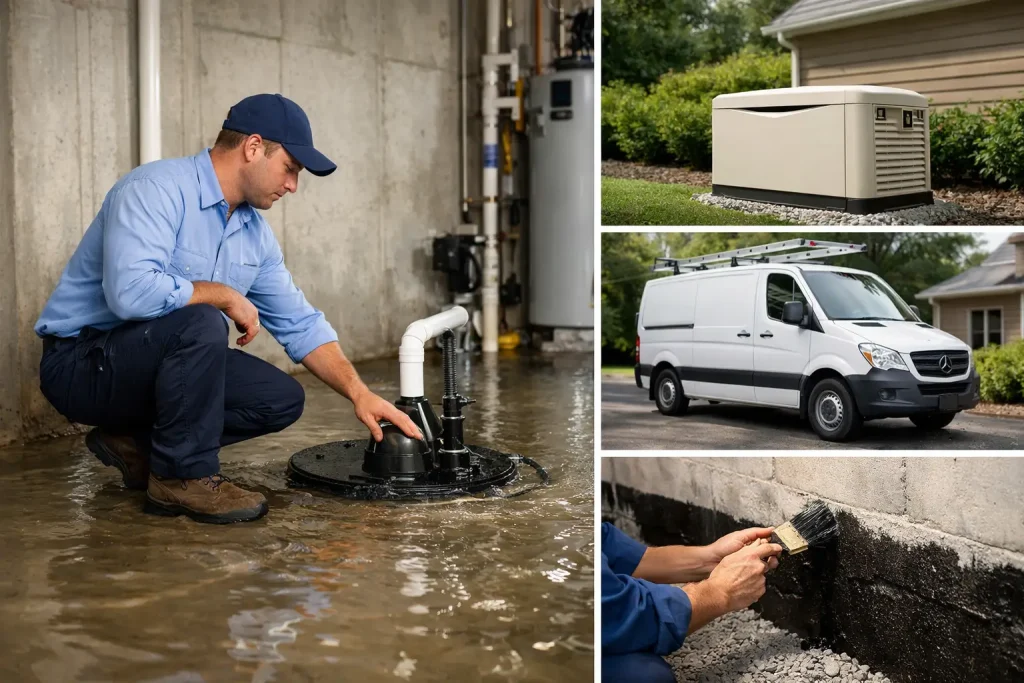
For homes with a sump pit, the sump pump is often the last line of defense against groundwater. It should be inspected and tested before the spring thaw and again before periods of heavy rain. A pump that has not run for months may have a stuck float, blocked intake, worn components, or a discharge problem that is not obvious until water levels rise.
A basic test involves slowly pouring water into the pit until the float activates the pump. Confirm that the pump starts, removes water efficiently, and shuts off properly. If it runs continuously, makes unusual noise, cycles on and off too often, or fails to start, arrange service before the next storm.
The discharge line deserves equal attention. It must carry water outside without leaking, freezing, or returning water to the foundation. A blocked or frozen discharge pipe can leave a working pump with nowhere to send water.
Consider a Backup Sump Pump
Many serious basement floods happen during storms that also cause power outages. A primary electric sump pump cannot protect the basement if there is no power. A battery backup sump pump can provide short-term protection, while a properly planned standby generator can keep essential systems running during an extended outage.
The right backup arrangement depends on the property, the pump load, the expected duration of outages, and whether other critical equipment also needs power. This is a situation where plumbing and electrical planning should work together. A backup pump, alarm, or generator is only useful if it is correctly installed, tested, and maintained.
4. Add an Alarm Before Water Reaches the Floor
A high-water alarm in the sump pit can alert you when water rises above the normal pump operating level. This may indicate a failed pump, a power interruption, a blocked discharge line, or groundwater entering faster than the system can remove it.
Water alarms can also be placed near water heaters, laundry equipment, utility sinks, floor drains, water softeners, and plumbing fixtures. They do not stop a leak, but an early alert can turn a major loss into a manageable repair. For a vacant property, a monitored alert system may provide extra peace of mind.
5. Protect Against Plumbing Failures
Not every basement flood starts outdoors. A burst supply line, failed washing machine hose, leaking water heater, or backed-up drain can release water quickly. Inspect exposed plumbing periodically for corrosion, moisture, staining, loose fittings, and slow drips.
Know where the main water shutoff valve is located and make sure responsible household members can operate it. If a pipe or fixture fails, turning off the water promptly can limit the damage. For homes with aging shutoff valves, poor water pressure, recurring leaks, or visible pipe deterioration, a professional inspection can help identify the most urgent concerns.
A plumbing backup is different from groundwater infiltration and needs a different solution. If sewage or drain water has backed up through a floor drain or lower-level fixture, avoid using water fixtures in the home until the issue is assessed. This type of water can create a health concern and should be handled carefully.
6. Check Foundation Openings and Window Wells
Cracks in concrete do not always mean the foundation is structurally failing, but they should not be ignored when moisture is present. Look for damp wall areas, peeling paint, white mineral deposits, musty odors, or water marks after rain. These signs can help identify where water is entering and whether the problem is isolated or widespread.
Basement windows and window wells are common weak points. Window wells should be free of leaves, soil, and debris, with drainage that allows water to move away rather than collect against the window. Covers can help keep out debris and reduce direct rainfall, but they must be secure and appropriate for the location.
Sealing a visible crack may be part of the repair, but surface sealing alone is not always enough. If water pressure outside the foundation is the real problem, improving exterior drainage and sump capacity may be more effective than repeatedly patching the interior symptom.
7. Maintain Drains and Consider Backwater Protection
A floor drain should be clear and able to receive water. If it smells dry, adding water to the trap can help maintain the water seal and reduce sewer odors. If it drains slowly, backs up, or has been covered during a renovation, have it inspected rather than assuming it will work during an emergency.
In areas served by municipal sewers, a backwater valve may help prevent sewage from flowing back into the home during a sewer surcharge. It is not suitable for every plumbing layout, and it requires ongoing maintenance. The valve must remain accessible, clean, and able to close properly. A licensed plumbing assessment can determine whether it is appropriate for the property.
8. Make the Basement Easier to Recover
Flood prevention also includes reducing the consequences if water does enter. Store belongings in watertight bins and keep them off the floor on shelving. Avoid placing irreplaceable documents, electronics, or valuable keepsakes directly on basement flooring.
If you are renovating a basement with a known moisture history, choose materials thoughtfully. Some flooring, wall finishes, and storage options tolerate occasional moisture better than others. A finished basement should never hide an unresolved water issue behind new drywall and flooring.
Keep a simple emergency plan: know the electrical panel location, the main water shutoff, the sump pump outlet, and who to call if the pump fails or a pipe leaks. If there is standing water near electrical equipment, do not enter the area or attempt electrical repairs yourself.
A dry basement is built on routine attention, not luck. Testing the sump pump, correcting exterior drainage, and responding to early signs of moisture can protect the home long before the next heavy storm puts every system to the test.