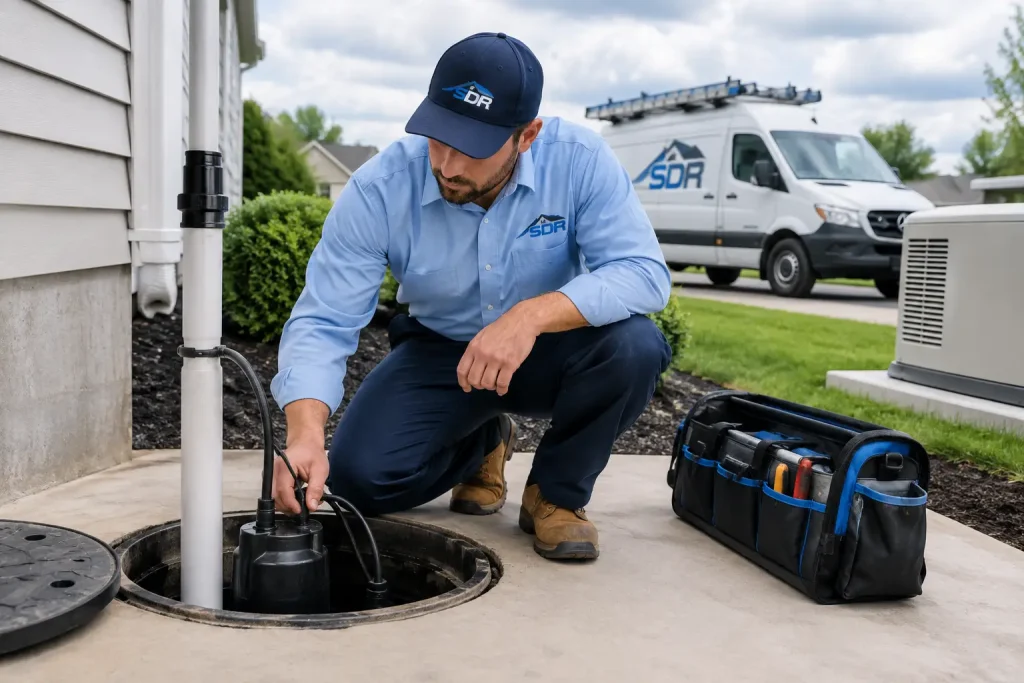
A sump pump can look perfectly fine right up until the first hard rain, rapid snowmelt, or high-water event puts it under real demand. Knowing how to inspect sump pumps gives you a chance to find a stuck float, blocked discharge line, failed check valve, or power problem before water reaches the basement floor.
A basic inspection is manageable for many homeowners, but work carefully. A sump pit combines standing water and electricity, and damaged wiring, a wet receptacle, or an improperly installed pump requires a qualified professional. Never reach into a pit when the pump is energized or when there is any concern about electrical damage.
Start with a Safe Visual Inspection
Before testing the pump, look around the pit and the surrounding floor. The cover should be secure, especially in a finished basement or a space used for storage. A covered pit helps keep debris out, reduces moisture and odors, and prevents accidental contact with the pump.
Check for visible water on the floor, corrosion on the pump body, cracked piping, loose fittings, or mud and debris around the basin. Some sediment is normal, particularly where groundwater carries silt, but heavy buildup can interfere with the float or clog the intake screen. If the pit is filled with soil, gravel, or construction debris, the pump may be working harder than it should.
Look closely at the power cord. It should be intact, dry, and plugged directly into a properly functioning outlet. Do not use an extension cord for a sump pump. Extension cords are more likely to overheat, loosen, or be damaged by moisture. If the outlet is loose, the cord is frayed, or a breaker has been tripping, stop the inspection and have the electrical issue assessed.
How to Inspect Sump Pumps by Testing Operation
The most useful test is to confirm that the pump starts, moves water, and shuts off correctly. Do not run the pump dry, since water helps cool and lubricate many pump designs.
Slowly pour water into the pit until the float rises and activates the pump. A properly operating unit should start without excessive hesitation, pump the water down promptly, and shut off after the water level falls. Listen for unusual sounds such as grinding, loud humming, rattling, or repeated clicking. These can point to a blocked impeller, worn motor, failing switch, or loose component.
If the float rises but the motor does not start, first verify that the outlet has power and that no breaker or reset button has tripped. Do not repeatedly reset a breaker that trips again. That can signal a pump, wiring, or outlet fault that needs professional attention.
Some pumps use a vertical float that slides on a rod, while others use a tethered float attached by a cord. Both need enough space to move freely. A float can get caught on the basin wall, power cord, discharge pipe, or debris inside the pit. During the water test, watch the float closely. It should not rub, stick, or remain in the raised position once the water level drops.
Check the Pumping Speed and Shutoff
A pump does not need to empty the basin instantly, but it should lower the water level steadily. Slow pumping may mean the discharge pipe is restricted, the impeller is obstructed, or the pump is undersized for the water entering the pit. On the other hand, a pump that turns on and off every few seconds may have a float adjustment problem, a check valve issue, or a basin that is too small for the amount of groundwater.
After the test, confirm that the pump shuts off. A unit that runs continuously can overheat and fail. It may be responding to a jammed float, a damaged switch, or water that is flowing back into the pit after each cycle.
Inspect the Check Valve and Discharge Line
A sump pump only protects the basement if water has a clear route out of the property. Follow the discharge pipe from the pit as far as you can safely access it. Look for cracks, loose joints, sagging sections, and signs of leaks. Water stains or damp areas along the pipe can reveal a small leak that becomes a larger problem under pressure.
Most systems have a check valve on the vertical discharge pipe near the pump. This valve prevents pumped water from falling back into the pit when the motor shuts off. If you hear a hard bang after every cycle, the check valve may be closing abruptly, installed incorrectly, or wearing out. A failed valve can cause frequent cycling and unnecessary strain on the pump.
Outside, make sure the discharge point directs water away from the foundation. It should not empty beside the house, against a walkway, or where the water can flow back toward the basement. Keep the outlet clear of leaves, mulch, soil, ice, and snow. A blocked exterior line can leave a working pump with nowhere to send the water.
Seasonal conditions matter. In colder weather, an exposed discharge line can freeze. During a spring inspection, look for damaged extensions and areas where runoff has created erosion, pooling, or slippery surfaces. If the discharge arrangement needs changes, the solution should protect both the foundation and the surrounding property.
Check the Backup Plan, Not Just the Main Pump
A standard sump pump depends on utility power. Unfortunately, storms that bring heavy rain can also cause outages. If your basement is vulnerable to water, inspect any battery backup pump or backup power arrangement before it is needed.
For a battery backup unit, check that the battery is connected securely, free from corrosion, and showing the expected status on the controller. Many systems include an audible alarm or test function. Follow the manufacturer instructions for testing, and replace batteries based on the recommended service interval rather than waiting for a failure.
If the property has a generator, make sure the sump pump is included in the backup-power plan and that the generator connection has been professionally designed for the home. A generator can be valuable during an outage, but it must be installed and operated safely. Never run a portable generator indoors, in a garage, or near open windows and doors.
Know When an Inspection Should Become a Service Call
Some sump pump problems are straightforward, such as clearing a small amount of debris from around an accessible float. Others can involve electrical hazards, drainage design issues, or a pump near the end of its service life. Call for service if the pump will not start, trips the breaker, runs constantly, makes abnormal noises, fails to discharge water, or leaves water in the pit after cycling.
Also arrange an assessment if you see recurring dampness, foundation-area pooling, sewage-like odors, or water backing up after a storm. The pump may not be the only issue. A blocked discharge line, poor exterior grading, undersized basin, failed check valve, or drainage problem can all affect system performance.
For homeowners planning a renovation, finishing a basement, or adding backup power, this is also a good time to review the sump system as part of the larger plumbing and electrical plan. SDR Electric, Plumbing & Heating can assess the interconnected equipment so the pump, drainage, outlet, and backup-power needs are addressed together.
Test your sump pump at least before the wet season and after any major change around the property. A few quiet minutes spent checking its operation can be the difference between a routine rainstorm and a basement cleanup.