A septic pump problem rarely starts with a dramatic failure. More often, an alarm sounds after heavy water use, a drain begins moving slowly, or a wet area appears near the pump tank. Knowing how to diagnose septic pump issues early can help you limit water use, avoid a sewage backup, and give a technician useful information when service is needed.
A septic pump system combines wastewater, electricity, control switches, and buried piping. That makes safety the first priority. You can safely check a few visible items, but do not open a septic tank, reach into a basin, or enter any septic structure. Wastewater can contain harmful bacteria, and confined tank spaces can contain dangerous gases. Electrical components near water also require caution.
Start With the Signs of a Septic Pump Problem
A pump is commonly used where wastewater must be lifted from one part of the system to another, such as from a pump chamber to a raised leaching field. Some properties also have a grinder pump that processes solids before moving wastewater through a pressure line. The exact equipment varies, but the warning signs are often similar.
A high-water alarm is the clearest sign that the pump chamber level has risen higher than it should. The alarm may be a buzzer, a flashing light, or both. Treat it as a warning, not as proof that the pump itself has failed. The pump may have lost power, a float switch may be stuck, the discharge line may be blocked, or the system may be receiving more water than it can move.
Other signs include toilets that flush poorly, drains that gurgle, sewage odors outside, wet ground around the tank area, or wastewater backing up at low fixtures. A backup inside the building requires immediate action. Stop running water, avoid flushing toilets, and keep people and pets away from any wastewater.
One slow sink by itself does not necessarily indicate a septic pump problem. A localized clog is more likely when only one fixture is affected. When several drains are slow or the alarm is active, the issue is more likely to involve the septic system or its pump controls.
How to Diagnose a Septic Pump Without Taking Risks
Begin by reducing water use. Do not run the dishwasher, washing machine, or long showers while a high-water alarm is on. Every gallon sent down a drain enters the system and can raise the level further. This simple step often prevents a warning condition from becoming an indoor backup.
Next, look at the alarm panel from the outside. Many panels have a red alarm light, an audible alarm, and labeled switches or indicator lights. A silence button may stop the buzzer, but it does not correct the condition. If you silence the alarm, leave the visual indicator active and arrange service promptly.
Check whether the pump circuit has tripped at the electrical panel. If it has, reset it once only if there is no standing water around the equipment and no visible damage. If the breaker trips again, leave it off. A recurring trip can point to a failing pump motor, damaged wiring, moisture in an electrical component, or a control issue. Repeatedly resetting a breaker can create a more serious electrical hazard and may damage the equipment.
If the pump plugs into a visible receptacle, confirm that the plug has not come loose. Do not handle plugs, cords, or controls with wet hands or while standing on wet ground. A tripped GFCI receptacle can sometimes interrupt power, but septic pump circuits should be evaluated according to the installation and local electrical requirements. If you are unsure which device serves the pump, it is safer to stop there.
Listen from a safe location when the system is expected to run. A normal pump often produces a brief hum or vibration. Silence when the chamber is high can suggest no power, a failed float switch, a failed motor, or a control-panel fault. A humming sound without water moving may indicate a jammed pump, blocked discharge line, stuck check valve, or failing motor. Do not remove covers or attempt to free a pump yourself.
Record what you observe: when the alarm began, whether the breaker was tripped, which fixtures are affected, recent heavy water use, and whether there has been flooding or a power outage. Those details can shorten the diagnostic process and help distinguish a pump issue from a broader septic-system concern.
What the Alarm and Float Switches Can Tell You
Most septic pump chambers use float switches to control the pump. A lower float tells the pump to stop after the water level drops. A pump-on float signals the pump to start at a set level. A separate high-level float activates the alarm if the water continues rising.
Because floats move in wastewater, they can become tangled, coated with debris, damaged, or stuck in one position. A stuck pump-on float may prevent the pump from starting. A failed high-level float may mean there is no alarm even though the chamber is too full. For that reason, the absence of an alarm does not rule out a problem if drains are backing up or wastewater is surfacing.
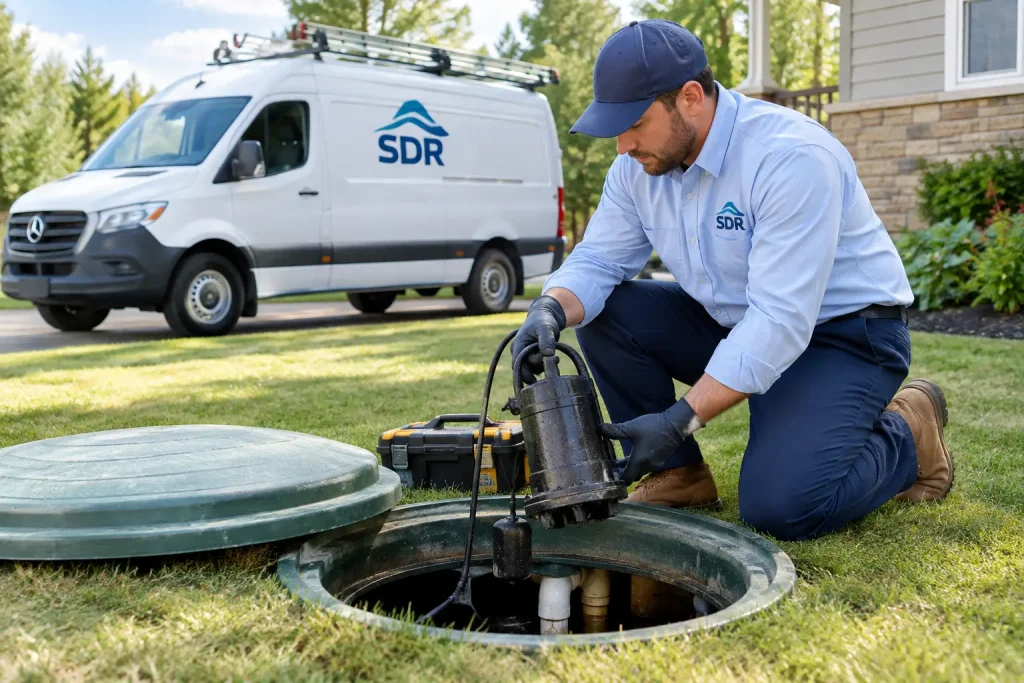
A technician can test the float switches, control panel, pump circuit, and motor safely. This work may involve live electrical testing and exposure to wastewater, so it is not a homeowner repair. In systems with separate electrical and plumbing components, coordinated troubleshooting matters. The fault may sit in the pump, controls, wiring, or discharge piping rather than in a single obvious part.
When a Pump Problem Is Not the Pump
A working pump cannot overcome every restriction in the system. If the pump runs but the alarm returns, the discharge pipe may be blocked, frozen, damaged, or obstructed by a closed or failed valve. In Eastern Ontario, freeze-thaw conditions can expose weaknesses in shallow or poorly protected piping.
A blocked effluent filter, a clogged screen, or a restriction at the treatment unit can also prevent normal flow. Depending on the system design, a full septic tank or a saturated leaching area may create similar symptoms. Heavy rain, high groundwater, excessive household water use, or a damaged drainfield can reduce the system’s ability to accept effluent.
This is why a pump should not be replaced based on an alarm alone. A proper service call confirms whether the pump is receiving the correct power, responds to its controls, draws appropriate electrical current, and moves water through the discharge line. The technician should also assess the check valve, piping condition, tank level, and any signs that the issue extends beyond the pump chamber.
When to Call for Service Right Away
Call for qualified service immediately if sewage is backing up into the home, wastewater is surfacing outdoors, the pump alarm stays on after water use has been reduced, or the pump breaker will not remain reset. The same applies if you smell strong sewage gas near the tank or see damaged electrical equipment.
Do not wait for a convenient time if the alarm is active. A pump chamber has limited storage capacity. Continued water use can push wastewater into the building or onto the property, creating a health concern and a more complicated cleanup.
For property owners with a septic pump, a practical service visit should address both the mechanical and electrical sides of the problem. SDR Electric, Plumbing & Heating can help assess pump operation, controls, power supply, and connected plumbing so the repair is based on the cause rather than a guess.
Preventing the Next Septic Pump Failure
The best prevention is regular attention before an alarm sounds. Keep the alarm panel accessible and make sure everyone in the property knows what the alarm means. Test the alarm only according to the system manufacturer’s instructions or during professional maintenance. Never bypass an alarm, float switch, or breaker to keep the pump running.
Use water thoughtfully during periods of heavy rain, after a power outage, or when the system has recently been serviced. Spread laundry loads across the week instead of running several back-to-back. Keep wipes, grease, hygiene products, and other non-flushable material out of toilets and drains. Even products labeled flushable can contribute to clogs and pump damage.
Ask for routine septic-system maintenance at intervals appropriate for your household, tank size, and system design. During service, the pump, floats, electrical connections, alarm, and discharge components can be inspected before a small issue becomes an emergency. A prompt response to an alarm protects your home, your property, and the system that works quietly beneath it.