A furnace replacement is rarely a casual decision. When the heat is unreliable, homeowners need an answer that works with the house they have, the utilities available, and the way the property will be used for years to come. The electric versus gas furnace decision is not simply about choosing a fuel source. It affects electrical capacity, ventilation, ductwork, maintenance needs, and how the entire heating system performs during an Eastern Ontario winter.
Electric Versus Gas Furnace: The Basic Difference
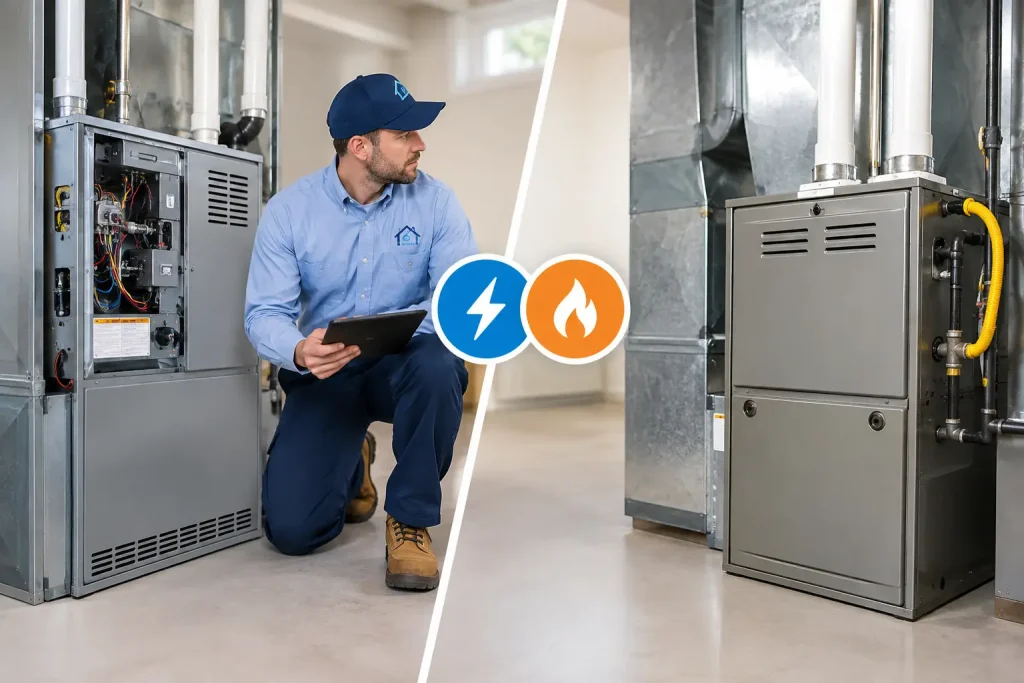
A gas furnace creates heat by burning natural gas or propane in a sealed combustion chamber. A heat exchanger transfers that heat to air moving through the ductwork, while combustion gases are safely vented outdoors. Gas furnaces need a gas supply, proper venting, combustion air considerations, and regular safety checks.
An electric furnace produces heat through electric resistance heating elements, similar in principle to a large electric heater. Air passes across those elements and is distributed through the home’s duct system. There is no on-site combustion, no flue pipe, and no gas line required.
Both systems can provide dependable forced-air heat when they are correctly sized and installed. The better choice depends on the property, not a general rule that applies to every home.
When a Gas Furnace Makes Sense
A gas furnace can be a practical option for a home already served by natural gas, particularly when the ductwork is in good condition and the existing furnace is nearing the end of its service life. Modern high-efficiency gas furnaces can provide strong, consistent heat even through extended cold weather.
For many homeowners, the biggest advantage is heating output. Gas furnaces can deliver a large amount of heat quickly, which can be useful in older homes with higher heat loss, drafty areas, or larger open spaces. Proper sizing still matters. Installing an oversized furnace can lead to short cycling, uneven comfort, unnecessary wear, and reduced efficiency.
Gas equipment also brings specific installation requirements. The furnace needs correctly installed venting, a condensate drain on high-efficiency models, safe gas piping, electrical connections, and adequate airflow. A technician should inspect the heat exchanger, burners, ignition components, venting, and carbon monoxide safety measures as part of regular maintenance.
If a home has no natural gas service, propane may be possible, but it changes the project scope. Fuel storage, supply planning, appliance compatibility, and outdoor tank placement all need to be considered before selecting the equipment.
When an Electric Furnace Is the Better Fit
An electric furnace can be a straightforward solution where natural gas is unavailable or where a property owner wants to avoid combustion equipment inside the building. Because it does not burn fuel, it does not require a chimney, flue, gas line, or combustion air setup.
Electric furnaces are often well suited to certain rural properties, additions, workshops, and homes where an electrical upgrade is already part of a larger renovation. Their mechanical design is generally simpler than that of a gas furnace, although they still require professional installation, correct wiring, safe breaker sizing, and routine inspection.
The key question is electrical capacity. Electric resistance heat uses substantial power, especially when the furnace is operating at full output. A home’s existing electrical panel and service may not have enough available capacity for a new electric furnace, particularly if the property also has an electric range, water heater, EV charger, hot tub, well pump, or other major loads.
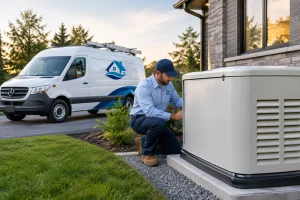
This is where coordinated planning matters. A heating replacement may also require a panel assessment, service upgrade, new dedicated circuits, or generator planning. Addressing those needs before installation helps prevent overloaded equipment and avoids surprises after the furnace is in place.
Efficiency Does Not Tell the Whole Story
It is easy to assume that an electric furnace is automatically the most efficient choice because nearly all electricity used at the unit becomes heat. At the furnace itself, that is true. But the operating result also depends on how electricity is generated and delivered, the local utility structure, the home’s insulation, thermostat settings, and the amount of heat the house loses on the coldest days.
Gas furnace efficiency is commonly measured by Annual Fuel Utilization Efficiency, or AFUE. A higher AFUE rating means more of the fuel is converted into usable heat rather than lost through venting. High-efficiency gas furnaces can perform very well, but their venting, drainage, and installation details need to be handled correctly.
For either option, the building envelope has a major effect on comfort. Air leaks around attic penetrations, poorly insulated walls, unsealed ductwork, and aging windows can make a new furnace work harder than it should. Before selecting equipment, it is worth looking at the home as a complete system rather than treating the furnace as an isolated appliance.
Consider the Ductwork and Airflow
A furnace can only perform as well as the duct system allows. Restricted return air, undersized supply ducts, disconnected runs, and dirty filters can cause hot and cold rooms regardless of whether the furnace is gas or electric.
During a replacement project, the contractor should evaluate airflow, filter access, return-air locations, and the condition of the blower system. This is especially important if the new furnace has a different capacity than the old unit or if the home has been renovated since the original system was installed.
For example, finishing a basement, adding a bedroom, or converting a garage can change the home’s heating load. A room addition may need duct modifications or a separate heating solution. Simply installing a larger furnace is not always the answer.
Safety and Maintenance Requirements
Both furnace types need maintenance, but the focus is different. Gas furnaces require attention to combustion safety, burner operation, venting, gas connections, condensate drainage, and carbon monoxide protection. Every home with fuel-burning equipment should have working carbon monoxide alarms in appropriate locations.
Electric furnaces do not create combustion gases, but they are not maintenance-free. Electrical connections, heating elements, relays, blower components, filters, and safety controls should be inspected. Loose electrical connections or failing components can affect performance and create safety concerns.
For either system, changing filters regularly is one of the simplest ways to protect airflow and equipment life. A clogged filter can contribute to overheating, higher energy use, and uneven comfort. If the furnace is noisy, cycling repeatedly, producing weak airflow, or leaving some rooms cold, it is better to have the system assessed than to wait for a complete failure.
Do Not Overlook Heat Pump Options
For some properties, the best answer is not strictly electric heat versus gas heat. A heat pump can provide heating and cooling through one system and may be paired with a gas furnace or electric backup heat. This type of setup can reduce reliance on the furnace during milder weather while maintaining dependable backup capacity for colder periods.
Whether a heat pump is suitable depends on the home, electrical service, ductwork, insulation, and heating goals. Cold-climate equipment has improved significantly, but proper load calculations and installation are still essential. A system should be selected based on the home’s real heating demand, not just square footage or the capacity of the equipment being replaced.
How to Make the Right Furnace Decision
Start with the conditions already present at the property. Is natural gas available? Is propane already in use? Does the electrical panel have capacity for electric resistance heat? Is the ductwork in good shape? Are there comfort issues that a furnace replacement alone may not solve?
A qualified assessment should include the home’s heat loss, existing equipment condition, ductwork, ventilation needs, electrical service, and future plans. Those plans matter. A homeowner considering an addition, electric vehicle charger, standby generator, or finished basement should account for those loads and changes now.
SDR Electric, Plumbing & Heating approaches furnace projects with the surrounding systems in mind. That means looking beyond the failed unit to identify the electrical, mechanical, and safety details that support reliable heat.
The right furnace is the one that is properly sized, safely installed, and compatible with the way your home is built and used. A clear on-site assessment gives you a practical path forward before the next cold stretch turns a heating concern into an urgent repair.