A tankless water heater can be an excellent upgrade when the old tank runs short during busy mornings, takes up needed utility-room space, or leaves a household waiting between showers. But tankless water heater reviews often focus on a homeowner’s first impression rather than the conditions that determine long-term performance. A unit that works well in one home may struggle in another if the incoming water is colder, the gas supply is undersized, the electrical service is limited, or the fixture demand is higher.
For homeowners, the useful question is not simply, “Which tankless heater has the best reviews?” It is, “Can this type of system deliver the hot water my home needs safely and reliably?” The answer depends on proper sizing, installation, water conditions, and a realistic look at how the household uses hot water.
What Tankless Water Heater Reviews Often Miss
Tankless water heaters heat water as it passes through the unit. Unlike a storage-tank heater, they do not keep a full tank of hot water ready for use. This can provide a long supply of hot water, but it does not mean unlimited hot water at every fixture, at every flow rate, in every season.
Most reviews are written shortly after installation. They may tell you whether the controls are easy to use, whether the homeowner noticed a faster recovery from shower to shower, or whether the unit is quiet. Those details have value, but they rarely explain the complete installation.
A strong review should answer practical questions: How many showers or fixtures run at once? Is the home supplied by a well or municipal water? Was the unit installed for natural gas, propane, or electric operation? Was the existing venting replaced? Did the electrical panel, gas piping, water lines, or condensate drainage need changes?
These details matter because tankless performance is tied directly to the system around it. The heater itself is only one part of the job.
Flow Rate Matters More Than “Endless” Hot Water
The most common source of disappointment is an incorrect expectation about flow rate. A tankless heater is rated for how much water it can heat while raising the water temperature by a certain amount. In colder climates, incoming water can be very cold, especially during winter. The colder the supply water, the harder the heater must work to provide a comfortable shower temperature.
For example, a household may expect to run two showers, a dishwasher, and a washing machine at the same time. Whether that is realistic depends on the unit’s capacity and the actual flow rates of those fixtures. High-flow showerheads, large soaking tubs, rain showers, and multiple bathrooms can create a much larger demand than a basic fixture count suggests.
This is why a proper assessment starts with household habits. A family that staggers showers may need a different solution than a home where several people get ready at once. A rental property, multi-unit building, or commercial washroom has another demand profile again.
Watch for Reviews That Mention Temperature Fluctuations
Temperature swings are not always a sign of a defective heater. They can happen when a fixture has very low flow, when several fixtures open and close quickly, or when the heater was not matched to the home’s peak demand. Some older fixtures and mixing valves can also affect how consistently hot water reaches the tap.
A qualified plumber can look at fixture flow, mixing valves, piping layout, and the heater’s settings before assuming the water heater is the problem. That diagnostic approach is especially useful when an existing tankless unit produces hot water but does not feel consistent.
Gas, Propane, or Electric: The Energy Source Changes the Job
Tankless systems are available in gas, propane, and electric models. Each can make sense in the right building, but the installation requirements are very different.
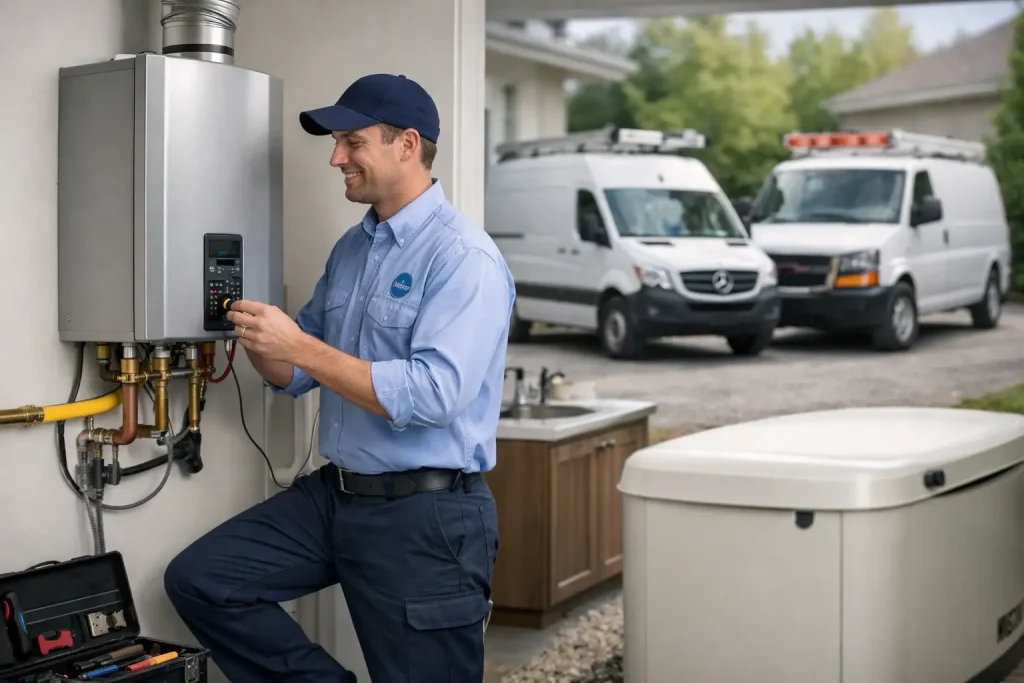
Gas and propane tankless heaters typically provide higher flow capacity for whole-home applications. However, they require correctly sized fuel piping, approved venting, combustion air considerations, and safe condensate management for high-efficiency models. Replacing a conventional tank heater with a gas tankless unit is not always a simple swap because the existing vent may not be suitable.
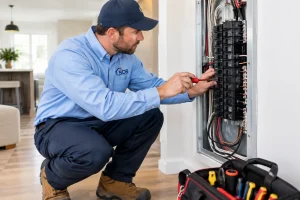
Electric tankless units do not require combustion venting, which can simplify placement in some homes. Their electrical demand, however, can be substantial. A whole-home electric tankless heater may require dedicated high-amperage circuits and may affect panel capacity. In a home with an older electrical service, a panel evaluation is a necessary part of planning, not an afterthought.
For properties with other major electrical loads – such as electric heating, central air conditioning, EV charging, a workshop, or a generator connection – it is particularly important to assess the entire electrical system. Integrated planning prevents a water-heating upgrade from creating capacity concerns elsewhere.
Water Quality Can Shape Long-Term Reliability
Water quality is a major factor that many tankless water heater reviews barely mention. Homes on well water may have hardness, sediment, iron, manganese, or other conditions that affect plumbing equipment. Even municipal water can be hard enough to leave mineral scale inside a heat exchanger over time.
Scale reduces heat transfer and can restrict water passages. The result may be reduced performance, error codes, unusual sounds, or shortened equipment life if maintenance is ignored. A tankless heater is not a reason to skip water treatment. In some properties, appropriate filtration, softening, or sediment control protects both the heater and the rest of the plumbing system.
Maintenance Is Part of Ownership
Tankless water heaters need routine attention. The exact maintenance schedule depends on the model, water quality, household use, and manufacturer requirements, but periodic flushing and inspection are common needs. The work should also include checks of venting, condensate components, gas connections where applicable, and safety controls.
Homeowners comparing reviews should be cautious with comments such as “maintenance-free.” No water-heating system is truly maintenance-free. A better expectation is that a properly selected, professionally installed unit can be kept dependable through regular service.
Installation Quality Has a Bigger Impact Than Many Reviews Suggest
A well-reviewed model can still perform poorly when installed without attention to the home’s plumbing, fuel, venting, drainage, and electrical requirements. Conversely, a properly sized and carefully installed unit can solve persistent hot-water problems for years.
A professional installation begins with a site review. The contractor should confirm the available fuel or electrical capacity, identify an approved vent route if needed, plan condensate drainage, check water pressure, and assess whether isolation valves and service access are in place. They should also consider where the unit will be located relative to bathrooms and kitchens, since long pipe runs can still create a wait for hot water at distant fixtures.
For renovation projects and new builds, tankless water heating can be planned alongside plumbing layouts, HVAC equipment, electrical upgrades, and water treatment. That coordinated approach is helpful when a mechanical room is being redesigned or when several systems share limited space.
When a Tankless Water Heater Is a Good Fit
Tankless water heaters are often a good fit for homes that need more consistent hot water for consecutive showers, want to reclaim floor space, or are completing a major renovation with updated utilities. They can also work well in smaller homes, accessory spaces, and applications where hot-water demand is predictable and properly calculated.
They may be less suitable when the home has limited gas capacity, insufficient electrical service for a whole-home electric model, difficult venting conditions, or untreated hard water. In some cases, a high-recovery storage-tank water heater, a hybrid system, or changes to fixture flow may better match the property.
The right choice is not about choosing a tankless system because reviews call it the best option. It is about matching the equipment to the building and the people using it.
Questions to Ask Before Choosing a Tankless System
Before moving forward, ask whether the proposed unit is sized for winter incoming-water temperatures and your peak simultaneous demand. Confirm what changes may be needed to venting, gas piping, electrical circuits, drainage, or water treatment. Ask how the unit will be serviced and whether the installation includes accessible isolation valves.
If your home has a well, recurring sediment, low water pressure, or water-softener concerns, bring that up early. Those conditions may affect the water heater decision as much as the number of bathrooms in the home.
A tankless water heater should feel like a planned improvement, not a gamble based on a star rating. SDR Electric, Plumbing & Heating can assess the connected plumbing, electrical, and mechanical requirements so the recommended system suits how your property actually operates. The most useful review is the one your household writes after a winter morning with every shower running as expected.