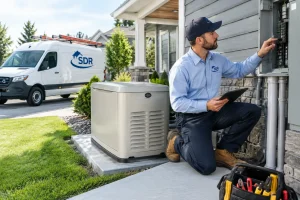
A winter outage is not just an inconvenience when your home depends on a well pump, sump pump, furnace, refrigerator, or medical equipment. Home standby generator reviews can help narrow the field, but the most useful reviews do more than rate a machine. They help you determine whether the generator, fuel supply, transfer equipment, and electrical system will actually support your home when the power goes out.
For homeowners in Eastern Ontario, backup power needs are often tied to real property systems: keeping water flowing from a well, preventing a sump basin from overflowing, protecting pipes during cold weather, and maintaining heat through an extended outage. The right standby generator is part of a planned electrical installation, not simply a piece of equipment placed beside the house.
What Home Standby Generator Reviews Should Tell You
A helpful review starts by identifying the type of home the generator is meant to serve. A compact unit may be appropriate for essential circuits in a smaller home, while a larger system may be needed for an all-electric home, a property with a well pump, or a household that wants more complete coverage. A review that calls a generator “powerful” without explaining the expected loads gives you only part of the picture.
Look for clear discussion of running watts and starting watts. Many motors need a higher amount of power for a brief moment when they start. Well pumps, sump pumps, refrigerators, freezers, air conditioners, and some heating equipment can create these startup demands. A generator that appears large enough on paper may still struggle if several motor loads start at once and the system has not been designed to manage them.
Good reviews also distinguish between essential-load backup and whole-home backup. Essential-load systems are designed to support selected circuits, such as heating controls, refrigeration, lighting, internet equipment, a sump pump, and a well pump. Whole-home systems are intended to power a broader range of household loads, though even these may use load management to prevent high-demand equipment from operating simultaneously.
Neither approach is automatically better. The right choice depends on how your home is wired, which systems matter most during an outage, and how much electrical demand the property creates.
Start With Your Actual Outage Priorities
Before comparing generator ratings, make a practical list of what must keep operating. For many households, the priorities are heat, water, food storage, basic lighting, internet access, a sump pump, and selected receptacles. For others, critical needs may include accessibility equipment, a home office, security systems, or livestock and outbuilding loads.
This is where generic reviews can fall short. A homeowner on municipal water may not need to account for a well pump. A rural home with a drilled well may treat that pump as essential. A home with a gas furnace still needs electricity for the blower motor and controls, while an all-electric home has a very different load profile. If your property includes a septic pump, water treatment equipment, or a detached garage, those details should be considered during planning.
A licensed electrician can complete a load assessment that turns those priorities into a realistic generator plan. This process identifies what each appliance and system requires, how loads interact, and whether controls are needed to stage larger equipment. It also helps avoid the common mistake of choosing a unit based on square footage alone. Square footage does not reveal how the home is heated, where its water comes from, or how many pumps and mechanical systems are connected.
Essential Circuits or Broader Coverage?
An essential-circuit installation can be a practical choice when the goal is to maintain the systems that protect the home and keep daily life manageable. It can also simplify decisions during an outage because the generator is not trying to carry every available load.
Broader coverage may make sense for homeowners who want more normal operation during a prolonged outage. That can include additional kitchen circuits, more lighting, selected cooling equipment, or other major household loads. However, broader coverage requires careful planning. The generator, service equipment, transfer switch, and fuel source all need to be matched to that goal.
Fuel Supply Matters as Much as Generator Size
Most permanently installed standby generators use natural gas or propane. Reviews frequently discuss runtime, but the more useful question is whether the fuel supply can support the generator under real operating conditions.
Natural gas can provide a continuous fuel source where service is available, but the gas line and meter capacity must be assessed. A generator is another major appliance, and its demand needs to be considered alongside furnaces, water heaters, ranges, fireplaces, and other gas-fired equipment.
Propane can be an effective solution for properties without natural gas service, but the tank size, available fuel volume, and expected outage duration matter. In a long outage, fuel planning becomes part of home preparedness. Cold weather and sustained high electrical demand can affect how much fuel the generator uses.
When reading reviews, be cautious with statements about fuel efficiency that do not state the electrical load being carried. Generator fuel use changes significantly between light household demand and periods when pumps, heating equipment, cooking appliances, or cooling equipment are running.
The Transfer Switch Is Not an Accessory
A standby generator needs an automatic transfer switch or related transfer equipment to safely separate the home from the utility supply during an outage. When utility power fails, the transfer equipment signals the generator to start and shifts the selected electrical loads to backup power. When utility power returns and stabilizes, it transfers the home back and allows the generator to shut down after a short cooldown period.
This equipment is central to safety. It prevents generator power from feeding back toward utility lines, which can create a serious hazard for utility workers and damage electrical equipment. It also determines which circuits receive backup power and how the system manages larger loads.
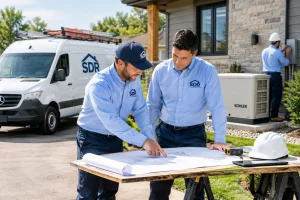
Reviews should explain whether the generator works with service-rated transfer equipment, selected-circuit panels, or load-management controls. These details may sound technical, but they directly affect whether the installation matches your outage plan. A qualified installer should review the service panel, existing electrical capacity, grounding and bonding requirements, equipment location, and the path for electrical and fuel connections before recommending a final setup.
Noise, Location, and Site Conditions Need a Real Look
Noise ratings are useful, but they are not the only consideration when choosing a location. A standby generator needs proper clearances for airflow, service access, exhaust, and safe operation. It should sit on a stable base and be positioned with attention to windows, doors, vents, property lines, snow accumulation, drainage, and nearby outdoor living areas.
A review may describe a unit as quiet, yet site conditions can make that experience different from one property to another. Sound can reflect off walls, travel toward a bedroom window, or become more noticeable in a closely spaced neighborhood. Installation planning should account for both the equipment requirements and how the generator will fit the property.
In areas that experience heavy snow, freeze-thaw conditions, and occasional flooding, the location also needs to remain accessible and protected. A generator that cannot be safely serviced or reached after a storm is less helpful when it is needed most.
Reliability Depends on Maintenance and Installation Quality
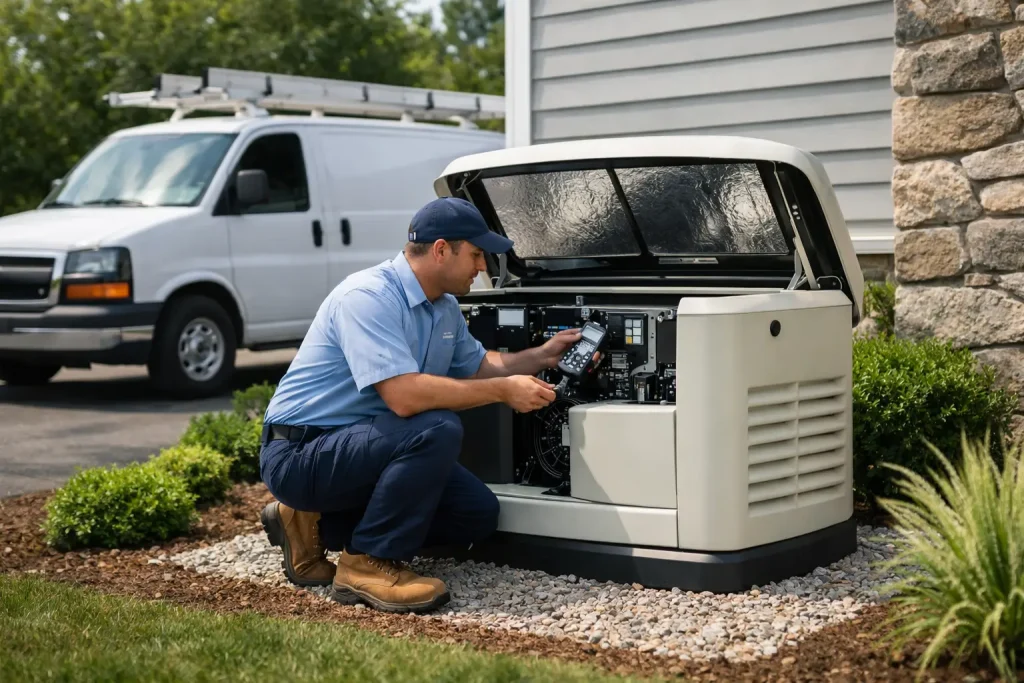
No standby generator is maintenance-free. Like other engine-driven equipment, it needs regular exercise, oil and filter service, battery checks, inspection of electrical connections, and attention to fuel-system components. Automatic exercise cycles help confirm the unit can start, but they are not a replacement for professional maintenance.
The most reliable reviews mention long-term ownership factors: how easily the generator can be serviced, whether the controls provide useful alerts, how the unit performs in cold conditions, and whether the owner follows a maintenance schedule. A well-sized generator installed without proper fuel capacity, electrical coordination, or ongoing service is still a weak backup-power plan.
It is also wise to ask how the generator will respond when several loads call for power at once. Load management may temporarily delay less critical equipment so that essential systems can continue operating. That is not a failure of the generator. It is a deliberate design feature that protects the system from overload.
Questions to Ask Before You Rely on a Review
Before treating any review as a recommendation for your home, ask whether it addresses your specific systems. Does it account for a well or sump pump? Does it explain which heating equipment will operate? Does it identify the fuel type and fuel-supply requirements? Does it clarify whether the recommendation is for essential circuits or wider home coverage?
Also ask whether the reviewer is discussing the generator alone or the complete installation. Backup power depends on more than the enclosure outside. Your electrical panel, transfer equipment, fuel connection, site preparation, and maintenance plan all have a role in how the system performs.
A generator should provide confidence during a difficult moment, not create new uncertainty. The most useful next step is to have your priority loads and property conditions reviewed by a licensed professional, so the backup-power system is designed around the way your home actually works.