A single leak can often be repaired. But when leaks, rusty water, weak pressure, and aging pipe materials keep appearing in different parts of the house, the issue may be larger than one fitting or fixture. Whole home repiping replaces the aging water supply piping throughout the property, giving your plumbing system a reliable foundation instead of asking you to keep reacting to the next failure.
For established homes across Eastern Ontario, this work can be a practical long-term upgrade, especially where older galvanized steel, deteriorating copper, or failing plastic piping is part of the system. The right decision starts with a clear assessment of what is actually happening behind the walls and below the floors.
Signs Your Plumbing May Need More Than a Repair
Pipes do not always fail dramatically. Often, they show a pattern of smaller problems first. A pinhole leak repaired in one area may be isolated. Several leaks over a short period, however, can point to pipe walls that are thinning or corroding throughout the home.
Water quality and pressure changes can also provide useful clues. Brown, yellow, or metallic-tasting water, particularly after water has been sitting in the pipes, may indicate internal corrosion. Low water pressure at multiple fixtures can result from mineral buildup or rust narrowing the inside of older supply lines. If pressure is poor at one faucet only, the fixture or its shutoff valve may be the problem. If it affects showers, sinks, and appliances, the supply piping deserves a closer look.
Watch for damp drywall, staining on ceilings, musty odors, unexplained increases in water use, or a water meter that continues moving when no water is being used. These conditions do not automatically mean the entire house needs to be repiped, but they do warrant prompt investigation. Hidden water damage can affect framing, insulation, finishes, and electrical components.
Homes with galvanized steel pipe are commonly evaluated for repiping because that material can corrode from the inside over time. Some older homes also have pipe materials, fittings, or previous repairs that no longer provide dependable service. An inspection helps identify what is installed, where the vulnerable sections are, and whether a targeted replacement is still sensible.
When Whole Home Repiping Is the Better Choice
The decision between repairing a section and replacing the full system comes down to condition, access, and the likelihood of future failures. A repair is often the appropriate choice when damage is limited to a known section caused by freezing, impact, or a faulty connection. There is no benefit in replacing sound piping simply because one accessible line has a problem.
Whole home repiping becomes more reasonable when the system has repeated leaks, widespread corrosion, poor performance, or incompatible pipe materials from multiple past renovations. It can also make sense during a major remodel, when walls and ceilings are already open and plumbing routes are easier to access.
A complete repipe is not only about replacing old pipe. It is an opportunity to correct undersized lines, improve shutoff locations, organize pipe routing, and ensure the plumbing layout supports the household’s actual water use. A growing family, added bathroom, finished basement, or new laundry area may place more demand on a system designed for a much smaller home.
Material Selection Depends on the Home
Modern repiping commonly uses copper, PEX, or a combination of approved materials. Each option has trade-offs.
Copper is durable and familiar in many homes, while PEX is flexible and can reduce the number of fittings required in certain runs. PEX can also be useful where routing new lines through finished spaces is difficult. The proper material and installation method depend on the home’s layout, local code requirements, water conditions, mechanical room configuration, and the scope of the project.
Water quality matters here. Properties served by private wells may have hardness, iron, acidity, or other conditions that influence plumbing components over time. If water treatment equipment is needed or existing equipment is due for review, it is wise to consider that work alongside the repiping plan. The water supply, treatment system, well pump, pressure tank, and interior plumbing all affect one another.
What to Expect During a Whole Home Repiping Project
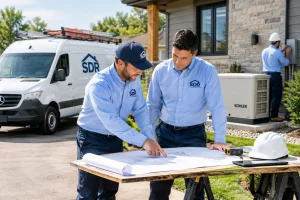
A well-planned project begins with an on-site review. The plumbing team identifies the current pipe materials, accessible routes, fixture locations, main shutoff, water heater connections, and any concerns involving walls, ceilings, crawl spaces, or basements. They should also discuss the household’s daily routine, since temporary water interruptions need to be planned carefully.
The work typically involves isolating and removing or abandoning old supply lines where appropriate, then installing new hot and cold water lines to fixtures throughout the home. In many cases, new pipes can be routed through basements, utility spaces, closets, or wall cavities without opening every surface. Some access openings may still be necessary, particularly in homes with finished basements, slab construction, or limited mechanical access.
Good communication matters because repiping affects several spaces at once. Homeowners should know which areas will be accessed, when water will be shut off, how long individual stages are expected to take, and who is responsible for any finish restoration after plumbing access is complete. Protecting work areas, keeping lines organized, and testing the system before walls are closed are basic parts of professional project planning.
Testing Is Not a Final Detail
New piping should be pressure-tested and inspected as required before the work is considered complete. This step verifies that connections hold under pressure and that the system is ready for normal use. Fixtures should also be checked for proper flow, temperature delivery, and shutoff operation.
If a renovation includes electrical, heating, cooling, or generator work, coordination can prevent unnecessary rework. For example, plumbing routes may share limited space with ductwork, electrical wiring, or new mechanical equipment. Planning these systems together is especially valuable in utility rooms, additions, basement renovations, and new construction.
Preparing Your Home and Household
Repiping is disruptive, but preparation reduces the stress. Clear personal items from under sinks, around the water heater, and from closets or utility spaces that may provide pipe access. If rooms need access through walls or ceilings, move furniture away from the work area and protect belongings from dust.
It is also helpful to plan for periods without water. Fill a few containers for drinking and basic washing if advised by the project team, and arrange schedules around the expected shutoff windows. Households with young children, home-based work, medical needs, or tenants should raise those considerations early so the work can be organized responsibly.
Do not overlook related equipment. An older main shutoff valve, aging water heater connections, corroded fixture stops, or an unreliable well pressure system can undermine the benefit of new interior lines. These items do not always need replacement, but reviewing them during the assessment helps avoid leaving a weak point connected to a new plumbing system.
The Long-Term Value Is Reliability
The main benefit of whole home repiping is not simply new pipe. It is fewer unknowns behind finished walls, more consistent water delivery, and a plumbing system that is easier to service going forward. Clear shutoffs and organized routing can make a future fixture replacement or repair less invasive.
For landlords and property owners, dependable plumbing also protects the building from water-related disruption. For homeowners planning to stay in place, it can remove the ongoing concern that a hidden line will fail during a weekend, a winter cold spell, or while the home is unoccupied.
SDR Electric, Plumbing & Heating Inc. can assess aging plumbing as part of the larger mechanical picture, helping homeowners understand whether a focused repair, phased upgrade, or full repipe is the sensible path. The best next step is an evaluation before the next small leak becomes a much larger property problem.