A winter outage can quickly affect more than lights and internet. If your home relies on a well pump, sump pump, electric heat controls, refrigeration, or a septic system, losing power can interrupt essential daily functions. Home generator installation Ontario homeowners can depend on starts with a clear plan for what must keep running, not simply choosing the biggest unit available.
A properly installed standby generator can restore power automatically when the utility supply fails and shut down safely when power returns. The equipment matters, but so do the electrical design, fuel source, site location, permits, and connection to the systems that protect your property.
Start With the Loads That Matter Most
The first decision is whether you need selected-circuit backup or broader whole-home coverage. There is no one right answer. A smaller system can support critical equipment during an outage, while a larger system may be appropriate for a home with electric appliances, a well, a sump pump, or occupants who need reliable heating and cooling equipment.
Critical loads often include the furnace or boiler controls, refrigerator and freezer, well pump, sump pump, septic pump, selected lighting, internet equipment, and a few receptacles. In some homes, a garage door opener, medical equipment, or water treatment system also belongs on the backup list.
A load assessment is more reliable than estimating by square footage. Motors and pumps can require a significant surge of power when starting, even if their normal running demand is modest. Electric ranges, dryers, water heaters, baseboard heat, and central air conditioning can also change the generator size required. A qualified installer should review the actual equipment in the home, identify starting loads, and discuss which appliances can run at the same time.
Selected Circuits or Whole-Home Backup?
Selected-circuit backup is practical when the goal is to maintain essentials and manage generator capacity carefully. A dedicated emergency panel or transfer equipment supplies only the circuits identified during planning. This approach works well when homeowners are comfortable leaving high-demand appliances off during an outage.
Whole-home backup offers greater convenience, but it still involves load management. Even a whole-home system may be programmed to prioritize or temporarily shed certain large loads so the generator is not overloaded. For example, the system may delay air conditioning or an electric appliance while a well pump starts. The right approach depends on your equipment, household needs, and how long outages typically last in your area.
Why the Transfer Switch Is Not Optional
A standby generator must never feed power back into the utility system through an improvised connection. This can endanger utility workers, damage equipment, and create a serious fire or shock hazard. The transfer switch is the control point that safely separates utility power from generator power.
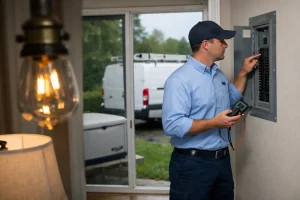
When the utility supply fails, an automatic transfer switch detects the outage, starts the generator, and transfers approved loads to generator power. When utility power is stable again, it transfers the home back and allows the generator to complete its shutdown cycle. Manual transfer switches are also available for certain applications, but they require someone to be present to operate them.
Transfer equipment should be selected and installed as part of the electrical design, not treated as an add-on. Panel capacity, service configuration, existing circuits, generator output, and future renovation plans can all affect the best setup. If you are adding a heat pump, finishing a basement, installing a well pump, or planning an electric vehicle charger, mention it during the assessment. Coordinating these projects early can prevent unnecessary rework later.
Fuel Supply and Site Planning Matter
Standby generators commonly operate on natural gas or propane. The better option depends on what is available at the property and whether the existing fuel system can support the generator alongside other appliances.
Natural gas can provide a continuous fuel source where service is available. Propane can be an effective choice for rural homes and properties without natural gas, but the tank, regulator, piping, and anticipated outage duration must be considered. A generator installation may require fuel-system upgrades or coordination with heating equipment, water heaters, fireplaces, or other gas appliances already using the same supply.
Site location is equally important. The generator needs an approved clearance from doors, windows, vents, combustible materials, and other building features. It also needs a stable base, appropriate drainage, service access, and consideration for noise near bedrooms or neighboring properties. Snow accumulation, roof runoff, prevailing winds, and landscaping can affect a location that looks suitable at first glance.
A proper site review prevents common problems such as placing equipment where exhaust could enter the home, where access is difficult during a storm, or where standing water could compromise the installation.
Permits, Codes, and Licensed Work
Home generator installation in Ontario involves electrical work and may also involve gas or propane piping. Permits, inspections, and code requirements exist to protect the home, its occupants, and the people working on nearby utility infrastructure.
The exact approvals required depend on the property and scope of work. Electrical connections and transfer equipment must be installed to applicable electrical requirements. Fuel connections must be completed by properly qualified professionals, and generator placement must follow manufacturer instructions and local requirements. A complete installation also includes correct grounding, overcurrent protection, disconnects, wiring methods, and labeling.
This is why a generator project benefits from coordinated electrical, heating, and fuel-system planning. A generator may appear to be one piece of equipment outside the house, but it connects to several systems that must work together safely. SDR Electric, Plumbing & Heating Inc. approaches these projects with that full-property view, especially when backup power affects pumps, heating controls, or mechanical-room equipment.
Plan for the Equipment You Cannot Afford to Lose
For many Eastern Ontario properties, water is the main reason to install backup power. A well pump cannot deliver water without electricity, and a sump pump cannot protect a basement during a prolonged outage if it has no power source. If either system is on your priority list, the generator assessment should account for the pump’s starting demand, voltage, circuit requirements, and any control equipment.
Heating is another key consideration. A gas, propane, oil, or wood heating system may still require electricity for blowers, circulators, ignition, zone controls, or thermostats. A generator can keep those components operating, but only if the correct circuits are included and the generator is sized for the connected loads.
Do not overlook the less obvious equipment. Water treatment systems, septic pumps, security systems, garage-door openers, routers, and refrigerated medications can all change what “essential backup” means for your household. A practical plan ranks these needs so the system is designed around real use during an outage.
Installation Is Only the Beginning
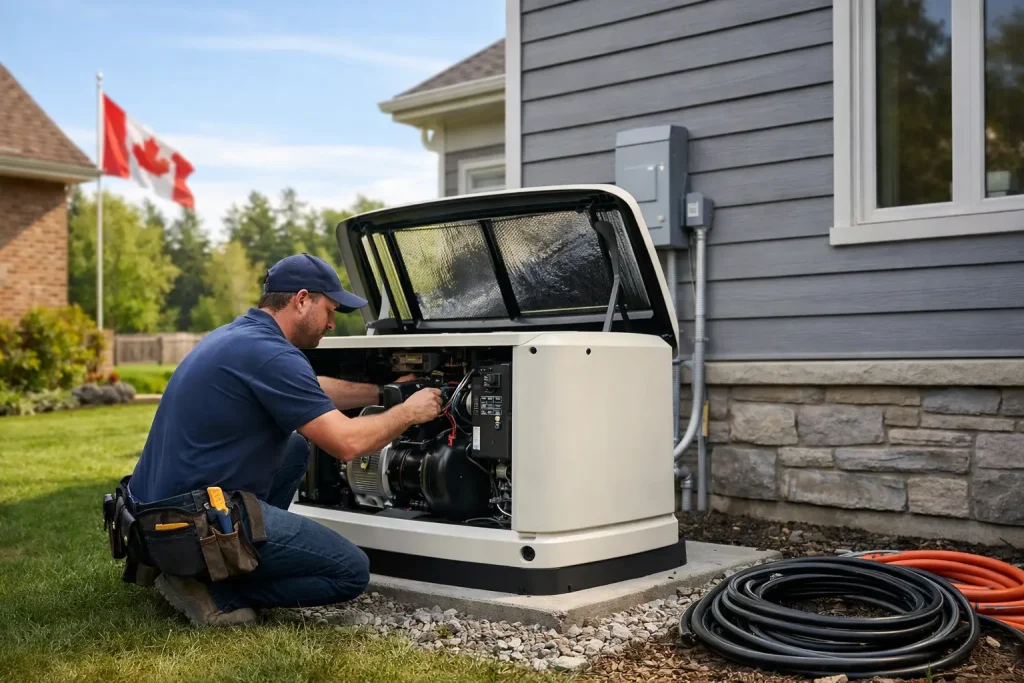
Once the generator is installed, it needs routine attention. Most standby units run an automatic exercise cycle, but that does not replace professional maintenance. Oil levels, battery condition, air intake, electrical connections, enclosure condition, error codes, and fuel supply should be checked according to the manufacturer’s schedule.
Homeowners should also know what normal operation looks and sounds like. Keep the area around the generator clear of leaves, snow, stored materials, and overgrown vegetation. After an outage, note whether the system started and transferred properly. If it did not, avoid repeated reset attempts without understanding the fault. A service technician can diagnose the issue safely and protect the generator from further damage.
It is also wise to revisit the backup plan after major changes to the home. A new heat pump, renovated kitchen, additional freezer, finished suite, or replacement well pump can alter electrical demand. Generator capacity that was appropriate several years ago may need to be reassessed.
Common Questions About Home Generator Installation Ontario
Will a generator run my entire house?
It can, but whether it should depends on the home’s electrical demand and the generator’s capacity. Many homeowners choose to back up essentials rather than every high-demand appliance. Load management can allow a larger system to support more of the home without operating all major loads at once.
Can I use a portable generator instead?
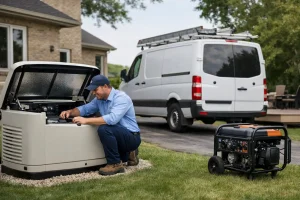
Portable generators can provide temporary power for limited needs, but they require manual setup, safe outdoor placement, properly rated connection equipment, and fuel handling during an outage. They must never run in a garage, basement, enclosed porch, or near openings where exhaust can enter the home. A permanently installed standby generator is designed for automatic operation and is often better suited to extended outages or properties with critical pumps and heating equipment.
How often should a standby generator be serviced?
Follow the manufacturer’s maintenance schedule and arrange service based on run hours, age, and operating conditions. Service is particularly valuable before severe-weather seasons and after a lengthy outage. Regular maintenance helps ensure the unit will start when it is needed rather than revealing a problem during an emergency.
The best backup-power system is one that reflects how your home actually operates. Before selecting equipment, make a short list of the systems that protect your water, heat, food, safety, and comfort. That list gives your installer the information needed to build a safe, dependable plan for the next outage.