A plumbing leak does not always begin with water running across the floor. It may start as a faint musty smell below a bathroom vanity, a water bill that rises without explanation, or a sump pump that seems to run more often than usual. Knowing how to identify plumbing leaks early gives you a better chance of limiting water damage, mold growth, and repairs to finishes such as flooring, drywall, and cabinets.
Some leaks are obvious and can be isolated at a fixture. Others are hidden behind walls, under slabs, or along water lines serving an appliance. The goal is not to open walls or take apart piping yourself. It is to recognize the warning signs, take a few safe checks, and know when a licensed plumbing professional should locate and repair the source.
Start With the Signs You Can See and Hear
Begin with a slow walk through the property. Check kitchens, bathrooms, laundry areas, utility rooms, mechanical rooms, and any location with exposed plumbing. Look inside vanity cabinets, around toilet bases, beneath sinks, and behind appliances where accessible. A leak can leave a small pool of water, but it can also show up as warped cabinet material, peeling paint, swollen baseboards, or stains on a ceiling below a bathroom.
Pay attention to sounds as well. A steady hissing or faint rushing sound when no fixture is running can point to water moving through a damaged pipe or a toilet that is continually refilling. Dripping behind a wall may be difficult to hear during the day, so a quiet evening is often the best time to listen near bathrooms, kitchens, and mechanical spaces.
Water pressure changes can provide another clue. A sudden drop in pressure throughout the home may indicate a supply-side issue, although it can also be caused by a well pump, pressure tank, water treatment system, or municipal supply concern. Low pressure at one faucet is more likely to be a localized issue, such as a clogged aerator, cartridge, shutoff valve, or fixture connection. The location and pattern matter.
How to Identify Plumbing Leaks With Your Water Meter
A water-meter check is one of the simplest ways to confirm whether water may be escaping somewhere in the plumbing system. First, make sure no one is using water. Turn off faucets, avoid flushing toilets, pause the dishwasher and washing machine, and confirm that outdoor hoses or irrigation equipment are not running.
Find the water meter and note the position of the low-flow indicator or record the meter reading. Many meters have a small dial, triangle, or star-shaped indicator that moves when even a small amount of water passes through the system. Wait 30 to 60 minutes without using any water, then check the meter again. If the indicator has moved or the reading has changed, there may be a leak.
This test is useful, but it does not tell you where the leak is. A running toilet, leaking humidifier line, failed water softener component, underground service line issue, or hidden pipe leak can all produce meter movement. If the meter remains still but you see staining or damp materials, the issue could be a drain leak that only appears when a fixture is used. Test that fixture separately by running water and watching the piping below it.
If your home uses a well, a pressure pump that cycles when no water is being used can also be a warning sign. Well and pressure systems have several possible causes for cycling, so it is best to have the system assessed rather than assuming the pump itself has failed.
Check Toilets, Fixtures, and Appliance Connections
Toilets are among the most common sources of silent water loss. Remove the tank lid and listen for intermittent filling. If water is constantly trickling into the bowl or the tank refills on its own after a flush, a worn flapper, fill valve, or overflow issue may be allowing water to pass. Food coloring placed in the tank can help reveal a leaking flapper: if color appears in the bowl without flushing, water is leaking through the tank.
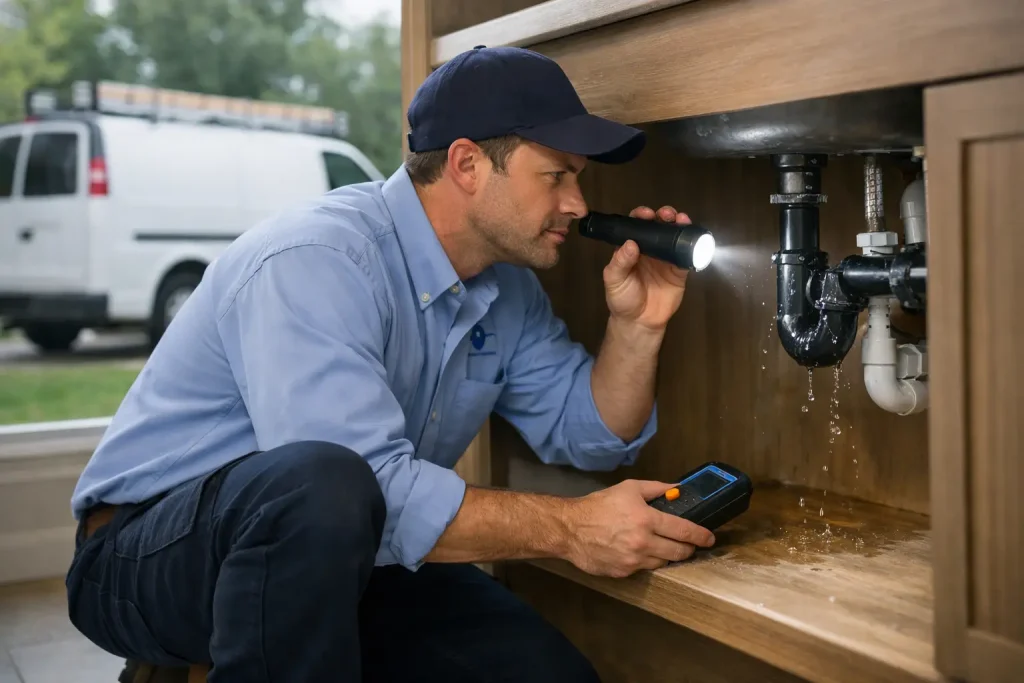
Under sinks, run both hot and cold water while checking the supply lines, shutoff valves, drain connections, and trap. Use a dry paper towel around fittings to detect moisture that is too small to form a visible drip. Do not overtighten fittings, especially on older plumbing or plastic connections. A fitting that looks loose may have a damaged washer, corroded thread, or cracked component that needs replacement.
Check around washing machines, dishwashers, refrigerators with water dispensers, and water heaters. Look for corrosion, dampness, mineral deposits, or discoloration around valves and hoses. Water heater leaks deserve prompt attention because a small drip at a connection can develop into a larger failure. If you see water around electrical components, do not touch the equipment or attempt a repair. Shut off power only if it can be done safely and contact a qualified professional.
Watch for Hidden-Leak Warning Signs
Hidden leaks often announce themselves through changes in the building rather than a visible drip. A yellow or brown ceiling stain, soft drywall, unexplained mold, loose flooring, or a persistent mildew odor should not be ignored. These signs may come from a plumbing line, a drain connection, a roof issue, or condensation from HVAC equipment. The source needs to be confirmed before repairs to the finish are made.
In colder Eastern Ontario weather, frozen or partially frozen pipes can create a delayed leak. A pipe may split during a freeze but not release significant water until temperatures rise and the line thaws. If you have had frozen plumbing, inspect exposed pipes, utility areas, crawl spaces, and any rooms that were unusually cold. Even after water service returns, continue checking for dampness over the next day or two.
Outdoor leaks can be harder to spot. Look for unusually green patches of grass, soggy ground near the water service line, wet areas around hose bibs, or a faucet that drips after it is shut off. Before winter, outdoor faucets and hoses should be properly shut down and drained where applicable. A damaged exterior faucet or line can leak inside a wall as well as outdoors.
What You Can Do Safely While You Wait for Help
If you find an active leak, the first priority is controlling the water. For a sink, toilet, or appliance connection, use the nearby shutoff valve if it operates normally. For a larger or unknown leak, shut off the main water supply to the property. Every homeowner and property manager should know where this valve is located and make sure it remains accessible.
Move valuables away from the affected area, place a container under a minor drip if safe, and take photos of visible damage for your records. Avoid using fixtures connected to a suspected drain leak until the issue is assessed. If water is near outlets, wiring, appliances, or electrical panels, stay clear of the area and arrange help right away. Water and electricity require careful, coordinated handling.
Do not rely on tape, sealants, or repeated tightening as a permanent solution. These temporary measures can conceal the source while water continues to damage surrounding materials. A proper repair should address the failed pipe, fitting, valve, fixture, or system component and confirm that related equipment is operating safely.
When to Call a Plumbing Professional
Call for service promptly when a meter test indicates ongoing water use, a ceiling or wall is wet, a toilet will not stop running, water pressure changes suddenly, or you cannot identify the source of moisture. Immediate help is especially important for burst pipes, water near electrical equipment, a leaking water heater, sewage backup, or a failed sump pump during wet conditions.
A qualified plumber can trace the leak, assess connected equipment, and recommend repairs based on the actual condition of the system. For homes and properties with interconnected plumbing, heating, electrical, well, sump, or water-treatment concerns, SDR Electric, Plumbing & Heating can help coordinate the work so the full issue is addressed rather than just the visible symptom.
A small stain or a moving meter is worth investigating while the problem is still contained. Acting early protects more than piping – it helps protect the structure, air quality, and day-to-day reliability of your property.