A finished basement, stored belongings, furnace, electrical panel, and water heater can all be at risk when the primary sump pump stops at the worst possible time. A properly planned sump pump backup installation gives your home a second line of defense when a storm causes a power outage, the main pump fails, or incoming groundwater overwhelms the system.
For homeowners in Eastern Ontario, this is more than a convenience upgrade. Heavy rain, spring thaw, frozen discharge lines, and sudden outages can create the exact conditions that put a basement at risk. The right backup system depends on the home’s water source, sump setup, electrical capacity, and how much water the property typically handles.
Why a Primary Sump Pump Is Not Enough
A primary sump pump does important work, but it has limits. Most systems rely on household power, and that power is often lost during severe weather. The pump can also fail because of a stuck float switch, a worn motor, a clogged intake, a blocked discharge line, or a pump that is simply undersized for the amount of water entering the pit.
A backup pump is designed to take over when the primary unit cannot keep up or cannot run. It does not eliminate the need to maintain the main pump. Instead, it creates redundancy for a system that protects some of the most important parts of your property.
Warning signs that a backup may be worth considering include a sump pit that runs frequently during rain, a history of water in the basement, a finished lower level, or an area where outages are common. Homes with a well should also think carefully about backup power, since an outage can affect both the sump pump and the home’s water supply.
Choosing the Right Sump Pump Backup System
The best choice is not always the largest pump or the most complicated setup. A qualified installer should first assess the pit, existing pump, discharge route, electrical supply, water source, and drainage conditions around the home.
Battery Backup Sump Pumps
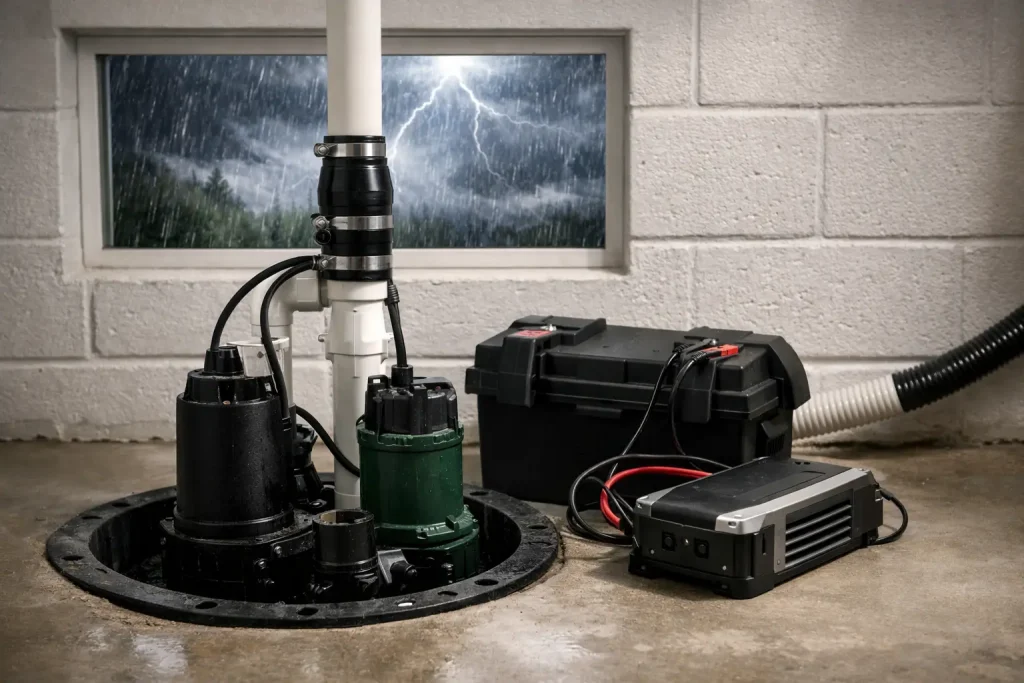
A battery backup system uses a secondary DC pump and a dedicated battery. When the main pump loses power or cannot manage the water level, the backup pump starts automatically.
Battery backup systems are a practical choice for many homes because they work independently of municipal water pressure. They can continue operating during an outage as long as the battery has enough stored power. Their runtime depends on battery condition, pump demand, and how much water is entering the pit. A long outage combined with high groundwater can drain a battery faster than homeowners expect.
A good installation includes an alarm or monitoring feature that alerts you when the backup is running, when the battery is low, or when there is a charging issue. Without an alarm, a homeowner may not realize the primary pump has failed until the backup battery is already under heavy demand.
Water-Powered Backup Pumps
Water-powered backup pumps use municipal water pressure to create suction and move sump water out of the pit. Because they do not rely on electricity or batteries, they can provide extended protection during a power outage.
This option is only suitable where dependable municipal water is available. It is generally not an appropriate solution for homes that rely on a well, because well pumps need electricity to produce water pressure. Water-powered systems also need careful plumbing design, appropriate backflow protection, and installation that meets local requirements.
For the right property, a water-powered backup can be an effective part of a broader flood-prevention plan. For another home, a battery system or generator-backed primary pump may be the better fit.
Generator-Backed Sump Pump Protection
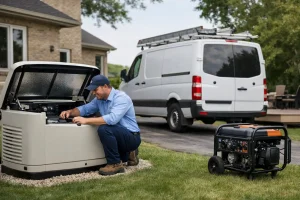
A standby generator can keep a primary sump pump operating during an outage, along with selected electrical loads such as heating equipment, refrigeration, lighting, and well pumps. This approach can be especially valuable for homes with frequent or extended outages.
A generator is not automatically a substitute for a backup sump pump. The primary pump can still fail mechanically, and a generator may have a startup delay. In homes with a high water table or a finished basement, it can make sense to combine a reliable primary pump, a backup pump, and properly planned generator power.
What a Proper Sump Pump Backup Installation Includes
A backup system should be treated as a complete installation, not simply a pump placed beside the existing one. The details determine whether it performs when conditions are at their worst.
The sump basin must be large enough to accommodate the equipment and allow the floats to move freely. If the pit is too small, pumps and switches can interfere with one another. A backup pump should be positioned so it activates at a higher water level than the primary pump, allowing the main unit to handle normal operation first.
The discharge piping also needs close attention. Water must be directed away from the foundation without creating a route for water to return to the pit. Check valves help prevent pumped water from flowing backward after a pump shuts off. In cold weather, exterior discharge sections must be planned to reduce the risk of freezing, which can stop even a healthy pump from moving water.
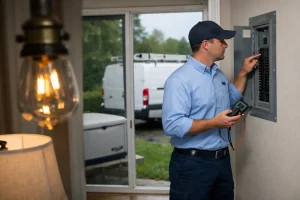
Electrical work matters as well. A primary sump pump should have a reliable, properly installed power connection, and backup charging equipment needs a suitable outlet and safe location. Extension cords, overloaded circuits, and improvised wiring are not dependable answers for equipment intended to protect a basement during an emergency.
A licensed, coordinated plumbing and electrical team can assess these pieces together. That is particularly useful when the project also involves a generator, an electrical panel upgrade, a finished basement renovation, or drainage-related concerns.
Common Installation Mistakes to Avoid
The most common mistake is waiting until a storm is already in the forecast. Backup systems need time for proper assessment, installation, testing, and any required adjustments to piping or electrical service.
Another issue is assuming every backup pump provides the same level of protection. A small battery unit may be suitable for brief outages and moderate water flow, but it may not be enough for a property that receives heavy groundwater. Likewise, selecting a powerful pump without addressing a restricted discharge line will not solve the underlying problem.
Homeowners should also avoid placing too much trust in a single alert. An alarm is useful, but it is not a maintenance plan. Batteries age, float switches can stick, and debris can collect in the sump pit. A system should be tested regularly, especially before spring thaw and periods of heavy rainfall.
Maintenance Keeps the Backup Ready
A backup system needs occasional attention even when it has never been called on. Check that the primary pump starts and stops correctly by slowly adding water to the pit. Confirm that the discharge is moving water outside and that it is not draining back toward the foundation.
For battery systems, inspect the battery and charging indicator according to the manufacturer’s instructions. Keep the area around the battery clean and dry, and replace the battery when it reaches the end of its expected service life. Do not wait for an alarm during an outage to learn that it no longer holds a charge.
It is also wise to test audible alarms and make sure household members know what they mean. A backup alarm is a prompt to investigate, not something to silence and forget. If the backup pump is running, the primary system may have lost power, failed, or become overwhelmed.
When to Call a Professional
Call for service if your sump pump runs continuously, cycles on and off too often, makes unusual noises, fails to discharge water, or leaves standing water in the pit. These issues can point to a pump problem, a float issue, a blocked line, or changing drainage conditions around the property.
A professional assessment is especially worthwhile before finishing a basement, replacing an aging primary pump, adding a standby generator, or purchasing a home with an existing sump system of unknown condition. SDR Electric, Plumbing & Heating can coordinate the plumbing and electrical work needed to plan a backup solution that suits the property rather than applying a one-size-fits-all fix.
The best time to prepare is when the sump pit is dry and the forecast is calm. A tested backup system gives you a practical layer of protection when the weather, power supply, or primary pump does not cooperate.