A faucet that suddenly spits air, a shower that fades to a trickle, or a pressure tank that clicks on and off every few seconds can turn an ordinary morning into a property-wide problem. Well pumps are the working center of a private water system. When they are not operating correctly, the cause may be the pump itself, but it can also involve the pressure tank, electrical controls, plumbing, or the well water supply.
For homeowners with private wells, knowing what the system is telling you can help prevent a minor service issue from becoming a no-water emergency. The right response is not always a full pump replacement. Careful troubleshooting matters because several connected components must work together to bring water from the well to the house safely and reliably.
How a Well Water System Works
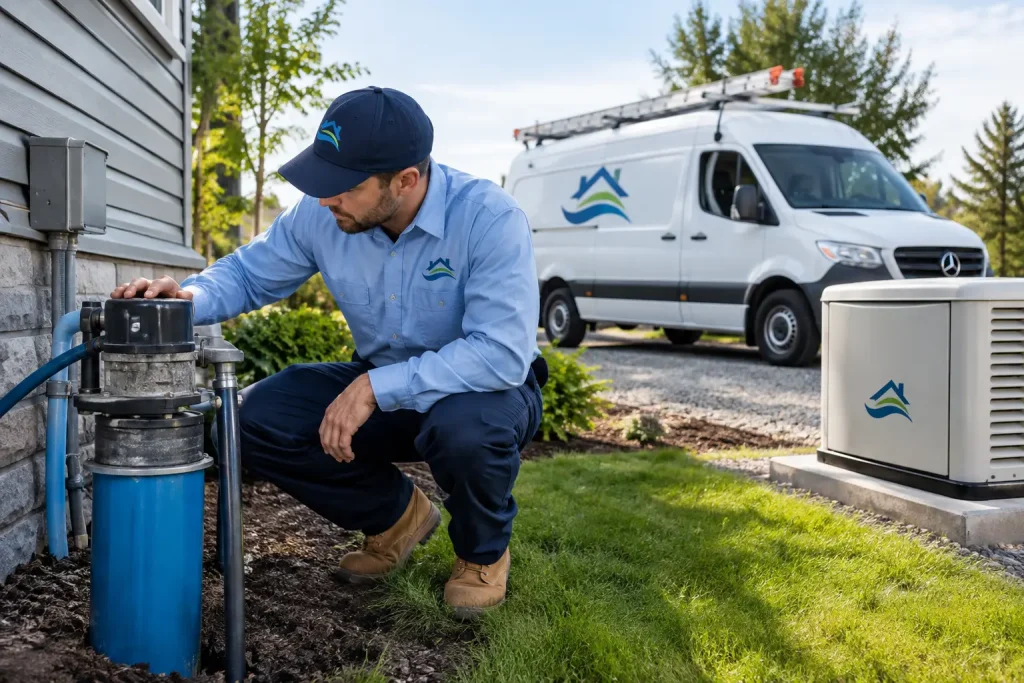
A typical private well system has more moving parts than most people see. A submersible pump is installed deep inside the well and pushes water upward through a pipe to the home. In some shallow-well applications, a jet pump may be installed above ground and draw water from the well instead. The pump is controlled by a pressure switch, while a pressure tank stores a small amount of pressurized water so the pump does not need to start every time someone opens a tap.
Water may then pass through treatment equipment such as a sediment filter, iron filter, UV system, or water softener before it reaches fixtures and appliances. Each component affects water delivery. A clogged filter can reduce flow. A failed pressure switch can stop the pump from starting. A waterlogged pressure tank can make the pump short-cycle and wear out sooner.
This is why a low-pressure complaint should be investigated as a full system issue, not treated as proof that the pump has failed.
7 Signs Your Well Pumps Need Attention
1. No water at any fixture
If every faucet, toilet, and shower has lost water, start by checking whether there is a wider power outage or a tripped breaker. If the home has power but the well system does not, the issue could be a failed pump, control box, pressure switch, wiring fault, or a problem at the electrical panel.
Do not repeatedly reset a breaker that trips again. A recurring trip can point to an electrical fault or a failing pump motor. Electrical work around a well system should be handled by a qualified technician because these systems commonly involve 240-volt circuits and equipment exposed to moisture.
2. Water pressure is lower than usual
Pressure that gradually weakens may be caused by a partially clogged filter, sediment buildup, an issue with water treatment equipment, a failing pump, or a restriction in the plumbing. If the pressure is poor only at one faucet or shower, the issue may be local to that fixture. If it affects the entire property, the well system deserves closer attention.
Notice whether pressure improves after the system rests. That detail can help distinguish between a flow restriction and a pump that is struggling to keep up with demand.
3. The pump runs constantly
A well pump should run long enough to build system pressure, then shut off. If you can hear it operating for extended periods when no water is being used, there may be a leak in the plumbing, a pressure tank problem, a damaged drop pipe, a stuck pressure switch, or a pump that cannot reach its shutoff pressure.
Constant operation puts strain on the pump motor and uses unnecessary electricity. It should be assessed promptly, especially if pressure is also inconsistent.
4. The pressure tank cycles on and off rapidly
Short-cycling happens when the pump starts and stops in unusually quick intervals. Often, the pressure tank has lost its proper air charge or its internal bladder has failed. Instead of storing usable pressurized water, the tank fills with water and gives the pump almost no buffer between demand and restart.
This issue is easy to overlook because water may still come out of the tap. But frequent cycling is hard on pump controls and motors. Addressing it early can protect other parts of the system.
5. Air sputters from faucets
A brief burst of air after plumbing work can be normal. Ongoing sputtering, however, may indicate that air is entering the system. Depending on the equipment and well setup, that can be linked to a low water level, a leak in the suction line on a jet-pump system, or a developing pump or piping issue.
If the water also looks cloudy or the pressure surges, avoid assuming the issue will clear on its own. Changes in water delivery should be checked before they lead to an interruption in supply.
6. Water quality changes with pressure problems
Cloudy water, sand or grit in fixtures, new staining, or an unusual odor can have several causes. Some are related to groundwater chemistry and require water treatment adjustments. Others may point to sediment entering the system, a damaged component, or conditions in the well that need attention.
A pump service call and water-quality testing can serve different purposes, but they often work best together when both delivery and water appearance have changed. Treatment equipment should not be used to mask a mechanical problem.
7. New noises, vibration, or electrical issues appear
Clicking from the pressure switch, humming at the pump controls, vibration near a jet pump, or breakers that trip when the pump starts are all useful warning signs. A single click at normal start-up may be expected. Repeated clicking, buzzing, heat, or a burning smell is not.
Turn off the affected equipment if it appears unsafe, keep the area dry, and arrange professional service. Waiting on an electrical warning sign can create greater equipment damage and a real safety risk.
Choosing Between Repair and Replacement
The practical choice depends on the source of the problem. A worn pressure switch, failed gauge, blocked filter, damaged tank bladder, or electrical connection may be repairable without replacing the well pump. If the pump motor has failed, the pump cannot maintain pressure, or a unit is near the end of its service life, replacement may be the more reliable long-term solution.
Pump selection should match the well’s depth, available yield, household demand, pipe size, and required pressure. Installing a more powerful pump is not automatically better. An oversized pump can contribute to rapid cycling if the tank and controls are not sized for the system. A pump that is too small may struggle during periods of higher use, such as irrigation, multiple showers, or a busy commercial property.
A qualified assessment should include the water system’s operating pressure, electrical supply, pump controls, tank condition, plumbing connections, and any treatment equipment downstream. This broader view is especially valuable during renovations, additions, or when a property is adding bathrooms, livestock water, irrigation, or other new demand.
Maintenance That Helps Protect Well Pumps
Private well systems benefit from occasional checks rather than a wait-until-it-fails approach. Watch the pressure gauge during normal use and pay attention to changes in how often the pump runs. Replace or service filters according to the equipment manufacturer’s guidance, since restricted filters can affect flow and pressure.
Keep the area around the pressure tank and controls dry, accessible, and free of stored items. Do not adjust pressure-switch settings without understanding the system’s safe operating range. Improper changes can damage equipment or create pressure concerns in the plumbing.
The well cap should remain secure and in good condition. Surface water, debris, insects, and other contaminants should not be allowed to enter the well. Homeowners should also schedule water testing at appropriate intervals and after flooding, nearby construction, or noticeable changes in taste, odor, color, or sediment.
For properties across Eastern Ontario, seasonal conditions can matter as well. Freezing temperatures can damage exposed plumbing, while heavy rain and spring runoff can affect water quality around vulnerable wellheads. A coordinated plumbing and electrical assessment can be helpful when a system has both water-delivery and power-related symptoms.
When to Call for Well Pump Service
Call for service promptly if you have no water, repeated breaker trips, constant pump operation, major pressure loss, visible leaks around the tank or controls, or changes in water that appear alongside system trouble. These are not situations where repeated resets or adjustments are likely to provide a dependable fix.
For planned work, consider an inspection before a renovation or before adding major water-using equipment. SDR Electric, Plumbing & Heating can assess the plumbing and electrical sides of a well system together, helping property owners identify the actual cause and plan the appropriate repair or upgrade.
Your well system works quietly when everything is right. Paying attention to pressure, pump cycling, water quality, and electrical warning signs gives you the best chance to keep it that way.