A patio outlet that works perfectly in July can begin tripping after the first wet snow or freezing rain. Outdoor electrical outlets and GFCI protection in winter deserve attention because cold, moisture, salt, and seasonal equipment can expose small electrical problems that were easy to miss in warmer weather. A tripped outlet may be protecting people from a real shock hazard, not simply creating an inconvenience.
For homeowners, that can mean a dead outlet needed for holiday lights, a frozen extension-cord connection, or a GFCI receptacle that will not reset. For property owners and businesses, it can also affect exterior lighting, signage, block heaters, snow-removal equipment, and other essential outdoor loads. Knowing what is normal, what is unsafe, and when to call a licensed electrician helps prevent a minor issue from becoming a winter service emergency.
Why Outdoor GFCI Outlets Trip More Often in Winter
A ground-fault circuit interrupter, commonly called a GFCI, is designed to shut off power quickly when it detects electricity taking an unintended path to ground. That protection reduces the risk of electric shock around wet locations. Outdoor receptacles are required to have this type of protection because rain, snow, condensation, damp concrete, and wet hands all increase the chance of a dangerous fault.
Winter adds several conditions that make a GFCI more likely to trip. Melting snow can enter a damaged or loosely fitted cover. Condensation can form inside an outdoor box when temperatures swing above and below freezing. Road salt and moisture can speed up corrosion at outlet terminals and plug blades. Even a single cracked extension cord or wet connector can cause the GFCI to open the circuit.
A trip does not automatically mean the GFCI receptacle has failed. It may be doing exactly what it was installed to do. The key is determining whether the problem is a temporary moisture issue, a damaged connected item, or a wiring condition that needs professional repair.
The Winter Conditions That Put Outdoor Outlets at Risk
Moisture inside the outlet box
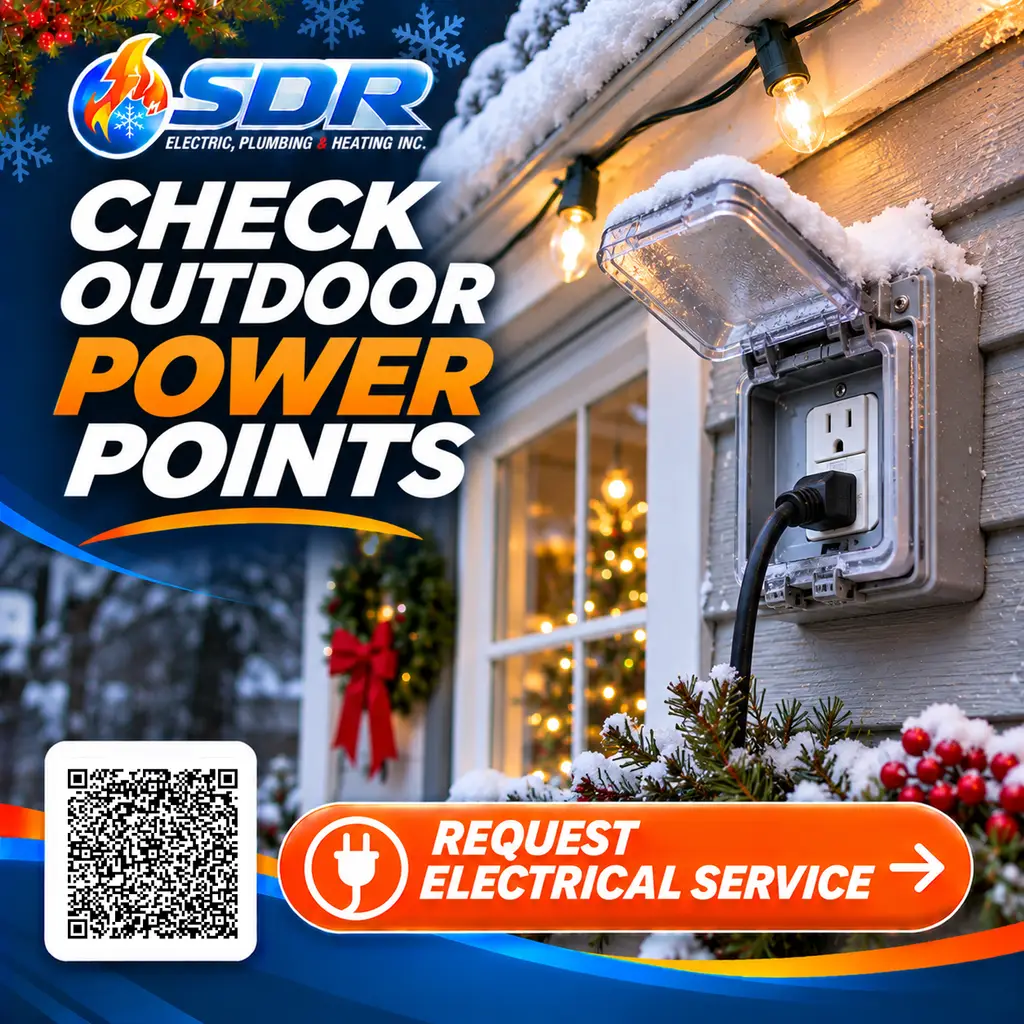
Outdoor receptacles need weather-resistant covers that close properly, including when a cord is plugged in. A basic flip cover may protect an unused outlet, but it often leaves an opening around a plugged-in cord. For equipment that stays connected outdoors, an in-use cover is generally the better arrangement because it shields the plug connection from rain and snow while power is being used.
If the cover is cracked, missing, warped, or unable to close, water can reach the receptacle. Never tape a cover shut as a permanent repair or attempt to dry an energized outlet with a heater, hair dryer, or compressed air. Turn off the circuit if there is visible water, ice, corrosion, or damage, then arrange for inspection.
Seasonal cords and lighting
Holiday lights, inflatable decorations, heated birdbaths, and outdoor tools can all create trouble when the equipment is not rated for outdoor use or when cords are worn. Plugs lying in snow, connections resting in puddles, and overloaded power strips are common causes of trips.
Use outdoor-rated extension cords only when necessary, and keep the connection point elevated and protected from standing water. Avoid running cords through doorways or windows where they can be crushed or where weather stripping can damage the insulation. A cord that is stiff, split, warm to the touch, discolored, or missing a grounding pin should be removed from service.
Freeze-thaw damage and aging parts
Electrical boxes, covers, gaskets, conduit fittings, and cable entries all expand and contract over time. A small gap may not be obvious during a quick walkaround, yet it can admit moisture during a thaw. Older receptacles can also lose their grip on plugs, creating a loose connection that may overheat under load.
This is one reason a repeatedly tripping GFCI should not be ignored just because it resets later. The outlet may dry out temporarily, but the pathway for moisture remains until the damaged component is repaired or replaced.
Shared protection upstream
One outdoor outlet may be protected by another GFCI receptacle located in a garage, basement, bathroom, utility room, or near the electrical panel. When an exterior outlet goes dead, homeowners sometimes replace the outdoor receptacle without realizing the actual GFCI protection is upstream.
Before assuming the outlet has failed, check for a tripped GFCI receptacle in these nearby areas and check the circuit breaker. If the reset button will not stay engaged, do not force it. That behavior can indicate an active fault, a failed device, or a wiring issue.
A Safe Way to Troubleshoot a Tripped Outdoor Outlet
Start by unplugging everything connected to the affected outlet or circuit. This includes extension cords, holiday lighting, tools, heaters, pumps, and chargers. Then check the breaker panel for a tripped breaker and look for GFCI receptacles that may have opened.
Press the GFCI reset button only after connected equipment has been removed and there is no visible moisture or physical damage. If it resets, plug items back in one at a time. If the GFCI trips when a specific cord or device is connected, stop using that item. The equipment, cord, or plug connection is likely the source of the problem.
If the GFCI trips with nothing connected, will not reset, feels warm, makes a buzzing sound, shows discoloration, or has visible water inside the box, leave the circuit off and contact a licensed electrician. These are not conditions to troubleshoot by taking apart the receptacle. Outdoor electrical work involves live conductors, grounding, weather sealing, and code requirements that need to be handled correctly.
When an Outdoor Outlet Needs More Than a Reset
A reset can be appropriate after a one-time issue, such as a wet plug that has been removed. Repeated trips point to a condition that needs correction. In some cases, the repair is straightforward: replace a worn weather-resistant GFCI receptacle, install a proper in-use cover, seal an entry point, or replace a damaged cord.
Other cases require more investigation. An electrician may need to trace a shared circuit, inspect underground wiring, test the GFCI device, verify grounding and polarity, or assess whether the circuit is overloaded. This matters especially where an exterior circuit serves multiple outlets, garage equipment, outdoor lighting, or a detached structure.
For older homes and renovated properties, it is also worth confirming that exterior receptacles have appropriate GFCI protection and weather-rated components. A receptacle that appears functional may not meet current safety expectations, particularly if it has been exposed to years of weather or was installed before a renovation changed how the space is used.
Preventing Winter Problems Before the Next Storm
A simple seasonal inspection can reduce the likelihood of losing an outdoor outlet when you need it most. Look for loose covers, cracked boxes, missing screws, exposed cable, corrosion, and plugs that no longer fit firmly. Test GFCI receptacles using their built-in TEST and RESET buttons according to the manufacturer’s instructions. The test should shut off power, and the reset should restore it.
Keep outdoor connections off the ground and away from areas where snow piles up or meltwater collects. Choose weather-rated equipment for exterior use, and avoid treating extension cords as permanent wiring. If you regularly need power for a pump, lighting, tools, or winter equipment, a properly installed dedicated outdoor circuit may be safer and more dependable than relying on temporary cords.
Properties with generators, sump pumps, exterior heating equipment, or integrated mechanical systems may have additional electrical needs that overlap with plumbing and heating work. Planning these systems together helps ensure circuits, outlets, weather protection, and backup-power connections are matched to the equipment they support.
Winter Electrical Safety Is About More Than Convenience
It is tempting to view a tripped outdoor outlet as a nuisance when lights go out or a tool stops working. But a GFCI is designed to react before an electrical fault becomes a serious shock risk. Bypassing it, replacing it with a standard receptacle, repeatedly resetting it, or using an indoor extension cord outdoors removes the protection that matters most during wet winter conditions.
If an outlet keeps tripping, the safest next step is to leave the affected equipment unplugged and have the circuit assessed. A properly sealed, weather-rated, GFCI-protected outdoor outlet gives you dependable power through winter while helping protect the people who use your property.