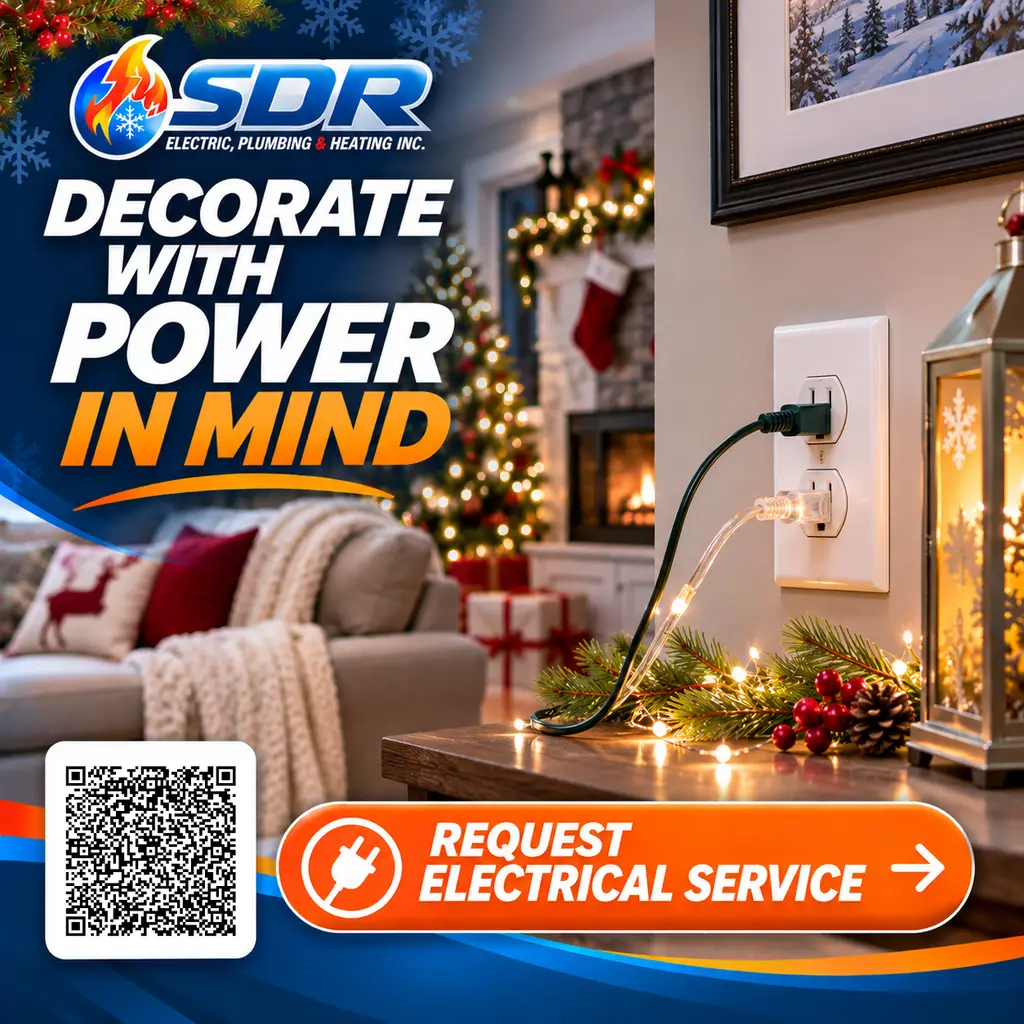
A glowing tree, window candles, and a lighted mantel can make a home feel ready for the season. But holiday extension cord safety for indoor decorations deserves the same attention as the decorations themselves. A cord tucked under a rug, a crowded power bar, or a damaged plug can turn a simple setup into a shock or fire hazard.
Most problems are preventable with a quick inspection and a plan for where each decoration will get power. The goal is not to eliminate extension cords entirely. It is to use the right cord, keep the electrical load reasonable, and avoid hiding hazards where they cannot be seen.
Holiday Extension Cord Safety for Indoor Decorations
Extension cords are intended for temporary use, which makes them useful during the holidays. They are not a substitute for adding an outlet where power is needed year-round. If a room routinely relies on cords running across the floor or behind furniture, a properly installed receptacle is the safer long-term solution.
For seasonal decorating, start with cords marked for indoor use. Indoor cords are designed for dry, protected areas and should never be used outdoors. Check the cord jacket for cuts, cracks, flattened spots, exposed wire, loose plug blades, or discoloration near either end. A cord that feels unusually warm while in use should be unplugged and replaced.
Use a cord that is long enough to reach the outlet without stretching across a walkway. Pulling a cord tight can strain the plug connection and make it easier for someone to trip or pull the plug partly out of the receptacle. A partially inserted plug can overheat at the connection point.
Match the Cord and Outlet to the Load
The safest holiday display begins with knowing what is plugged in. Modern LED string lights use much less electricity than older incandescent sets, but low energy use does not make every setup automatically safe. Multiple decorations connected to one outlet can still overload a power bar, an extension cord, or the branch circuit serving that room.
Check the manufacturer labels on light strings, illuminated decorations, and extension cords. Decorative lights often state how many identical sets may be connected end to end. Do not exceed that number, even if the plugs physically fit together. The listed limit accounts for the wiring and fuse protection built into the light set.
Avoid plugging one extension cord into another. This practice, often called daisy-chaining, adds connection points that can loosen, overheat, or become damaged. It also makes it harder to know whether the first cord is rated to carry the combined load. Use one properly rated cord from the outlet to the decoration whenever possible.
Power bars can be useful for low-load electronics and holiday lighting when they are in good condition and used according to their label. They should not be covered, squeezed behind a heavy piece of furniture, or used to supply portable heaters, kitchen appliances, or other high-wattage equipment. A power bar with a reset button is not a guarantee that every connected device is safe to run together.
If a breaker trips, a fuse blows, lights flicker, or an outlet feels warm, treat it as a warning. Do not simply reset the breaker and continue using the same arrangement. Unplug the decorations, inspect the equipment, and reduce the load. Repeated tripping can point to an overloaded circuit, faulty decoration, damaged cord, or electrical issue that needs professional assessment.
Keep Cords Visible, Dry, and Protected
Where a cord runs matters as much as what is connected to it. Do not place extension cords under rugs, carpets, throw mats, or furniture. Covering a cord prevents heat from dissipating and hides damage caused by foot traffic or furniture legs. It also makes a loose connection difficult to spot.
Avoid routing cords through doorways, under doors, through walls, ceilings, or windows. Closing a door or window on a cord can crush the insulation and damage the conductors inside. Passing a cord through a wall is especially unsafe because the cord cannot be inspected and was not designed to be installed as permanent building wiring.
Keep indoor cords away from water sources, including tree stands, pet water bowls, humidifiers, and areas where wet boots or outerwear may be placed. If a fresh tree needs water, make sure the cord and plug connections remain well clear of the stand. Never handle plugs with wet hands.
Use cord clips or approved cord-management products where needed, but do not staple, nail, tack, or tape through an extension cord. Fasteners can pierce or compress the insulation. If a cord must cross a traffic area temporarily, reroute the display if possible instead of creating a trip hazard.
Use the Right Equipment Around Trees and Mantels
Before decorating a tree, inspect every light string. Look for broken sockets, loose bulbs, cracked insulation, missing fuses, and darkened areas that suggest overheating. Replace damaged light sets rather than attempting a makeshift repair with tape.
For a fresh tree, check the lights daily while watering. Dry trees can ignite quickly, so keep the tree hydrated and well away from fireplaces, radiators, space heaters, candles, and heat registers. Turn off tree lights before leaving home or going to bed. A timer can help, provided it is rated for the connected load and plugged directly into a properly functioning outlet or approved power bar.
Mantel displays need similar care. Keep electrical cords and lighted decorations away from open flames, hot fireplace surfaces, and combustible garland. If stockings or decorations could pull on a cord, secure the display so the plug connection is not under strain.
Three-prong plugs should go into properly grounded three-slot outlets. Do not remove the grounding pin or use an adapter to force a grounded plug into an older two-slot receptacle. That ground pin is a safety feature, particularly for metal-framed or higher-load decorative equipment.
Know When the Issue Is More Than a Cord
Sometimes holiday decorating exposes an electrical concern that has been present all year. Older homes may have too few outlets in living areas, loose receptacles that do not hold plugs securely, or circuits serving more than expected. A plug that falls out, a buzzing outlet, scorch marks, frequent breaker trips, or a burning odor are not seasonal inconveniences. They need prompt attention.
A licensed electrician can assess the circuit, replace damaged devices, add outlets where they are genuinely needed, or identify wiring concerns before the holiday load is added. This is particularly worthwhile during renovations, when a new outlet location can eliminate a permanent tangle of cords behind a television, beside a tree, or near a planned display area.
SDR Electric, Plumbing & Heating Inc. helps homeowners across Eastern Ontario address practical electrical issues with licensed, safety-focused workmanship. When an outlet, circuit, or panel behavior does not seem right, having it checked is safer than working around it with more cords or adapters.
Quick Questions Homeowners Ask
Can I plug holiday lights into an extension cord?
Yes, if the lights and cord are rated for indoor use, the cord is in good condition, and the combined load stays within the manufacturer ratings. Use one appropriate extension cord rather than connecting cords together.
Is it safe to leave holiday lights on overnight?
Turning them off before bed is the safer practice, especially for tree lights and displays with several connected items. A timer can reduce the chance of lights being left on accidentally, but it does not replace inspection and proper load management.
What should I do if an outlet gets warm?
Unplug everything from the outlet and do not use it until the cause is identified. Warmth, discoloration, crackling, or a loose receptacle can indicate a failing connection that requires electrical service.
A thoughtful holiday display should bring comfort, not uncertainty. Take a few extra minutes to check cords, protect connections, and give your decorations the power setup they need. That small bit of planning helps keep the season bright for the right reasons.