A breaker that trips when the microwave and toaster run together is more than an inconvenience. Flickering lights, warm outlets, and extension cords doing permanent duty can all point to an electrical system that no longer matches how your household uses power. The best electrical safety upgrades address those everyday warning signs before they become a shock, fire, or outage problem.
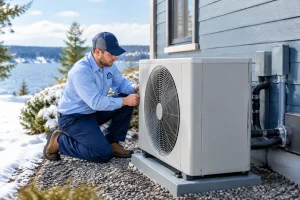
For homeowners, the right improvement depends on the age of the home, the condition of the panel and wiring, and what has changed since the electrical system was installed. A renovation, electric vehicle charger, finished basement, workshop, heat pump, or added appliances can all change the demands placed on your service.
Start With an Electrical Safety Assessment
Before selecting upgrades, have a licensed electrician assess the panel, branch circuits, grounding, outlets, visible wiring, and the load created by major equipment. This is especially useful in older homes, properties with previous renovations, and homes where the panel has never been reviewed after major appliances were added.
An assessment separates a minor repair from a larger planning issue. For example, one worn receptacle may simply need replacement. Repeated breaker trips in several areas may mean circuits are overloaded, improperly sized, damaged, or not adequate for the way the space is now used.
It also helps identify work that should be coordinated. Electrical improvements often overlap with plumbing, heating, cooling, and backup-power projects. Planning the electrical scope early can prevent walls from being opened twice or new equipment from being installed without the circuit capacity it requires.
1. Upgrade an Outdated Electrical Panel
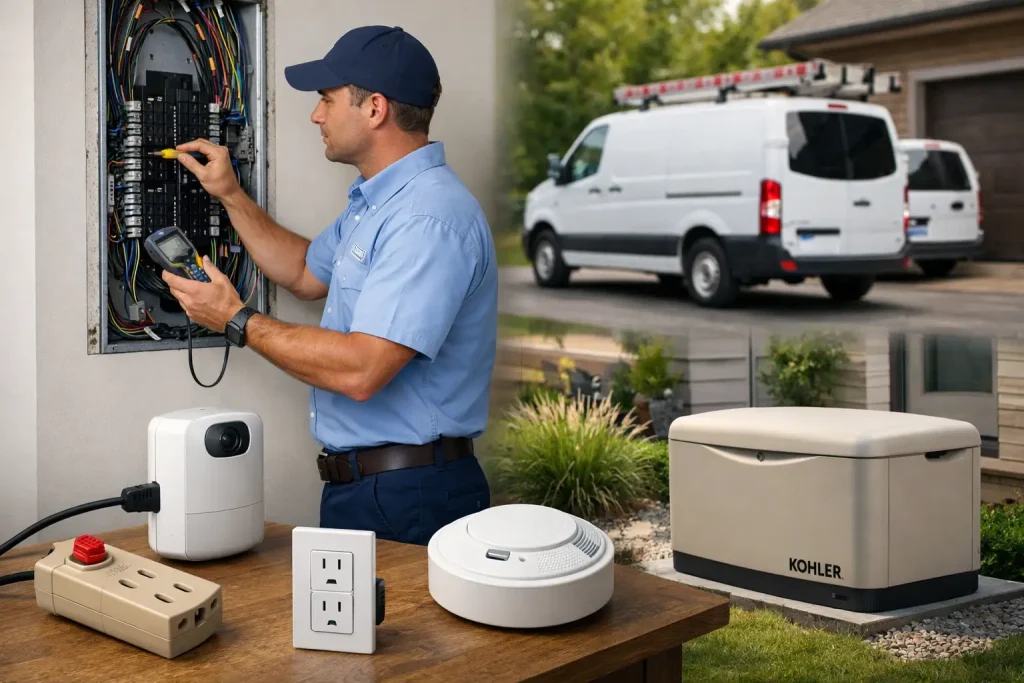
The electrical panel distributes power throughout the home and provides overcurrent protection when a circuit draws more power than it should. A modern, properly sized panel gives an electrician room to safely organize circuits, add protection, and support future upgrades.
Panel replacement is worth discussing when breakers trip frequently, the panel is full, circuits have been added in an unorganized way, or major new loads are planned. Signs such as corrosion, heat damage, buzzing, a burning odor, or breakers that will not reset properly require prompt professional attention.
A larger service is not automatically necessary for every home. Sometimes the existing service has enough capacity, but the panel needs replacement or circuits need to be redistributed. Other times, an EV charger, electric heating equipment, induction range, hot tub, or workshop makes a service upgrade the practical long-term choice. A load calculation provides the answer rather than guesswork.
2. Add GFCI Protection Where Water Is Present
Ground-fault circuit interrupter, or GFCI, protection helps reduce the risk of serious electric shock. It quickly cuts power when it detects that electricity may be flowing along an unintended path, including through a person.
GFCI protection is particularly important around sinks, tubs, showers, laundry equipment, garages, unfinished basements, exterior receptacles, and other damp or wet locations. A GFCI receptacle has test and reset buttons, although protection may also be provided by a GFCI breaker at the panel.
A breaker-based solution can protect an entire circuit, while a receptacle-based solution may be appropriate for a specific location. The best choice depends on the circuit layout and what needs protection. If a GFCI trips repeatedly, do not keep resetting it without investigating. The cause may be a defective appliance, moisture, damaged wiring, or a failing device.
3. Use AFCI Protection to Reduce Fire Risk
Arc-fault circuit interrupter, or AFCI, protection is designed to detect dangerous electrical arcing. Arcing can occur when a wire or connection is damaged, loose, pinched, or deteriorated. Unlike a straightforward overload, an arc fault may not draw enough current to trip a standard breaker before it creates heat.
AFCI breakers are commonly used to improve protection in living areas and bedrooms, where cords, furniture, wall damage, and aging connections can create hidden risks. They are especially relevant during renovations, panel upgrades, and work on older circuits.
AFCI devices can occasionally reveal a problem that had gone unnoticed, such as a damaged appliance cord or loose connection. That is frustrating when a breaker trips, but it is also the point of the protection. A licensed electrician can determine whether the issue is the circuit, the connected equipment, or the breaker itself.
4. Replace Worn, Loose, or Ungrounded Outlets
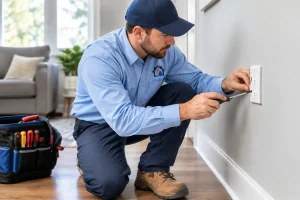
An outlet should hold a plug firmly. If plugs fall out, the faceplate is cracked, the receptacle feels warm, or there are discoloration marks, stop using it and arrange for service. These conditions can indicate worn contacts or loose connections that generate heat.
Older homes may also have two-slot outlets without a grounding path. It can be tempting to use adapters or replace the faceplate with a three-slot receptacle, but that does not create a true equipment ground. The appropriate solution depends on the existing wiring and the intended use of the circuit.
Tamper-resistant receptacles are a sensible safety upgrade for homes with young children. Weather-resistant, covered receptacles are appropriate outdoors. In garages and workshops, durable devices and correctly planned circuits can handle tools and equipment more safely than relying on power bars and extension cords.
5. Install Whole-Home Surge Protection
Surges are not limited to dramatic lightning events. Smaller voltage spikes can occur when power is restored after an outage or when large equipment cycles on and off. Over time, these events can affect sensitive electronics, appliances, control boards, and connected home systems.
A whole-home surge protective device is installed at or near the electrical panel and helps reduce exposure across the home. It works best as part of a layered approach. Point-of-use surge strips can still be useful for computers, televisions, and networking equipment, but they should not be treated as a substitute for proper electrical protection.
This upgrade is particularly practical for homes with heat pumps, modern furnaces, smart appliances, well-pump controls, security systems, or generator equipment. It cannot guarantee that every electronic device will survive every event, but it adds a valuable first line of defense.
6. Add Dedicated Circuits for High-Demand Equipment
A dedicated circuit serves one appliance or piece of equipment. It prevents a high-demand load from sharing power with lighting, countertop appliances, or other devices that could overload the circuit.
Common candidates include refrigerators, freezers, microwaves, dishwashers, laundry equipment, sump pumps, well pumps, HVAC equipment, garage tools, and electric vehicle chargers. The exact circuit requirements vary by equipment and installation, so the circuit should be planned around the manufacturer requirements and the property’s electrical capacity.
Dedicated circuits are also a safety improvement because they reduce reliance on extension cords. Extension cords are intended for temporary use, not as permanent wiring behind furniture, under rugs, through doorways, or across walkways. If a room needs more outlets or a new appliance needs power, adding a properly installed circuit is the safer solution.
7. Plan Backup Power Safely
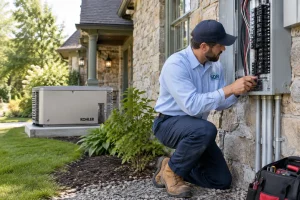
Backup power can keep essential equipment operating during an outage, including a sump pump, well pump, refrigerator, heating controls, medical equipment, and selected lighting. But a generator must be connected through approved transfer equipment that prevents electricity from feeding back into utility lines.
A portable generator can be useful for limited, short-term needs when it is used outdoors and connected correctly. A standby generator can provide more automatic, whole-property coverage, but it requires careful electrical and mechanical planning. The right system depends on which loads need to operate, how long outages typically last, available fuel options, and the capacity of the existing electrical service.
For properties with well water, sump systems, electric heat, or critical refrigeration, backup power planning should include more than the generator itself. The electrician should confirm which circuits are essential and how the transfer equipment, panel, and load management will work together.
When to Call for Electrical Service
Call a licensed electrician promptly if you notice a burning smell, sparking, buzzing, hot switches or outlets, frequent breaker trips, shocks or tingling from appliances, water near electrical equipment, or visible damaged wiring. Turn off power to the affected area if it is safe to do so, and do not attempt to repair a panel, outlet, or wiring issue yourself.
For planned work, it helps to think ahead. If you are renovating a kitchen, finishing a basement, installing a heat pump, adding a pump system, or preparing for an EV, include electrical planning at the beginning. SDR Electric, Plumbing & Heating can coordinate electrical work with related plumbing, HVAC, and generator needs so the finished system is safe, practical, and ready for the way you live.
The best upgrade is rarely the flashiest one. It is the one that removes a known risk, supports the equipment your home depends on, and gives you confidence that power is being delivered where it is needed without asking aging wiring or overloaded circuits to do too much.