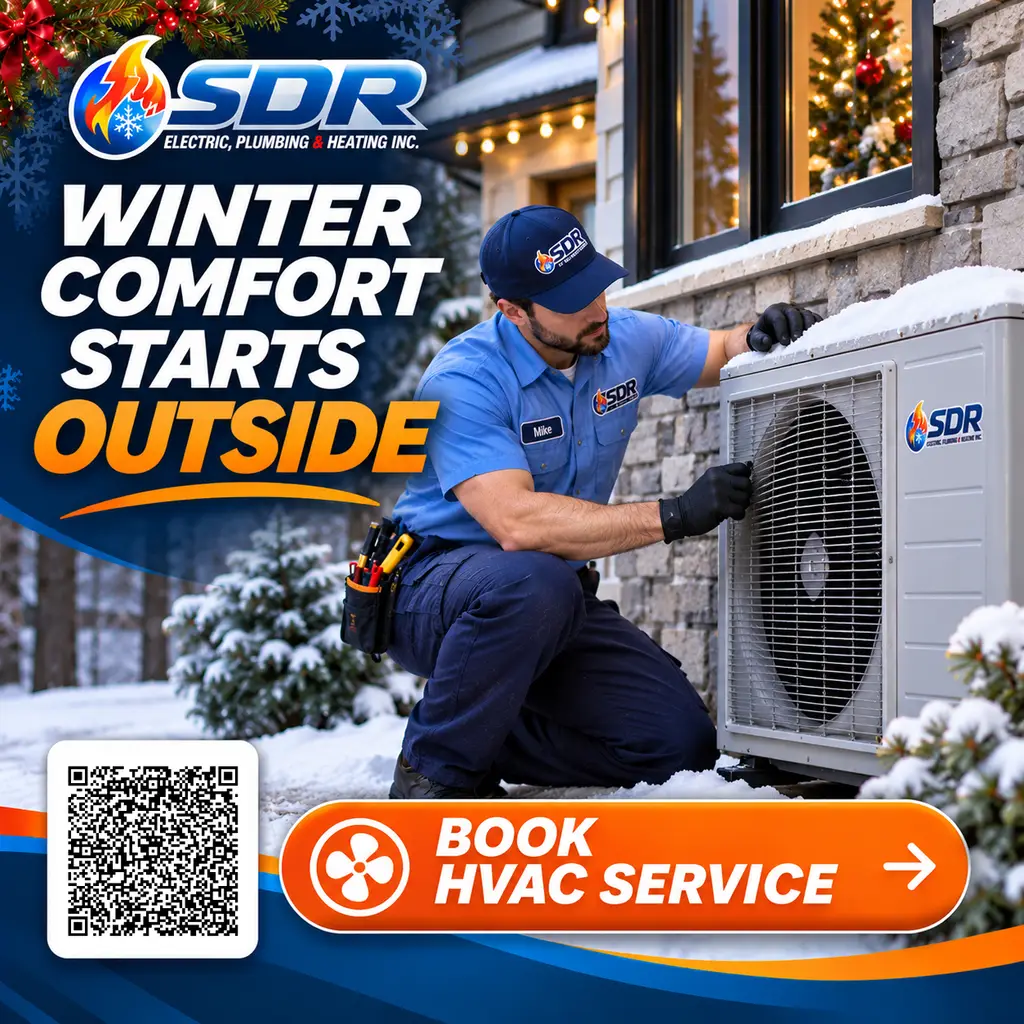
A heat pump does not create heat by burning fuel. It moves available heat from outside air into your home. That distinction is why many property owners ask how heat pumps perform during Ontario cold weather, especially after a stretch of subzero temperatures, wind, snow, and freezing rain.
The practical answer is that a properly selected cold-climate heat pump can heat an Eastern Ontario home through much of the winter and, in many cases, through nearly all of it. Performance does change as outdoor temperatures fall, however. The right equipment, correct sizing, sound installation, and a planned backup heat strategy determine whether the system feels dependable when winter is at its worst.
How Heat Pumps Perform in Ontario Cold Weather
Modern cold-climate air-source heat pumps are built to operate well below freezing. Even cold outdoor air contains some heat energy, and the unit’s refrigeration cycle captures that energy and transfers it indoors. As temperatures drop, the equipment must work harder to collect heat, so its heating capacity and efficiency gradually decline.
That does not mean the system stops working at 32°F. Many cold-climate models continue providing useful heat at temperatures far below 0°F. The exact low-temperature performance depends on the model, the home’s heat loss, installation details, and whether another heat source is available to assist during extreme conditions.
A heat pump’s efficiency is often described by its coefficient of performance, or COP. A COP above 1 means the unit delivers more heat energy than the electricity it consumes. During mild winter weather, a heat pump can be very efficient. During a deep cold snap, its COP falls, but it may still be an effective and practical heat source.
The key is setting realistic expectations. A heat pump may run for longer periods in very cold weather, and that can be normal. Long, steady run times often maintain more even indoor temperatures than the short on-and-off cycles of oversized equipment.
What Changes When the Temperature Drops?
Outdoor temperature is only one part of the equation. Wind exposure, air leakage, insulation levels, window performance, duct condition, and thermostat settings all affect comfort. A home that loses heat quickly requires more from any heating system, including a heat pump.
In Leeds & Grenville and surrounding Eastern Ontario communities, cold weather is often paired with damp conditions, blowing snow, and freeze-thaw cycles. Those conditions make installation quality especially important. An outdoor unit needs proper clearance, a stable elevated mounting location, correct drainage, and room for airflow. If snowbanks, ice, leaves, or drifting snow block the unit, heating performance can suffer.
Defrost Cycles Are Normal
When a heat pump operates in cold, humid weather, frost can form on the outdoor coil. The system periodically enters a defrost cycle to clear that frost. During defrost, the unit temporarily reverses operation, and supplemental heat may operate indoors to prevent cool air from reaching the living space.
A brief defrost cycle is normal. Repeated cycling, heavy ice buildup, loud mechanical noises, water draining into an unsafe location, or a unit that cannot recover afterward should be checked by a qualified HVAC technician. Ice around the outdoor unit can become both a performance issue and a safety concern.
Backup Heat Has a Job to Do
Backup heat is not necessarily a sign that the heat pump has failed. It is part of the design in many Ontario installations. Depending on the system, that backup may be electric heat strips, an existing furnace in a dual-fuel arrangement, a boiler-based solution, or another properly integrated heat source.
The backup system may turn on during defrost cycles, when outdoor temperatures fall below a selected balance point, or when the home needs to recover from a large thermostat setback. It should be sized and controlled intentionally. If backup heat runs far more often than expected, the cause may be severe weather, a thermostat setting, insufficient heat-pump capacity, duct problems, or an equipment issue that needs service.
Proper Sizing Matters More Than the Equipment Label
Selecting a heat pump based only on square footage is risky. Two homes of the same size can have very different heating loads. Ceiling height, insulation, air leakage, basement conditions, windows, additions, and the number of occupants all matter.
A professional load calculation estimates how much heat the building loses under local design conditions. That information helps determine whether a heat pump can carry the full heating load, when backup heat should engage, and whether ductwork can distribute the required airflow. It also prevents a common problem: installing a unit that appears large enough on paper but cannot keep up in the rooms that are coldest.
Oversizing is not a solution. An oversized system can cycle too often in milder weather, reduce comfort, and complicate humidity control during cooling season. The goal is a system designed for the building rather than a one-size-fits-all replacement.
Ducted, Ductless, and Hybrid Systems
The best setup depends on the property. A centrally ducted heat pump can work well when existing ducts are properly sized, sealed, and balanced. If some rooms are consistently too warm or too cold, duct improvements may be needed as part of the project.
Ductless heat pumps are often useful for additions, older homes without central ductwork, finished basements, workshops, or areas that need independent temperature control. Indoor unit placement matters. A wall head cannot heat closed rooms as effectively as an open area, so the layout should match how the space is actually used.
A hybrid system combines a heat pump with another heating source. This approach can suit homes that already have a compatible furnace or that need added capacity for the coldest periods. It requires careful electrical, HVAC, and thermostat coordination so the equipment operates safely and switches at the intended times.
Electrical Planning Is Part of Heat Pump Performance
A heat pump is an electrical appliance with dedicated circuit, disconnect, and load requirements. In an older home, the electrical panel may need evaluation before installation. This is particularly relevant when the property also has an electric water heater, EV charger, generator equipment, electric backup heat, or renovation-related electrical additions.
Good planning looks at the whole property, not just the outdoor unit. SDR Electric, Plumbing & Heating Inc. can coordinate HVAC and electrical work so equipment selection, circuit capacity, controls, and backup-power considerations are reviewed together. That reduces the risk of treating connected systems as separate projects.
Keep Winter Performance on Track
Homeowners can help protect performance with a few straightforward habits. Keep the outdoor unit clear of snow, ice, leaves, and stored materials, while avoiding sharp tools that could damage the coil. Change or clean indoor filters as recommended, and keep supply and return vents open and unobstructed.
Avoid large thermostat setbacks during very cold weather unless your installer has recommended a control strategy for the system. A major temperature increase can trigger backup heat and reduce the benefit of steady heat-pump operation. If you notice weak airflow, unusual sounds, a persistent alert, or uneven temperatures, arrange service before a small issue becomes a no-heat call.
Annual maintenance is also valuable. A technician can inspect electrical connections, refrigerant operation, condensate and defrost components, filters, coils, airflow, and controls. For a system that works through snow, ice, and prolonged cold, preventive attention is practical protection.
Frequently Asked Questions
Will a heat pump work during an Ontario cold snap?
Yes, a cold-climate heat pump can continue operating during a cold snap, but its output and efficiency decline as temperatures fall. Whether it can meet the entire home’s heating demand depends on the specific unit, home heat loss, and available backup heat.
Does a heat pump blow cold air in winter?
Supply air from a heat pump is usually warmer than the room, but it may feel less hot than air from a furnace. Because heat pumps often run longer and deliver steady, moderate heat, indoor comfort should be judged by room temperature and consistency rather than by how hot the vent air feels.
Should the outdoor unit be covered in winter?
No. A heat pump needs open airflow to operate. Covering it while it is in use can trap moisture, restrict airflow, and interfere with performance. Keep snow and debris clear around the unit instead.
A heat pump should be planned as part of your home’s full comfort system, not treated as a standalone box outside. When the equipment, electrical service, ductwork, backup heat, and building envelope work together, winter heating becomes more predictable when Ontario weather turns severe.