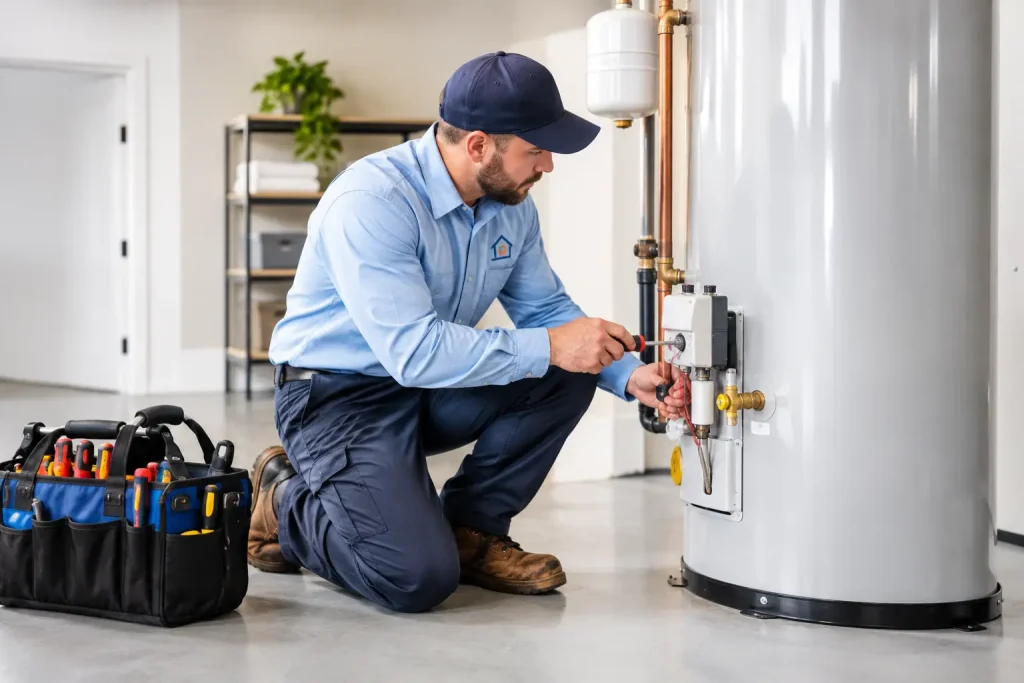
An electric water heater usually gives very little warning before a small issue becomes an unwelcome cold shower, a leak, or a failed heating element. Knowing how to maintain electric water heaters helps protect a system that works every day, particularly in homes with hard water, well water, or older plumbing.
Most maintenance is straightforward, but electric water heaters combine pressurized hot water with high-voltage electrical components. That means there is a clear line between basic homeowner checks and work that should be handled by a licensed plumbing and electrical professional. A regular inspection and a few practical habits can extend service life, improve hot-water recovery, and help catch trouble before water reaches the floor.
Why electric water heater maintenance matters
Inside a conventional tank-style electric water heater, one or two heating elements warm the stored water. Minerals in the water settle at the bottom of the tank over time. This sediment acts as an insulating layer, forcing the lower element to work harder and slowing hot-water recovery.
Sediment can also create popping or rumbling sounds as water heats beneath it. In some cases, it contributes to element failure, uneven water temperature, or early tank deterioration. Homes supplied by a private well may need closer attention because mineral content and water chemistry vary widely from one property to another.
Maintenance also gives you a chance to inspect the surrounding plumbing. A minor drip at a valve, a corroded pipe connection, or moisture around the tank may be the first sign that service is needed.
How to maintain electric water heaters without taking risks
Start with a visual check every few months. Look around the base of the tank, the cold-water inlet, hot-water outlet, drain valve, and temperature-and-pressure relief valve. The area should be dry. Rust streaks, white mineral deposits, damp insulation, or standing water deserve attention, even if the heater is still producing hot water.
Check that the electrical disconnect or breaker is clearly identified and that the access panels on the heater are secure. Do not remove electrical covers or touch wiring unless you are qualified to do so. If you see a scorched cover, smell burning plastic, hear buzzing, or notice a breaker that trips repeatedly, turn off power at the breaker and arrange professional service. Continuing to reset a tripping breaker can create a serious safety concern.
Keep the area around the heater accessible and free of stored items. Water heaters need room for inspection and service, and combustible materials should never be piled beside equipment that includes electrical connections.
Watch for changes in performance
A healthy electric tank heater should provide consistent hot water for the household’s normal routine. If the water turns lukewarm sooner than usual, recovery takes longer, or only a limited amount of hot water is available, sediment or a failed heating element may be involved. Thermostat issues, damaged wiring, and an undersized heater can cause similar symptoms.
Very hot water is another concern. Water that suddenly feels hotter than normal can increase scalding risk and may point to a thermostat problem. Avoid adjusting internal thermostats unless you understand the equipment and have safely isolated power. A qualified technician can test the elements, thermostats, wiring, and tank condition to identify the actual cause rather than replacing parts by guesswork.
Drain sediment on a planned schedule
Flushing the tank is one of the most useful ways to reduce sediment buildup. How often it should be done depends on the water supply, the age of the unit, and whether sediment has been managed consistently. Annual service is a sensible starting point for many households, while homes with mineral-heavy water may benefit from more frequent attention.
Because this work involves hot water, pressure, hoses, and electrical power, follow the heater manufacturer’s instructions carefully. Turn off power at the breaker before draining any electric water heater. Never allow the elements to energize while the tank is empty or partially empty, since they can burn out quickly.
A proper flush typically involves shutting off the cold-water supply, connecting a hose to the drain valve, and directing water to a safe drainage point. The water may be hot enough to cause injury, so allow the tank to cool as needed and keep children and pets away from the work area. Once the tank is refilled, confirm it is completely full and air has been cleared from the hot-water lines before restoring power.
There is one important trade-off: an old water heater that has never been flushed may have a weakened drain valve or heavy internal corrosion. Opening a stuck valve can occasionally create a leak that will not reseal. If the tank is older, visibly corroded, or already showing signs of leakage, it is better to have a plumber assess it before attempting a flush.
Check the temperature-and-pressure relief valve
The temperature-and-pressure relief valve, often called the T&P valve, is a safety device. It opens if pressure or temperature inside the tank reaches an unsafe level. Its discharge pipe should run downward and terminate safely near the floor, without a cap, plug, or restriction.
Look for dripping from the valve or pipe, but do not ignore it as a harmless nuisance. A dripping T&P valve can result from a faulty valve, excessive system pressure, thermal expansion, or a water temperature issue. The cause matters. Replacing the valve alone may not solve the underlying problem.
Some manufacturers recommend carefully testing the valve periodically. In practice, a valve on an older heater can stick, fail to reseat, or reveal a pre-existing problem. If you are unsure of the valve’s condition, if the discharge piping is missing, or if water is already leaking from it, arrange a professional inspection instead of forcing the test lever.
Protect the tank from corrosion
Most tank-style water heaters contain a sacrificial anode rod designed to corrode before the steel tank does. It is one of the most valuable parts in the system, but it is out of sight and commonly overlooked. Its service life depends on water chemistry and household hot-water use.
Anode rod inspection is generally a professional task because it may require working with electrical access covers, tight overhead clearance, and a pressurized tank. Replacing a depleted rod at the right time can add useful life to a sound tank. It cannot restore a tank that is already rusting through, but it may help prevent that outcome.
Water treatment can also affect maintenance needs. A water softener may reduce scale in some conditions, while certain water chemistry concerns can accelerate corrosion. If you rely on well water and repeatedly see scale, staining, odors, or premature fixture and appliance issues, testing the water can provide more useful answers than repeatedly treating symptoms.
Know when repair is no longer the right call
Not every water heater problem calls for replacement. A failed element, thermostat, relief valve, or pipe connection may be repairable when the tank itself is in good condition. However, water leaking from the tank body, rust-colored water, widespread corrosion, or repeated component failures can indicate that the unit is nearing the end of its service life.
Replacement is also an opportunity to review capacity, electrical supply, and the rest of the mechanical room. A growing household may need more hot-water capacity. A renovation may change demand. In some homes, plumbing, electrical, water treatment, and heating equipment all compete for limited space, so coordinated planning prevents avoidable conflicts.
A simple maintenance rhythm for homeowners
Use a quarterly visual check to look for leaks, corrosion, unusual noises, and changes in hot-water performance. Plan a yearly maintenance appointment or tank flush based on your water conditions and the manufacturer’s recommendations. If your home has hard water, a well, or a history of sediment problems, ask for a more specific service schedule.
Do not wait for a complete loss of hot water to act. A small drip, new rumbling noise, or reduced supply often gives a licensed technician the chance to make a targeted repair before the problem affects your home. For property owners in Eastern Ontario, SDR Electric, Plumbing & Heating can assess the heater and the connected plumbing and electrical systems together, so the recommendation fits the condition of the whole installation.
A water heater is easy to forget when it is working properly. Give it a little planned attention, and it is far more likely to deliver dependable hot water when your household needs it most.