A loose outlet beside the kitchen counter, a plug that falls out near the TV, or a receptacle that feels warm after use can seem like a small repair. It is not always small. Outlet replacement timing matters because a worn or damaged receptacle can create shock, overheating, and fire risks long before the rest of the electrical system shows obvious trouble.
For homeowners, landlords, and business owners, the right time to replace an outlet depends on its condition, location, age, and the equipment connected to it. Some outlets need prompt replacement. Others are candidates for a planned safety or convenience upgrade during a renovation, panel update, or room refresh.
Outlet Replacement Timing: Signs It Should Not Wait
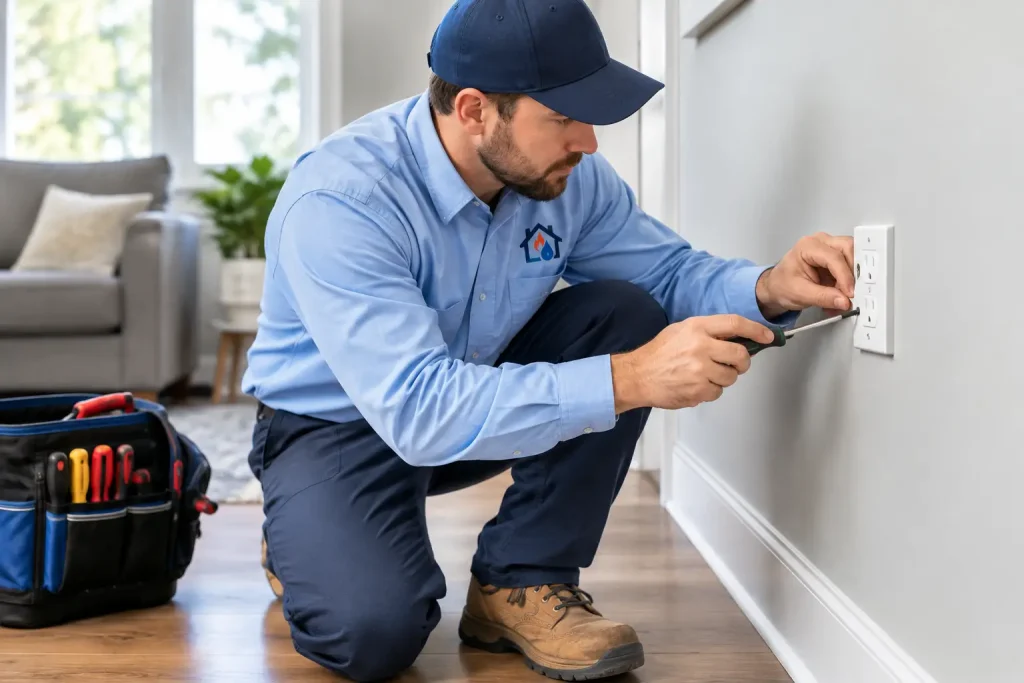
An electrical outlet should hold a plug firmly and operate without heat, noise, odor, or visible damage. When that changes, it deserves attention from a licensed electrician.
A plug that slips out easily is one of the most common signs of wear. The internal contacts that grip the plug blades can loosen after years of use. Loose contact increases electrical resistance, and resistance creates heat. That can damage the receptacle, plug, cord, or wiring connection behind the wall.
Heat is a more urgent warning sign. Stop using an outlet if its cover plate, plug, or surrounding wall feels warm or hot during normal use. The same applies if you notice discoloration, a burning smell, crackling, buzzing, smoke, or intermittent power. Do not keep testing the outlet or assume a new cover plate will solve the problem. The cause may be a failed receptacle, a loose wire connection, overloaded circuit, damaged wiring, or another issue that needs proper diagnosis.
Visible cracks, chipped faces, missing cover plates, and exposed wiring also call for replacement or repair. A damaged face can allow accidental contact with energized components, especially in homes with children, pets, or frequent guests.
If an outlet has stopped working entirely, replacement may be part of the repair, but it should not be the first assumption. A tripped breaker, tripped ground-fault circuit interrupter, failed connection elsewhere on the circuit, or wiring fault can affect one or more outlets. Finding the source protects the property from repeat failures.
Age Alone Does Not Set the Schedule
There is no single replacement interval for every outlet. A lightly used receptacle in a dry bedroom may remain serviceable for many years. An outlet behind a kitchen appliance, in a workshop, or in a rental unit may experience much heavier use and wear sooner.
That said, older homes can have receptacles and wiring that no longer suit how people use electricity. Modern households charge phones, power home-office equipment, run kitchen appliances, and use entertainment systems from circuits that may have been designed for much lighter demand. Older two-slot outlets, ungrounded circuits, worn receptacles, and limited outlet locations are all reasons to arrange an electrical assessment.
An old outlet is not automatically unsafe, and a new-looking outlet is not automatically sound. Condition and installation quality matter more than appearance. A qualified electrician can test the outlet, inspect connections where appropriate, verify grounding, and determine whether a single replacement is enough or whether the circuit needs additional work.
When an Upgrade Makes More Sense Than a Basic Replacement
Replacing a damaged standard receptacle with the same type is often appropriate. In other situations, the better decision is to upgrade protection or add capacity where the property needs it.
Ground-fault circuit interrupter outlets are commonly used where moisture is more likely, including bathrooms, kitchens, laundry areas, garages, unfinished basements, and exterior locations. These devices monitor the flow of electricity and can shut off power quickly when they detect an imbalance that may indicate a shock hazard. They need occasional testing and should be replaced if they fail to reset, test improperly, or show signs of damage.
Arc-fault protection may also be appropriate in certain living areas. Arc faults can occur when damaged cords, loose connections, or compromised wiring create sparking that does not always trip a standard breaker. The right protection depends on the circuit, panel, room use, and applicable electrical requirements.
Tamper-resistant receptacles are a practical choice in homes with children. Their internal shutters help prevent foreign objects from being inserted into the slots. Weather-resistant, in-use covered outlets are designed for exterior conditions, while USB-equipped outlets can reduce the need for bulky charging adapters in convenient locations.
These upgrades are useful when selected for the right application. They are not a substitute for correcting a worn connection, overloaded circuit, or moisture problem. For example, adding a new outlet near a bathroom sink requires more than choosing a receptacle from a shelf. The location, circuit protection, wiring method, and condition of the existing electrical system all need to be considered.
Outlet Problems That Point to a Larger Electrical Issue
A single worn outlet can be a contained repair. Repeated outlet failures, frequent breaker trips, flickering lights, or multiple warm receptacles suggest a broader issue. This is especially true in older homes and properties that have gone through several renovations over the years.
Watch for patterns. If a breaker trips whenever a space heater, microwave, air conditioner, or power tool runs, the circuit may be overloaded or the equipment may have a fault. If several outlets lose power at once, there may be a tripped protective device or a connection problem upstream. If lights dim when a large appliance starts, the electrical system may need a more detailed evaluation.
Extension cords and plug-in power bars can also reveal that a room does not have enough accessible outlets for its actual use. They can be useful for temporary, low-demand needs when used correctly, but they should not become permanent wiring. Avoid running cords under rugs, through walls, across doorways, or from one power bar to another. A properly planned outlet addition is safer and more convenient.
For commercial spaces, tenant improvements, workshops, and home-based businesses, outlet placement should match the work being performed. Equipment loads, desk layouts, cleaning needs, customer areas, and future flexibility all affect the right plan. Coordinating electrical work with heating, plumbing, or renovation scopes can prevent walls and ceilings from being opened more than once.
What to Do Before Calling for Service
If you notice heat, burning odor, smoke, sparking, or visible damage, stop using the outlet immediately. If it is safe to do so, turn off the breaker supplying that circuit. Do not touch exposed wiring or remove the receptacle from the wall yourself.
For an outlet that has lost power without signs of damage, check whether a breaker has tripped and whether a nearby ground-fault outlet needs to be reset. A ground-fault device in a garage, bathroom, basement, or exterior location can sometimes protect outlets farther away than expected. If it trips again, do not repeatedly reset it. That is a signal to have the circuit checked.
When arranging service, it helps to note what was plugged in when the issue occurred, which rooms are affected, whether the breaker tripped, and whether the outlet has been wet or physically damaged. These details give the electrician a clearer starting point and support a more efficient diagnosis.
Plan Outlet Work During Renovations and Property Updates
Renovations create an ideal opportunity to address outlet replacement timing before finishes go back on the walls. Kitchens, bathrooms, basements, additions, and mechanical-room upgrades often involve changed layouts and new equipment. Planning outlet locations early helps avoid overloaded counters, visible extension cords, and inconvenient charging setups later.
Consider how the room will actually be used. Kitchen counters need practical access for small appliances. Bedrooms benefit from outlets near both sides of the bed. A finished basement may need dedicated consideration for entertainment equipment, a home office, or a sump pump connection. Exterior outlets can make seasonal lighting, landscaping tools, and maintenance work safer and easier when they are properly protected.
SDR Electric, Plumbing & Heating Inc. can assess individual outlet concerns as well as larger electrical upgrades that connect to renovations, backup power, and mechanical equipment. The goal is not to replace components without reason. It is to identify the cause of the problem and recommend work that supports safe, dependable use of the property.
A receptacle is easy to overlook because it is part of daily life. Treat changes in its fit, temperature, appearance, or performance as useful warning signs. Addressing them early gives you a safer outlet today and a clearer picture of what your electrical system needs next.