When the power goes out during a winter storm, the question is not simply whether you have backup power. It is whether that backup can keep the systems your property depends on running safely. In the propane versus electric generators decision, the right choice comes down to outage length, the loads you need to support, available fuel, and how your electrical system is set up.
For many homes in Eastern Ontario, backup power needs go beyond lights and phone chargers. A well pump, sump pump, furnace blower, refrigerator, freezer, security equipment, and essential medical equipment may all need attention during an outage. The best solution is the one that supports those priorities without creating unsafe connections, overloaded circuits, or fuel-management problems.
What “Electric Generator” Usually Means
The term electric generator can be confusing. Every generator produces electricity, including a propane standby unit. In backup-power conversations, however, “electric” usually refers to a battery energy storage system. These systems store electricity in large batteries and deliver it through an inverter when utility power fails.
A battery system is quiet, produces no exhaust at the home, and starts automatically when properly installed. It can be an excellent fit for short interruptions and selected essential circuits. It can also be paired with solar equipment, where appropriate, to recharge during daylight.
Its limitation is stored energy. Once the battery is depleted, it must recharge from the utility, solar production, or another approved charging source. A large electrical load can reduce available runtime quickly. Electric resistance heating, electric water heating, central air conditioning, dryers, ranges, and well pumps can demand significant power, especially when several loads start at once.
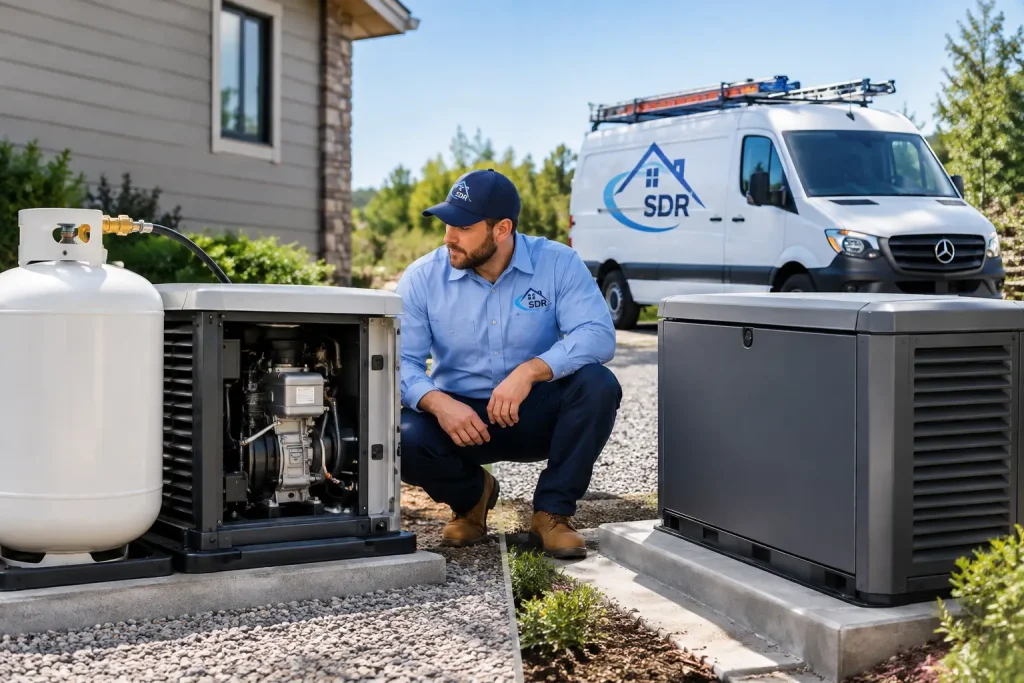
A propane generator burns stored propane to create electricity. Whole-home standby models are permanently installed outdoors, connected to a fuel supply, and paired with an automatic transfer switch. When utility service fails, the system can start automatically and transfer selected or whole-home loads according to the installation design.
Propane Versus Electric Generators: The Practical Difference
The clearest difference is how each system sustains an outage. A propane generator can continue operating as long as the propane supply is adequate and the equipment is maintained. A battery system operates for as long as its usable stored capacity can support the connected loads.
That does not make propane automatically better. If outages at your property are typically brief and your goal is to keep a refrigerator, internet equipment, lighting, and a few key receptacles energized, a battery system may be a clean and practical option. Its quiet operation can be particularly appealing where noise and exhaust are major concerns.
If your property experiences extended outages, depends on a well pump, or needs to operate multiple essential mechanical systems, propane often provides more dependable long-duration backup. This is especially relevant for rural properties where a loss of power can also mean no water supply, no sump-pump protection, and limited ability to run heating equipment.
The key is to plan for the real loads, not just the loads you hope to run. A backup system should be designed around what must operate during an outage and what can remain off until utility power returns.
Start With the Systems That Cannot Wait
A useful backup-power plan separates essential loads from convenience loads. Essential loads commonly include refrigeration, lighting in key areas, communications equipment, sump pumps, well pumps, furnace controls and blowers, garage-door access, and selected receptacles. For some homes, a septic pump or medical device is also a priority.
Heating deserves a closer look. Many gas, propane, and oil-fired furnaces still require electricity for controls, ignition, and blower motors. A fireplace with an electric fan may have similar needs. A backup system can keep these appliances operating only if the electrical circuits and startup demands are included in the design.
Electric heat is different. Baseboard heaters, electric furnaces, and heat pumps can require substantial capacity, particularly in cold weather. A battery system sized for basic essentials may not be intended to carry whole-home electric heating. A propane standby generator may support more loads, but it still needs proper load management so that high-demand equipment does not exceed generator capacity.
For properties with a well, pump sizing matters. A pump motor can draw a higher amount of power when starting than while running. The same is true for sump pumps, compressors, and some refrigeration equipment. This is why a qualified assessment should account for both running watts and starting loads rather than adding up appliance labels casually.
Installation and Safety Are Part of the Decision
Backup power is not a plug-and-play project when it supplies a home electrical panel. The transfer equipment is what prevents generator power from feeding back into utility lines. Backfeeding can endanger utility workers, damage equipment, and create serious fire and shock hazards.
A properly installed system uses an approved transfer switch or interlock arrangement and is designed around the circuits it will supply. It also considers grounding, overcurrent protection, outdoor equipment placement, ventilation clearances, fuel connections, and local permit requirements.
Propane generators must remain outdoors and clear of doors, windows, vents, and other locations where exhaust could enter the building. Carbon monoxide is a serious hazard. Battery systems do not produce combustion exhaust, but they still require professional installation, appropriate location, protective equipment, and compliance with electrical and fire-safety requirements.
Automatic operation is another point to consider. A permanently installed propane standby generator can sense a utility failure, start, and transfer power without someone being home. Many battery systems can do the same for designated loads. Portable equipment generally requires manual setup and should never be operated indoors, in a garage, or near openings into the home.
Fuel Planning and Runtime
Propane is stable in long-term storage and can serve more than one household purpose, depending on the property. Its availability during an outage depends on the amount stored on site and the rate at which the generator uses fuel under load. A generator carrying a few essential circuits will generally use less fuel than one supporting a larger portion of the home.
Battery runtime depends on capacity and usage. Conserving energy during an outage makes a meaningful difference. Keeping refrigerators closed, avoiding high-heat appliances, and limiting unnecessary loads can extend the time available for essentials.
Solar can help recharge a battery system, but it should not be treated as guaranteed outage power without reviewing the complete system design. Solar output changes with weather, season, roof conditions, and daylight hours. In a prolonged winter outage, production may not match household demand. A battery-and-solar arrangement can be useful, but it should be sized around realistic expectations.
Which Option Fits Your Property?
A propane standby generator is often the stronger fit when you need automatic, longer-duration power for a well pump, sump pump, furnace, refrigeration, and broader household loads. It is also practical for homes where outages can last beyond a few hours or where reliable fuel storage is already available.
A battery backup system can be a strong choice when quiet operation, no onsite combustion, and support for selected circuits are the main goals. It works best when the household understands its load limits and has a plan for managing energy during an extended outage.
Some properties benefit from a combined approach. A battery can carry short interruptions quietly and immediately, while a generator provides longer-term support when conditions require it. Whether that level of integration makes sense depends on the property’s electrical service, mechanical systems, outage history, and priorities.
Before choosing equipment, document what happens when the power fails at your property. Does the well stop supplying water? Does the sump pump protect a finished basement? Does your heating system need electricity to run? Are there business, accessibility, or medical needs that cannot be interrupted? Those answers give a qualified electrical and generator professional the information needed to recommend a safe, workable backup-power design.
A dependable backup system is not measured by its nameplate alone. It is measured by whether it keeps the right parts of your property operating when the grid is down.