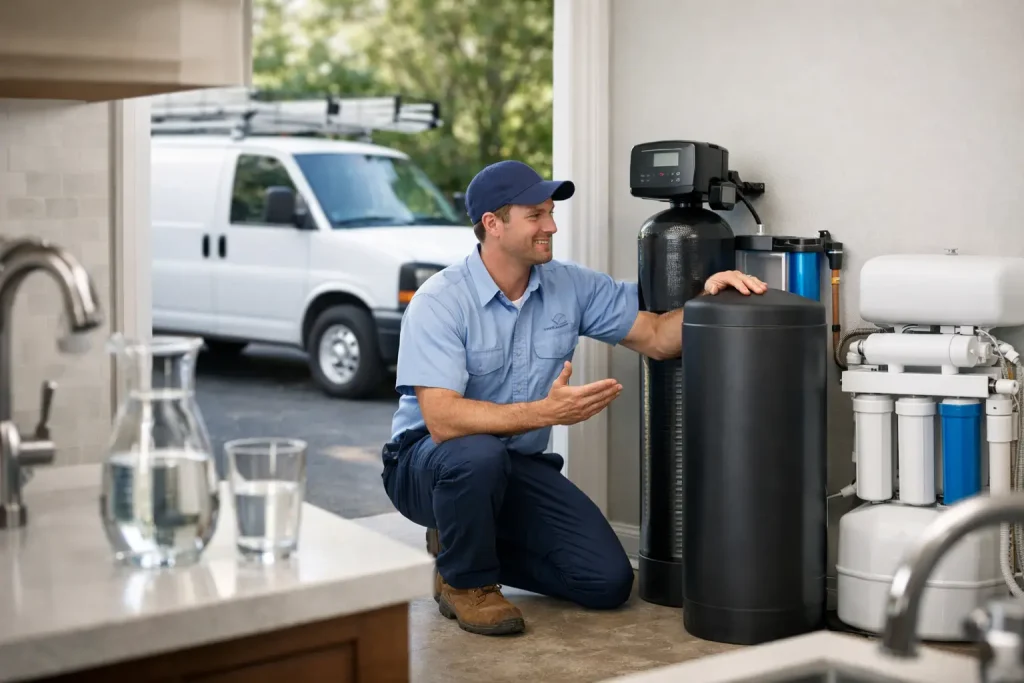
Brown stains in a toilet, a rotten-egg odor at the tap, scale on a kettle, or cloudy well water are not problems to solve by choosing a filter off the shelf. The best water treatment options start with identifying what is actually in the water, how much water the property uses, and whether the supply comes from a private well or a municipal system.
For homeowners in Eastern Ontario, water conditions can vary significantly from one property to the next. A system that works well for a neighbor may not address your home’s iron, hardness, bacteria, sediment, or taste concerns. The right solution should protect your plumbing fixtures and appliances while providing water that is appropriate for drinking, cooking, bathing, and everyday use.
Start With a Water Test, Not a Product
Water treatment is most effective when it is based on evidence. For private wells, routine testing for bacteria is a basic safety step. A broader water analysis can also identify hardness, iron, manganese, sulfur, pH, total dissolved solids, and other conditions that affect treatment equipment.
Municipal water may be treated before it reaches your home, but that does not mean every homeowner has the same concerns. Chlorine taste, aging plumbing, sediment, and specific household preferences can still make filtration worthwhile. The treatment goal may be as simple as improving taste at one drinking tap or as comprehensive as conditioning the entire home’s water supply.
A proper assessment also looks beyond the lab results. Low water pressure, a well pump that cycles frequently, a clogged pressure tank filter, or undersized plumbing can resemble a water-quality issue. Before installing equipment, the water supply and plumbing system should be checked so the treatment plan addresses the real cause.
Best Water Treatment Options by Water Problem
There is no single best system for every home. Each option is designed to address a particular condition, and many properties need a combination of equipment.
Water Softeners for Hard Water
Hard water contains elevated calcium and magnesium. It commonly leaves white scale on faucets, shower doors, dishes, and heating elements. It can also make soap harder to rinse away and shorten the service life of water heaters, dishwashers, washing machines, and fixtures.
A conventional ion-exchange water softener is often the most reliable choice for significant hardness. It replaces hardness minerals with sodium or potassium through a regeneration process. This equipment needs a drain connection, electricity, and regular salt or potassium replenishment. It also must be sized for the home’s water use and hardness level. A unit that is too small may regenerate too often, while an oversized or poorly programmed system can waste water and salt.
Salt-free conditioners are sometimes considered where the main objective is reducing scale buildup rather than removing hardness minerals. They are not a direct substitute for a true softener in every situation. If your water test shows high hardness and you want noticeably softer bathing and laundry water, a traditional softener is generally the more appropriate option.
Iron and Manganese Filters for Staining
Orange, reddish-brown, black, or dark gray staining often points to iron or manganese. These minerals can stain fixtures and laundry, plug faucet aerators, and create buildup in toilets and appliances. Their appearance can change after water sits in a glass or after it is exposed to air, so visual symptoms alone do not confirm the right treatment method.
Depending on the test results, an iron filter may use oxidation, air injection, specialized media, or another process to capture the minerals before they enter the home. Some water softeners can handle small amounts of clear-water iron, but they are not always the best choice for higher iron levels or more complex water chemistry. Iron treatment may require backwashing, a drain connection, and periodic service to keep the media and control valve operating correctly.
Sulfur Treatment for Rotten-Egg Odors
A rotten-egg smell is commonly associated with hydrogen sulfide gas, although certain bacteria or plumbing conditions can contribute to odors as well. The odor may be present in both hot and cold water, only at one fixture, or primarily when water has been sitting unused.
The proper solution depends on where the problem begins. An oxidizing filter can often remove hydrogen sulfide from the incoming supply. In other cases, well disinfection, plumbing adjustments, or water heater service may be part of the answer. Treating the whole home with the wrong filter can leave the odor unchanged, which is why diagnosis matters before installation.
Sediment Filtration for Sand, Silt, and Cloudiness
Sediment filters capture physical particles such as sand, silt, rust, and debris. They can be especially useful on private wells, after plumbing work, or where older piping contributes visible particles. Sediment filtration also protects other equipment, including softeners, UV systems, and specialty filters, from premature fouling.
A cartridge filter is a practical option for light to moderate sediment, but it needs scheduled replacement. For heavier sediment loads, a backwashing filter may be a better fit because it can clean itself and reduce frequent cartridge changes. The right filter size and micron rating depend on the amount and type of material in the water. A filter that is too fine can restrict flow and contribute to pressure complaints.
UV Water Treatment for Bacteria Control
Ultraviolet, or UV, treatment is commonly used on private well systems to disinfect water by exposing it to ultraviolet light. It can be an effective final barrier against bacteria and certain microorganisms when it is correctly selected, installed, and maintained.
UV is not a filter. It does not remove sediment, hardness, iron, odor, or chemical contaminants. Clear water is essential because particles can shield microorganisms from the UV light. For that reason, a UV unit is often installed after sediment and iron treatment. The lamp must be replaced on schedule, the quartz sleeve needs cleaning when required, and the unit needs reliable electrical power. If there is a power interruption, the system cannot disinfect water until power is restored.
Carbon Filters for Taste and Chlorine
Activated carbon is well suited to improving taste and reducing chlorine odor, particularly on municipally supplied water. It may be installed as a point-of-use filter at a kitchen sink or as a whole-home unit when the concern applies throughout the house.
Carbon media has limits. It needs appropriate contact time and eventual replacement, and it should not be treated as a universal answer to unknown water-quality concerns. A carbon filter can make water taste better without addressing bacteria, hardness, or heavy iron.
Reverse Osmosis for Drinking Water
Reverse osmosis, often called RO, is a point-of-use system usually installed at a kitchen sink. It uses a membrane and multiple filtration stages to reduce a wide range of dissolved substances in drinking water. It can be a strong choice when the goal is higher-quality water for drinking, cooking, coffee, and ice.
RO does not usually replace whole-home treatment. It produces water more slowly than a standard faucet and sends some water to drain as part of the treatment process. A properly installed system needs periodic filter and membrane maintenance, and it should be connected and drained in a way that protects the plumbing system.
Build a Treatment System in the Right Order
When a home has several water concerns, equipment order affects performance. A typical well-water layout may begin with sediment removal, followed by iron or sulfur treatment, a softener if needed, and UV disinfection near the end of the process. A reverse osmosis unit can then serve a dedicated drinking-water faucet.
The exact sequence depends on the water test and the equipment selected. For example, iron can foul a UV sleeve, and sediment can clog a softener control valve. Installing one device without considering the rest of the system can create unnecessary maintenance and leave the original problem unresolved.
Space, drainage, electrical access, bypass valves, shutoffs, and future service access should also be part of the plan. Water treatment equipment belongs in a clean, accessible location that is protected from freezing. On well systems, treatment should be coordinated with the pressure tank, pump controls, and plumbing layout rather than treated as an isolated add-on.
Maintenance Is Part of Safe, Dependable Water Treatment
Every treatment system needs attention. Softener salt must be maintained, filter cartridges need changing, backwashing equipment needs periodic inspection, and UV lamps need replacement at the manufacturer’s recommended interval. Ignoring maintenance can reduce flow, affect water quality, or allow a problem to return gradually.
Keep a simple record of filter changes, service dates, and water-test results. If staining, odor, cloudiness, or pressure changes return, that history can help identify whether the issue is treatment maintenance, a change in well conditions, or a separate plumbing concern.
The most useful water treatment system is not necessarily the largest one. It is the one matched to your tested water, household demand, plumbing layout, and maintenance expectations. A qualified plumbing team can help connect those details into a practical plan, so your home has water treatment that works reliably long after installation.