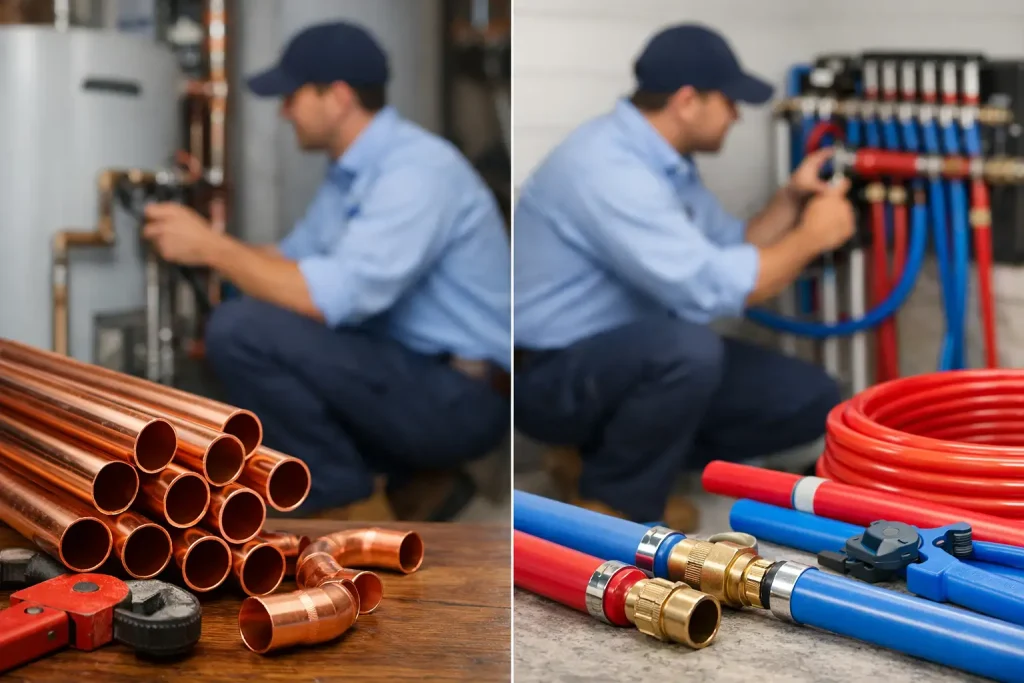
A pipe replacement is rarely just about a pipe. It may start with a pinhole leak behind a finished wall, weak pressure at an upstairs fixture, discolored water, or a renovation that exposes aging plumbing. When homeowners weigh copper versus PEX, the best answer depends on the property, its water conditions, the available access, and the scope of the work.
Both materials can provide dependable domestic water piping when they are properly designed and installed. The practical question is not which pipe is universally better. It is which system makes the most sense for your home, building, or planned upgrade.
Copper Versus PEX: The Key Differences
Copper is a rigid metal pipe with a long history in residential and commercial plumbing. It is joined with properly selected fittings and requires careful routing through framing, walls, and mechanical spaces. Many established homes throughout Eastern Ontario have copper plumbing, either throughout the building or as part of a previous upgrade.
PEX, short for cross-linked polyethylene, is a flexible plastic water pipe. It is commonly installed in long runs with fewer directional fittings, using an approved fitting system. Its flexibility can make it especially useful when new water lines must be routed through existing framing with limited wall and ceiling openings.
The material choice affects more than the pipe itself. It influences installation planning, connection methods, freeze protection, water quality considerations, future service access, and how the plumbing coordinates with electrical, heating, and renovation work.
Where Copper Makes Sense
Copper remains a proven choice for many plumbing applications. It is rigid, durable, and well suited to exposed locations where a clean, permanent-looking installation matters. In a mechanical room, for example, copper can provide organized piping around water treatment equipment, shutoff valves, pumps, and other serviceable components.
It also has strong resistance to physical damage in areas where piping may be exposed. A properly supported copper installation does not depend on the same level of protection from impact as flexible tubing. For certain visible runs or specific building conditions, that can be a meaningful advantage.
Copper is not affected by ultraviolet exposure in the way PEX is. That matters if pipe will be temporarily stored or permanently routed where sunlight reaches it. It also handles higher temperatures than PEX, although domestic water systems should still be designed to control temperature safely at fixtures.
However, copper is not immune to problems. Water chemistry can affect its service life. Aggressive or acidic water, high mineral content, and certain corrosion conditions may contribute to pinhole leaks or deterioration over time. A home supplied by a private well should not assume that copper is automatically the right choice without considering water quality and treatment needs.
Copper is also less forgiving in tight renovation spaces. Because it is rigid, it needs more fittings to turn corners and change direction. Each joint must be installed correctly, inspected, and left accessible where required. In a finished home, that can affect how much access is needed to complete a repair or repipe safely.
Where PEX Is a Strong Fit
PEX is widely used because it is flexible, efficient to route, and practical for many repiping and new-construction projects. Long, continuous runs can often be installed through joist spaces and wall cavities with fewer connections hidden inside the building. Fewer concealed joints can simplify the layout and reduce potential leak points.
Its flexibility is particularly valuable during renovations. Rather than opening large sections of finished drywall to route rigid pipe, a qualified plumber may be able to guide PEX through smaller, carefully planned access points. That does not eliminate the need for wall or ceiling access, but it can reduce disruption in the right layout.
PEX also tolerates freezing conditions better than rigid copper because it can expand to a degree. That is not a guarantee against freeze damage. Water lines can still burst, fittings can fail, and a frozen pipe is always a service concern. Proper insulation, heated-space routing, air sealing, and protection around exterior walls remain the real defenses against freezing.
For homes with private wells, water treatment systems, or complex mechanical rooms, PEX can work well when the system is planned around serviceability. Shutoffs, manifolds, pressure tanks, filters, softeners, and fixtures should all be arranged so future maintenance does not require guesswork or unnecessary disruption.
PEX does have limitations. It must be protected from direct sunlight and from physical damage. It needs proper support, protective plates where it passes through framing, and correct clearance from heat-producing equipment. The fitting method also matters. A dependable installation relies on compatible, approved components and a contractor who follows the system requirements rather than mixing methods casually.
Water Quality Can Change the Decision
For many properties in Leeds and Grenville, the water source deserves a close look before selecting plumbing materials. Municipal water and private well water can behave very differently, and water conditions can vary between nearby properties.
If a home has staining, scale buildup, metallic taste, recurring pinhole leaks, or water-treatment equipment, those details should be part of the plumbing conversation. A water test and a review of the existing system can help identify whether mineral content, pH, hardness, iron, or other conditions are affecting fixtures and piping.
PEX does not corrode like copper, which can make it attractive when water chemistry is a concern. But it does not solve every water-quality problem. Hard water can still affect fixtures, water heaters, valves, and appliances. Iron and sediment can still restrict filters or damage equipment. The right solution may include treatment, filtration, a softener, or adjustments to the overall plumbing layout – not simply a different pipe material.
Consider the Whole Plumbing System, Not Just the Pipe
A repipe is an opportunity to correct problems that may have been hidden by the original installation. Old shutoff valves, poorly supported lines, unprotected pipes near exterior walls, undersized branches, and hard-to-reach connections can all create future service issues.
For an addition, basement finish, or major renovation, water piping should be coordinated with electrical, HVAC, insulation, and framing work before walls are closed. This is especially important when a project includes a new bathroom, laundry area, well pump equipment, water treatment, or a relocated mechanical room. Early planning avoids conflicts between ducts, drains, wiring, and water lines.
A well-designed system should also make isolation straightforward. Individual fixture shutoffs, accessible main shutoffs, and clearly planned zones can reduce the impact of a future repair. If a line leaks, you want to isolate the affected area without shutting down water to the entire property for longer than necessary.
What About Mixing Copper and PEX?
Many homes use both materials, and that is often completely appropriate. A plumber may retain sound copper piping in accessible areas while replacing damaged or difficult-to-service branches with PEX. Copper may be used near equipment or on exposed sections, with PEX routed through walls and ceilings to serve fixtures.
The transition points need to be installed correctly, supported properly, and planned with future maintenance in mind. A mixed system should never be treated as a shortcut. It should be a deliberate repair or upgrade strategy based on the condition of the existing pipes and the goals of the project.
Questions to Ask Before Choosing
Before committing to copper or PEX, it helps to look beyond the immediate leak or renovation task. Consider the age and condition of existing plumbing, whether the home is on a well or municipal supply, and whether there are signs of water-quality issues. Think about access: are walls open now, or will the work take place in a finished home?
Also consider future plans. If a bathroom addition, kitchen renovation, water softener, pressure tank replacement, or mechanical-room upgrade may happen later, piping choices made now can either support that work or make it more complicated. A clear layout and accessible shutoffs provide value long after the installation is complete.
The Right Material Is the One That Fits the Job
Copper and PEX are both dependable options when used in the right place and installed to current requirements. Copper can be an excellent fit for durable exposed piping and specific system layouts. PEX can be a practical solution for efficient routing, renovations, and properties where water chemistry makes corrosion a concern.
If you are dealing with a leak, low water pressure, aging pipes, or a renovation plan, start with a full assessment of the plumbing system rather than choosing a material from a single rule of thumb. A qualified local plumbing team can evaluate the piping, water source, access conditions, and connected equipment, then recommend a path that protects your property and makes future service easier.