A breaker that trips once after a clear overload can be frustrating. A breaker that keeps tripping is your electrical system telling you something needs attention. If you are asking, “why does my breaker trip,” the answer is usually that the circuit is carrying too much current, a device has developed a fault, or there is a wiring problem that needs professional diagnosis.
The breaker is a safety device. It shuts off power before wiring can overheat, equipment can be damaged, or a fault creates a shock or fire risk. Resetting it may restore power temporarily, but repeatedly forcing a breaker back on without finding the cause is never a repair.
Why Does My Breaker Trip in the First Place?
A circuit breaker monitors the electricity flowing through a circuit. When current exceeds what the wiring and breaker are designed to handle, the breaker opens and cuts power. It can also trip quickly when it detects a short circuit or ground fault.
The timing of the trip provides useful clues. If it trips after several appliances are running for a while, an overload is likely. If it trips immediately when you plug in or turn on one item, suspect that appliance, cord, outlet, or switch. If it trips with nothing apparently running, the issue may be hidden wiring, an outdoor receptacle, a hardwired appliance, or the breaker itself.
Older homes, renovated spaces, garages, kitchens, laundry rooms, and areas with added electric heating or workshop equipment often need special attention. The electrical demand in a home changes over time, but the original circuit layout may not have changed with it.
The Most Common Reasons a Breaker Trips
An overloaded circuit
An overload happens when too many devices draw power from the same circuit at once. This is common in kitchens, bathrooms, garages, basements, bedrooms with space heaters, and home offices. A toaster oven, kettle, microwave, and coffee maker can easily overload a shared kitchen circuit. In a garage, a compressor, heater, freezer, and power tools may do the same.
Extension cords and power bars do not increase a circuit’s capacity. They only allow more devices to connect to the same circuit. If a breaker trips when several items are in use, unplug or switch off some loads, then reset the breaker once. If the circuit stays on after reducing the load, the immediate problem may be capacity rather than a damaged component.
The long-term solution depends on how the space is used. It may be as simple as distributing appliances across different circuits. It may also mean adding a dedicated circuit for equipment such as a microwave, dishwasher, sump pump, freezer, electric heater, or workshop tool.
A short circuit
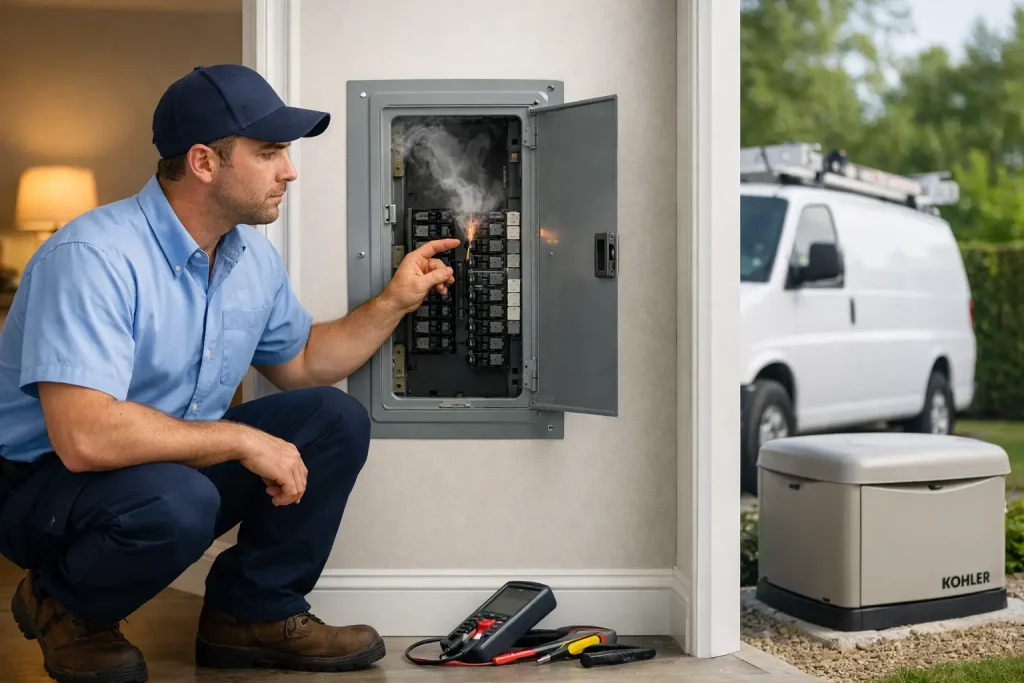
A short circuit occurs when a hot wire contacts a neutral wire or another unintended conductive path. This causes a sudden surge of current, and the breaker usually trips immediately. You may notice a pop, a burning smell, discoloration at an outlet, or a breaker that will not remain reset.
Damaged appliance cords, loose connections, worn outlets, rodent damage, moisture, and incorrect wiring can all lead to a short circuit. Do not continue testing an outlet or appliance if you see scorch marks, smell burning insulation, hear crackling, or feel unusual heat. Leave the breaker off and arrange for a licensed electrician to inspect the circuit.
A ground fault
A ground fault happens when electricity leaves its intended path and flows to ground through metal, moisture, or a person. These faults are especially concerning in locations where water is present, including bathrooms, kitchens, laundry areas, outdoors, garages, and unfinished basements.
Ground-fault circuit interrupter protection, often called GFCI protection, is designed to shut power off quickly when it senses an imbalance. Sometimes the device that has tripped is a GFCI receptacle rather than the breaker at the panel. A bathroom outlet, exterior outlet, garage outlet, or basement receptacle may be controlled by one GFCI device located elsewhere.
If a GFCI will not reset, or resets and trips again, moisture or a faulty connected device may be involved. Disconnect anything plugged into the protected outlets before trying one reset. If it continues to trip, do not bypass the protection or replace the receptacle without diagnosing the cause.
A faulty appliance or cord
One appliance can trip a healthy circuit. Portable heaters, older refrigerators, vacuums, power tools, air conditioners, kettles, and damaged chargers are common examples because they either draw significant current or can develop internal faults.
To narrow down the issue safely, unplug everything on the affected circuit. Reset the breaker once, then reconnect items one at a time. If the breaker trips when a particular appliance is connected or switched on, stop using that item until it has been repaired or replaced. If the breaker trips with every item unplugged, the problem is more likely in the fixed wiring, an outlet, a light fixture, or equipment that is hardwired.
An AFCI trip
Many newer or updated electrical systems include arc-fault circuit interrupter protection, or AFCI protection. These breakers are designed to detect dangerous electrical arcing that can occur from damaged cords, loose connections, pinched wiring, or failing devices.
An AFCI can trip because of a real wiring issue, but diagnosing the reason may require more than a visual inspection. Appliances with motors or electronic controls can sometimes affect troubleshooting as well. If an AFCI repeatedly trips, avoid replacing it with a standard breaker or disabling the protection. The protection is there to reduce fire risk, and an electrician can determine whether the issue is the circuit, a connected device, or the breaker itself.
A problem with the breaker or panel
Breakers can wear out, and panel connections can loosen or deteriorate. A failing breaker may trip under normal use, feel hot, make unusual noises, or refuse to reset even after the circuit load has been removed. However, a breaker should not be assumed to be defective simply because it trips. Replacing a breaker without testing the circuit can conceal the actual fault.
Panel work should be left to a licensed electrician. Even when the main breaker is off, parts of an electrical panel may remain energized. This is not a place for trial-and-error repairs.
What You Can Safely Check Before Calling
Start by identifying what lost power. Look for outlets, lights, appliances, or rooms that are off, then check your panel for a breaker sitting between the on and off positions. To reset it properly, move the breaker fully to off first, then back to on.
Before doing that, turn off or unplug the devices on the affected circuit. If the breaker stays on after you reduce the load, you can use the circuit cautiously while planning a more permanent solution if it is routinely overloaded. If it trips again immediately, leave it off.
A quick visual check can also help. Look for damaged cords, loose plugs, moisture near outlets, scorched receptacles, or an appliance that was running when the outage occurred. Check accessible GFCI receptacles and press reset only if the area is dry and there are no signs of damage.
Do not remove outlet covers, open the panel, use a larger breaker, or repeatedly reset a tripping breaker. A breaker is sized to protect the wire behind the wall. Installing a larger one without confirming the wiring is rated for it can create a serious overheating hazard.
When a Repeated Breaker Trip Needs Professional Service
Call for electrical service promptly if a breaker trips repeatedly, will not reset, trips with no devices connected, or trips when a major hardwired appliance starts. You should also arrange an inspection if you notice burning odors, buzzing, warm outlets or panel components, flickering lights, corrosion, water near electrical equipment, or visible damage.
Some electrical issues overlap with other home systems. A sump pump that trips its circuit can put a basement at risk during heavy rain. A well pump circuit that fails can mean no water. An HVAC circuit that trips may leave the home without heating or cooling when you need it most. In these cases, restoring power safely involves checking both the electrical circuit and the equipment it serves.
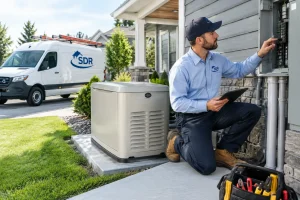
For renovations, additions, electric vehicle charging, backup generators, finished basements, and new high-demand appliances, a load assessment can prevent nuisance tripping before it begins. SDR Electric, Plumbing & Heating can assess the circuit, identify the actual cause, and recommend a repair or upgrade that fits the way your property is used.
A breaker that trips is doing its job. Treat it as an early warning, not an inconvenience to override, and you can address a small electrical problem before it becomes a larger interruption or safety concern.