A furnace or air conditioner can be running normally while a neglected filter quietly makes the whole system work harder. Homeowners often ask, “when should HVAC filters change?” The practical answer is based on filter type, household conditions, and how often the equipment runs – not just the date written on the filter frame.
A clean filter supports steady airflow through your heating and cooling equipment. A dirty one can reduce comfort, increase strain on the blower, and allow more dust to circulate through the home. Checking it regularly is a simple maintenance task that can prevent avoidable service issues.
When Should HVAC Filters Change in a Typical Home?
For many homes, a 1-inch disposable HVAC filter should be checked monthly and replaced every one to three months. That is a useful starting point, but it is not a fixed rule. A system that runs heavily during a cold Eastern Ontario winter or a hot, humid summer may need a fresh filter more often than a system used lightly during mild weather.
Thicker media filters usually last longer because they have more surface area to collect dust. Depending on the model and the conditions in the home, a 4-inch or 5-inch filter may last six to 12 months. Always follow the filter and equipment manufacturer’s guidance, but do not rely on the calendar alone. If the filter looks loaded with dust or airflow has noticeably dropped, replacement may be needed sooner.
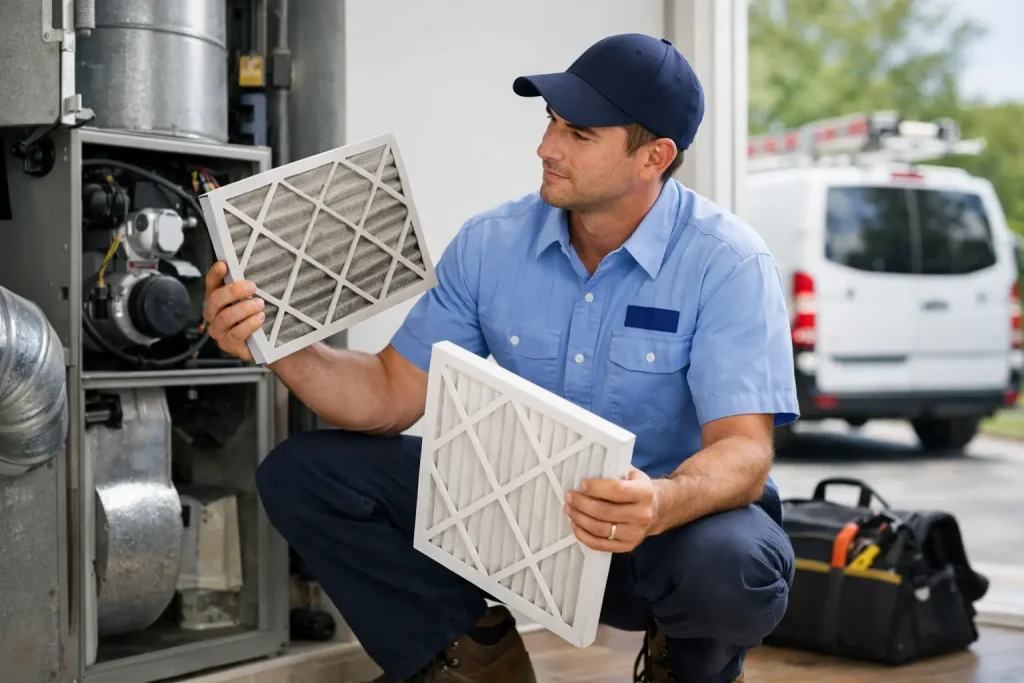
The best routine is to inspect the filter every month. Hold it up to a light source. If very little light passes through the filter material, it is likely time to replace it. Visible dust buildup, discoloration, pet hair, or a musty smell are also good reasons to change it.
What Makes a Filter Get Dirty Faster?
Two homes with the same furnace can need very different filter schedules. The amount of airborne material in the home and the amount of time the system operates both matter.
Homes with pets often need more frequent filter changes. Pet dander and hair can build up quickly, especially when supply and return grilles are close to areas where pets sleep or play. A home with multiple pets may need a 1-inch filter changed every 30 to 60 days.
Allergies are another factor. A higher-efficiency filter can capture finer particles, but it may also become restrictive sooner than a basic filter. If someone in the household is sensitive to pollen, dust, or other airborne particles, inspect the filter monthly and replace it before it becomes visibly loaded.
Renovations create a large amount of fine dust. Sanding drywall, cutting flooring, demolition work, and even repeated trips through a work area can push dust into the return-air system. During active renovation work, check the filter more often. If possible, protect return grilles in the work area without blocking system airflow, and avoid running the HVAC system while heavy dust-producing work is underway.
Other conditions that shorten filter life include smoking indoors, frequent use of fireplaces, a dusty rural property, open windows during high-pollen periods, and a large household with doors opening often. Commercial spaces and rental properties may also need a closer schedule because occupancy and operating hours vary significantly.
A Dirty Filter Can Cause More Than Dust
Your HVAC filter is not there only to improve indoor air quality. It also protects the equipment. Return air passes through the filter before moving across sensitive components such as the blower, indoor coil, and heat exchanger area. When airflow is restricted, the system has to work harder to move air through the ductwork.
In heating mode, poor airflow can contribute to overheating and may cause the furnace’s safety controls to shut the unit down. In cooling mode, low airflow across the indoor coil can contribute to freezing, weak cooling, or water-related issues when the ice melts. These symptoms do not always mean the filter is the only problem, but it is one of the first things to check.
A clogged filter can also make rooms feel uneven. You may notice that the system runs longer, certain rooms do not reach the thermostat setting, or airflow from supply vents feels weak. Replacing the filter is a sensible first step. If comfort problems continue with a clean filter, the issue may involve ductwork, blower performance, thermostat controls, refrigerant operation, or another component that needs qualified service.
Choose the Right Filter, Not Just the Highest Rating
Filter ratings are often shown as MERV, which stands for Minimum Efficiency Reporting Value. In general, a higher MERV rating captures smaller particles. That can be beneficial, but a higher rating also may create more resistance to airflow if the system is not designed for it.
For many residential systems, a mid-range filter provides a practical balance between filtration and airflow. The correct choice depends on your furnace or air handler, the filter cabinet, the size of the return-air system, and household needs. Installing an overly restrictive filter can create the same airflow problems as leaving a basic filter in too long.
Filter fit matters just as much as rating. Use the size specified for the filter rack or cabinet, and install it with the airflow arrow pointing toward the furnace or air handler. A filter that is bent, undersized, or loosely fitted can allow unfiltered air and debris to bypass it.
If you are unsure which filter is appropriate, do not guess based on the packaging alone. An HVAC technician can confirm what your equipment can handle and recommend a maintenance schedule suited to the home.
How to Change an HVAC Filter Safely
Changing a filter is usually straightforward, but it should be done carefully. Turn the thermostat system off first, especially if the filter location is near moving equipment. Find the filter slot, which may be located in the return-air grille, furnace cabinet, air handler, or a dedicated filter rack beside the equipment.
Slide out the old filter and note its dimensions, airflow direction, and MERV rating. Before installing the replacement, look for any signs that should not be ignored: excessive dirt inside the cabinet, moisture, standing water, damaged wiring, unusual odors, or a filter that has been pulled into the equipment. These can point to a larger airflow, drainage, or mechanical concern.
Install the new filter in the correct direction, close the compartment securely, and turn the system back on. Writing the installation date on the filter frame makes future checks easier. A recurring reminder on a phone calendar is also helpful, particularly for busy households and landlords managing several properties.
Signs You Should Check the Filter Today
You do not need to wait for a scheduled replacement date if the system is showing signs of restricted airflow. Check the filter if you notice:
- Weak air coming from supply vents
- Longer heating or cooling cycles
- More dust collecting around vents and furniture
- Hot or cold rooms that were previously comfortable
- A furnace that shuts down unexpectedly or an air conditioner that is not cooling well
- A visible layer of dirt, pet hair, or debris on the filter
These signs can have other causes, so a new filter is not a substitute for diagnosis when the equipment is not operating properly. If the system keeps shutting down, makes unusual noises, leaks water, gives off burning or gas-like odors, or will not maintain temperature after a filter change, arrange professional service promptly.
Keep Filter Changes Part of Seasonal Maintenance
A filter check fits naturally into seasonal home maintenance. Before the heating season, confirm that the filter is clean, vents are open and unobstructed, and the area around the furnace is clear. Before the cooling season, do the same and make sure the outdoor unit has space around it for proper airflow.
For homeowners in Brockville, Leeds and Grenville, and surrounding communities, seasonal temperature swings can mean long operating hours for heating and cooling equipment. A simple filter routine helps reduce unnecessary stress during the times you rely on the system most.
If you are changing filters more often than expected, or they become unusually dirty in just a few weeks, treat that as useful information. It may be caused by pets or renovation dust, but it can also point to duct leakage, return-air issues, poor filter fit, or an equipment problem worth checking. A clean filter is a small step, but it gives your HVAC system the airflow it needs to do its job safely and reliably.