A kitchen light that flickers once when the refrigerator starts may be annoying. Lights that dim throughout the house, flash unpredictably, or change when you use another appliance deserve closer attention. Understanding what causes flickering house lights can help you separate a simple bulb issue from an electrical problem that needs prompt professional service.
Some causes are minor and isolated to one fixture. Others involve overloaded circuits, loose wiring connections, or a problem at the electrical panel or utility service. The pattern matters: where the flickering happens, when it happens, and whether other electrical symptoms appear at the same time.
What causes flickering house lights?
Flickering occurs when a light does not receive steady power or when there is a poor connection between the bulb, fixture, switch, wiring, or power supply. The source can be as simple as an aging LED bulb, but it can also point to a connection that is heating up behind a wall or inside a panel.
Start by noticing whether one light flickers or several do. A single fixture usually narrows the issue to the bulb, fixture, switch, or branch circuit. Multiple lights in different rooms, especially if they brighten and dim together, can indicate a larger service or panel issue.
A loose or failing light bulb
A bulb that is not fully seated in its socket can flicker as vibration or normal fixture movement affects the connection. Turn off the switch, allow the bulb to cool, and carefully check that it is properly installed. If it still flickers, try a known-good bulb of the correct type and wattage for the fixture.
LED bulbs can also fail before their advertised lifespan, particularly in enclosed fixtures that trap heat. If replacing the bulb solves the problem, the electrical system may be fine. If a new bulb flickers in the same fixture, further troubleshooting is warranted.
An incompatible dimmer switch and LED bulb
Many older dimmer switches were designed for incandescent bulbs. When paired with certain LED bulbs, they may cause flickering, buzzing, reduced dimming range, or lights that will not turn fully off. This is especially common after homeowners replace older bulbs with energy-efficient LEDs.
A compatible dimmer and dimmable LED bulbs often resolve the issue. However, do not assume every dimmer-related problem is harmless. A warm switch plate, crackling sound, burning smell, or intermittent power should be evaluated by a licensed electrician.
A worn fixture, switch, or socket
Light fixtures and switches have electrical contacts that wear over time. A loose socket tab, failing switch, damaged fixture wiring, or corroded connection can interrupt power to the light. You may notice flickering when you touch the switch, open a door, use a ceiling fan, or move the fixture.
This type of problem may be limited to one room, but it should not be ignored. Electrical connections that repeatedly lose contact can create heat and damage surrounding components. A qualified electrician can test the circuit and repair or replace the affected device safely.
Circuit problems that can make lights flicker
A light may flicker because another device on the same circuit is drawing a large amount of power. Central air equipment, refrigerators, freezers, microwaves, well pumps, sump pumps, shop tools, and portable heaters can all create a brief voltage drop when starting.
A small, occasional dip in nearby lights can happen in some homes. Frequent or severe dimming is not something to accept as normal, especially if it has recently started or gets worse when a particular appliance runs.
An overloaded circuit
Older homes and renovated spaces sometimes have too many outlets, lights, and appliances sharing one branch circuit. The circuit may not trip, yet lights can flicker when several loads operate at once. This is common in kitchens, garages, basements, home offices, and areas where additional equipment has been added over time.
Avoid trying to solve repeated flickering by simply moving extension cords around or replacing breakers with larger ones. Circuit protection must match the wiring it protects. An electrician can determine whether the load needs to be redistributed, a dedicated circuit added, or an outdated panel upgraded.
Loose wiring connections
Loose connections are one of the more serious answers to the question, “what causes flickering house lights?” A wire connection can loosen from age, vibration, improper installation, or thermal expansion and contraction. The problem may be at a switch, outlet, ceiling box, junction box, panel, meter base, or service connection.
As resistance rises at a loose connection, the connection can overheat. Signs may include flickering, a buzzing outlet or panel, a switch or outlet that feels warm, discoloration, a burning odor, or breakers that trip without an obvious reason. Turn off power to the affected area if it is safe to do so, and arrange professional electrical service as soon as possible.
A failing breaker or electrical panel issue
Breakers and panel components can deteriorate, particularly in aging electrical systems or panels that have been modified over many years. Corrosion, moisture exposure, worn bus connections, or improperly terminated wires can create unstable power to one or more circuits.
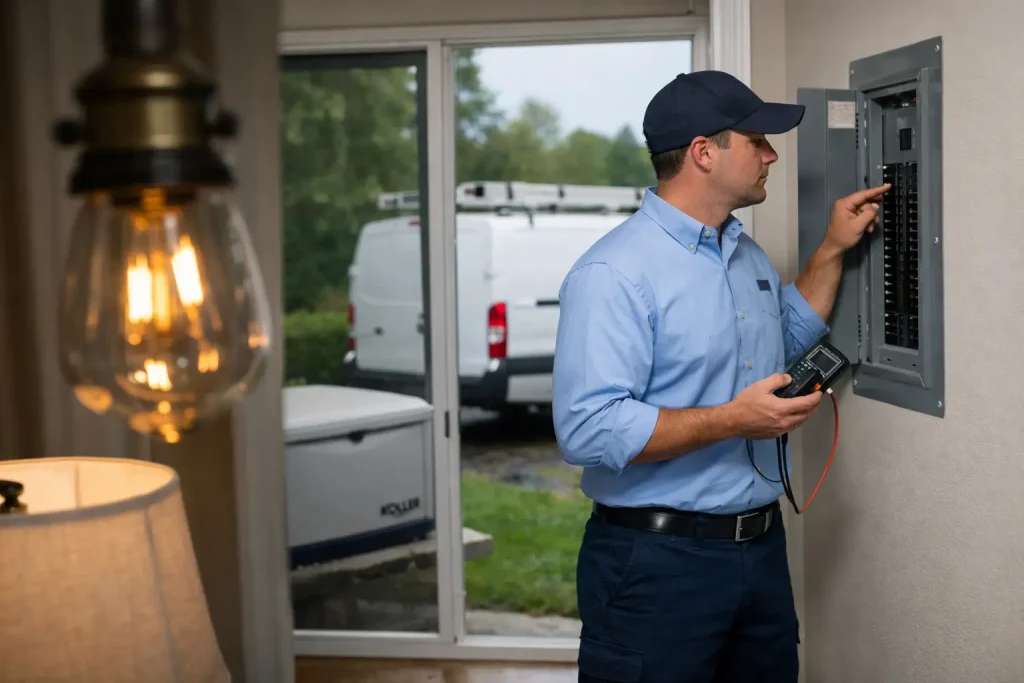
Do not remove a panel cover or attempt to tighten wiring yourself. Even with a main breaker turned off, parts of an electrical panel may remain energized. A licensed electrician has the testing equipment and training to identify whether the issue is a breaker, circuit connection, panel component, or incoming service problem.
When flickering points to a utility or service issue
If lights flicker across the home, brighten noticeably, or dim when major equipment starts, the issue may be beyond a single circuit. A problem with the main service, meter base, service entrance wiring, or utility connection can affect multiple rooms at once.
Pay particular attention if some lights become unusually bright while others dim. This can be a sign of a loose neutral connection, which may create damaging voltage changes for appliances and electronics. Shut off sensitive equipment if you can do so safely, avoid using major appliances, and contact a licensed electrician promptly. Depending on the diagnosis, the electrician may also advise contacting the utility provider.
Storms, fallen branches, and vehicle damage to nearby utility equipment can also cause intermittent power quality problems. If neighbors are experiencing similar symptoms, a utility-side issue is more likely. Still, do not assume the cause is outside your home without having the situation assessed when symptoms are persistent or severe.
What to do when your lights flicker
Begin with the simple observations that help identify the source. Note which lights flicker, whether they are on the same circuit, and what was running at the time. Check whether the issue stops with a new bulb or after turning off a dimmer. These details give an electrician a more efficient starting point.
Call for electrical service soon if the flickering affects multiple fixtures, occurs repeatedly, or happens when appliances start. Treat the following signs as urgent: a burning smell, smoke, sparks, buzzing from a panel or outlet, hot switches or receptacles, discolored covers, frequent breaker trips, or lights that suddenly brighten and dim throughout the house.
Avoid repeatedly resetting a tripped breaker or continuing to use a device that appears connected to the problem. Do not use an extension cord as a permanent workaround for an overloaded area. If water has entered an electrical panel, outlet, or fixture, keep clear of the affected equipment and seek qualified help immediately.
Professional troubleshooting protects the whole system
Electrical troubleshooting is about more than stopping a visible flicker. A proper inspection follows the circuit back to its source, checks connections and voltage under load, and considers how appliances, pumps, heating and cooling equipment, and backup power systems interact with the home’s electrical service.
For homeowners in Brockville and surrounding Eastern Ontario communities, SDR Electric, Plumbing & Heating can assess flickering lights with a safety-first approach and provide clear recommendations based on the actual condition of the system. Whether the repair is a fixture connection, a dedicated circuit, or a larger service concern, addressing it early can help protect your home and the equipment that depends on steady power.
A flickering light is often the first visible clue that something has changed. Pay attention to the pattern, trust warning signs, and have persistent electrical symptoms checked before a minor interruption becomes a larger repair.