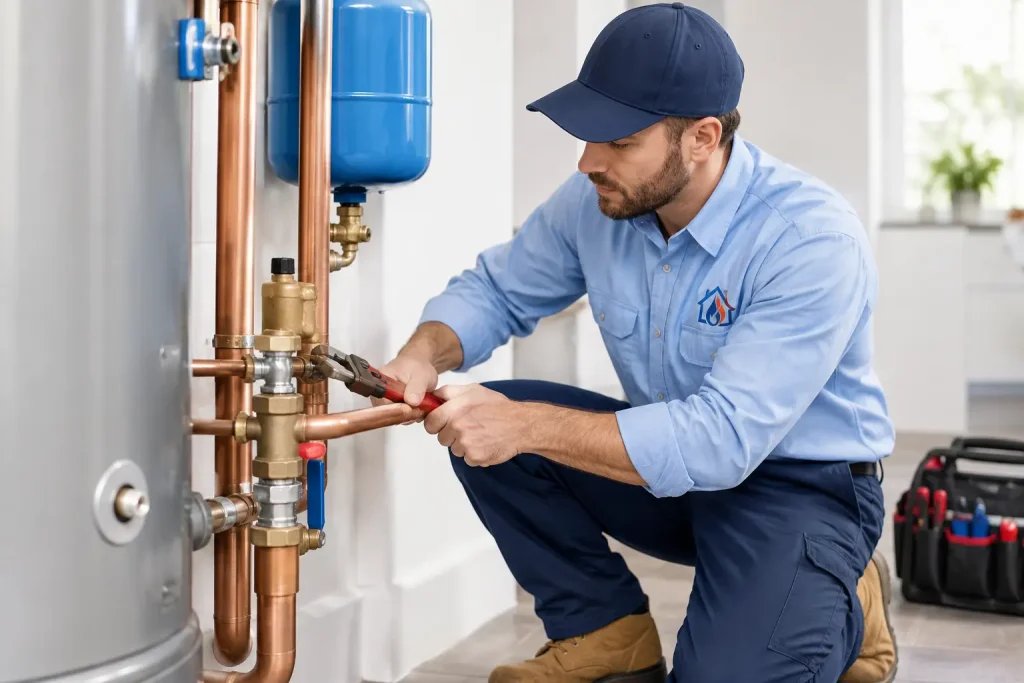
That sharp bang in the wall when a toilet finishes filling or a washing machine shuts off is more than an annoying plumbing sound. Water hammer can put repeated stress on pipe joints, valves, appliance hoses, and fixtures. Knowing how to stop water hammer starts with identifying when it happens and what is causing water to stop too suddenly.
A single light knock may be manageable, but loud or frequent banging deserves attention. In homes with finished basements, older plumbing, well systems, or recently replaced appliances, the cause is not always obvious. The right repair depends on whether the issue is high water pressure, unsupported piping, a fast-closing valve, or a failed water hammer arrestor.
What Water Hammer Sounds Like and Why It Happens
Water hammer is a pressure surge inside a water line. When flowing water is stopped abruptly, its momentum has to go somewhere. That sudden stop creates a shock wave that travels through the pipe, often producing a bang, thud, rattle, or vibration.
Fast-closing valves are common triggers. Washing machines, dishwashers, ice makers, and some modern faucets use solenoid or cartridge valves that can shut off quickly. If the plumbing system does not have adequate pressure control or shock absorption, the change in flow can make pipes move or strike nearby framing.
Not every pipe noise is water hammer. A ticking sound after a hot shower may be pipes expanding and contracting. A continuous hiss can point to a running toilet or a leaking valve. A rattle that happens only when water runs may be a loose pipe or failing fixture component. The timing of the sound matters: water hammer usually occurs at the exact moment water flow stops.
How to Stop Water Hammer: Start With the Likely Cause
The most effective repair is targeted. Before adding an arrestor or opening walls, pay attention to which fixture causes the noise and whether it happens throughout the property.
If the banging occurs only when the washing machine runs, the washer supply lines and valves are likely involved. If it happens when several fixtures close, overall water pressure or pipe support may be the issue. If the noise began after a new dishwasher, fridge, faucet, or toilet was installed, the new fixture may be closing faster than the previous one.
Check for Excessive Water Pressure
High pressure makes every pressure surge more severe. Many homes operate comfortably around 40 to 60 psi. Pressure consistently above 80 psi can strain plumbing components and should be corrected, not ignored.
A plumber can test static and flowing pressure and inspect the pressure-reducing valve, if your home has one. A malfunctioning pressure-reducing valve can allow pressure to climb, especially when demand is low. On homes served by a well, the pressure switch and pressure tank also need to be considered. A tank that is waterlogged, improperly charged, or short-cycling can contribute to unstable pressure conditions.
High pressure can also be related to thermal expansion. When a water heater warms cold water in a closed plumbing system, the water expands. An appropriate expansion tank helps manage that increase. Thermal expansion is not always the direct cause of water hammer, but correcting it can protect the overall system and reduce pressure-related problems.
Secure Loose Pipes Where They Are Accessible
Water lines should be supported so they cannot swing, rub, or strike framing when pressure changes. Pipes are often most accessible near a mechanical room, basement ceiling, utility area, or under a sink.
Look for visible pipes that shift noticeably when a nearby fixture turns on or off. A qualified plumber can add proper pipe supports, isolators, or protective padding where needed. Do not force a pipe into position or overtighten metal straps against copper or plastic piping. The goal is to control movement without damaging the pipe or creating noise from expansion.
If the noise is coming from behind a finished wall or ceiling, avoid cutting into surfaces based on guesswork. A plumbing professional can often narrow down the source by testing fixtures, listening at accessible sections of pipe, and evaluating pressure first.
Install or Replace Water Hammer Arrestors
A water hammer arrestor is a purpose-built device that absorbs the pressure surge created when a valve closes. Unlike a simple capped section of pipe, a modern arrestor typically uses a sealed air chamber or piston designed to cushion the shock wave.
Arrestors are often installed close to the fast-closing valve. For example, a washing machine may need arrestors on both hot and cold supply lines, while a dishwasher or ice maker may need one placed on its dedicated supply line. Placement matters. An arrestor installed far from the fixture may offer limited improvement because the pressure wave occurs at the valve itself.
Older homes may have traditional air chambers, which are vertical capped pipes intended to hold air. Over time, those chambers can fill with water and stop working. Some homeowners try draining the plumbing system to restore the air pocket. This can occasionally help on a system built with old-style air chambers, but it is not a permanent fix for every property. Modern sealed arrestors do not need to be drained or recharged.
Inspect the Fixture Valve Itself
Sometimes the problem is not the whole plumbing system. A worn toilet fill valve, loose faucet cartridge, defective shutoff valve, or appliance solenoid can create unusual noise as it closes.
A toilet that bangs at the end of its fill cycle is a common example. Replacing an aging fill valve may resolve the issue, particularly if the sound is isolated to one bathroom. Similarly, a washing machine valve that has become noisy or an appliance hose that is kinked, loose, or deteriorated should be inspected before assuming the pipes inside the wall are at fault.
Turn off the water supply before working on fixture valves. If you find corrosion, leaking shutoffs, brittle supply hoses, or valves that will not fully close, stop there and arrange a repair. Forcing a failing valve can turn a noise issue into an active leak.
When a DIY Fix Is Reasonable – and When It Is Not
Homeowners can safely start by identifying the fixture, checking for obvious loose accessible piping, and noting whether the issue is limited to hot water, cold water, or one appliance. It is also reasonable to replace a clearly failing toilet fill valve if you are comfortable shutting off and restoring water to the fixture.
The repair becomes more involved when the source is hidden, multiple fixtures are affected, water pressure is high, or the home has a well pump and pressure tank. These conditions call for proper testing and a system-level view. Adding arrestors without addressing excessive pressure may reduce the noise temporarily while leaving the underlying strain in place.
Professional service is particularly important if banging is accompanied by leaks, discolored water, reduced pressure, frequent well-pump cycling, or a pressure relief valve that drips near the water heater. Those signs can point to a broader plumbing issue that should be corrected promptly.
Preventing Water Hammer During Plumbing Upgrades
Water hammer prevention is easier when it is planned during a renovation, appliance replacement, or mechanical-room upgrade. New fast-closing fixtures should be evaluated with the existing pipe layout and water pressure in mind. Properly sized arrestors, secure piping, pressure regulation, and expansion control work together better than a single quick fix.
For property owners planning a kitchen renovation, laundry-room update, basement finish, or new appliance installation, this is also a good time to inspect shutoff valves and supply hoses. These small components are often overlooked until they fail or begin making noise.
SDR Electric, Plumbing & Heating can assess water hammer as part of a broader plumbing inspection, including fixture operation, water pressure, pipe support, water-heater connections, and well-system components where applicable. Clear testing helps ensure the recommended repair matches the actual cause rather than masking the sound.
A quiet plumbing system is not just more comfortable. It is a sign that water pressure, valves, and piping are working together as they should. Address the first repeated bang before it becomes the sound of a damaged fitting or an unexpected leak.