A generator that is too small can leave your well pump, furnace, refrigerator, or sump pump without enough power when you need them most. A generator that is unnecessarily large can complicate installation and fuel planning. Knowing how to select generator size starts with a clear look at what your property must keep running during an outage, not simply the square footage of the building.
For many Eastern Ontario homeowners, backup power is about more than lights and phone chargers. It may protect a basement from flooding, keep a water system operating, maintain heat during a winter outage, or support refrigeration and essential equipment. The right generator size depends on those real loads and how they operate together.
How to Select Generator Size Based on Your Needs
Start by deciding whether you need essential-power backup or whole-property backup. Both approaches can be appropriate, but they serve different goals.
An essential-load generator is designed to operate selected circuits during an outage. These often include a refrigerator or freezer, furnace or boiler controls, a sump pump, well pump, internet equipment, a few lighting circuits, and certain kitchen receptacles. This option requires prioritizing what matters most and managing larger appliances while on generator power.
A whole-home generator is intended to carry most or all normal household loads. It may be a practical choice for larger homes, properties with several critical systems, homes where the occupants cannot easily manage power use during an outage, or businesses that need continuity for more equipment. Whole-property coverage does not always mean every electrical item can run at the same time. The electrical design still needs to account for demand and load management.
Before looking at generator ratings, write down what must remain powered. Be specific. “Keep the house running” is not a load calculation. “Run the well pump, furnace, sump pump, refrigerator, freezer, kitchen lights, selected outlets, and garage door opener” is something a qualified professional can assess.
Understand Running Watts and Starting Watts
Every electrical load has a running demand, commonly expressed in watts. Motors also require extra power for a brief moment when they start. This is called starting wattage, surge wattage, or inrush current. It is one of the most common reasons a generator that appears large enough on paper struggles in real conditions.
A refrigerator may use a moderate amount of power once running, but its compressor needs more power to start. The same applies to sump pumps, well pumps, furnace blowers, air conditioners, freezers, and many shop tools. A generator must be able to handle the highest expected starting demand while also supporting the loads that are already operating.
For a basic estimate, identify the running watts for each essential appliance, then add the starting-watt requirement of the largest motor load that may start while the other loads are running. This provides a starting point, but nameplate information, voltage, motor type, and existing electrical equipment all affect the final calculation.
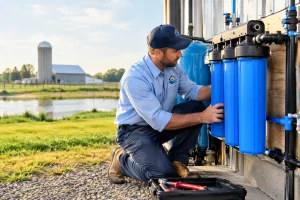
A well pump is a good example. It may only run periodically, but it is a critical load for homes on private wells. Its starting demand can be substantial, and it may cycle unexpectedly while the generator is powering other equipment. A system sized only for its normal running wattage can trip, stall, or cause voltage drops when the pump starts.
Do Not Guess at Motor Loads
Appliance labels, equipment manuals, and electrical panels provide useful information, but they do not always tell the full story. Older equipment may not match published figures, and some loads are hardwired or connected to multiple components. Heating systems, water-treatment equipment, pumps, and HVAC equipment often need a closer review.
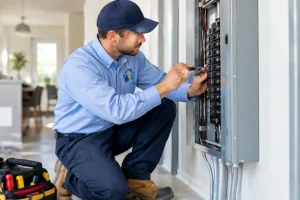
A licensed electrician can identify the circuits involved, verify amperage and voltage, and calculate demand based on the actual equipment at your property. This matters especially when electrical, plumbing, and heating systems intersect. A backup plan that keeps the furnace powered but overlooks the condensate pump, well pump, or fuel system controls may not deliver the result you expect.
Identify the Loads That Matter During an Outage
The best generator size is rarely determined by a single appliance. It is determined by the group of loads that need to work together.
For a typical home, essential circuits may include heating equipment, refrigeration, lighting, internet and communication devices, a sump pump, a well pump, and selected kitchen outlets. If the home relies on a septic system with a pump, that equipment may also be critical. Properties with medical equipment, security systems, livestock facilities, home offices, or temperature-sensitive storage may have additional priorities.
Heating and cooling deserve careful consideration. Many furnaces and boilers use relatively modest electrical power for controls, ignition, and blower motors, even if they burn gas, propane, or oil for heat. Electric baseboard heat, electric furnaces, electric water heaters, and heat pumps can require much larger generator capacity. Central air conditioning can also add a major motor load. Whether these systems should run on backup power depends on the generator size, fuel supply, electrical service, and the homeowner’s priorities.
Avoid assuming that an appliance is essential simply because it is used every day. Electric ranges, clothes dryers, hot tubs, electric vehicle chargers, and large workshop equipment can quickly increase the required capacity. They may be excluded from an essential-load plan or managed so they cannot operate during an outage.
Account for Fuel Type, Runtime, and Installation
Generator sizing is not only an electrical decision. Fuel supply and installation conditions affect how useful the system will be during a prolonged outage.
Standby generators commonly operate on natural gas or propane. Natural gas can offer an ongoing fuel source where service is available, while propane can be suitable for rural properties and locations without gas lines. The generator’s fuel consumption changes with electrical load, so a unit running near capacity will use more fuel than one carrying only essential circuits. Fuel planning should reflect the expected outage duration and the loads you intend to run.
Portable generators can support selected equipment, but they require safe outdoor placement, manual setup, fuel storage, and careful connection. They must never operate in a garage, basement, enclosed porch, or near openings where exhaust can enter the building. Carbon monoxide is a serious hazard.
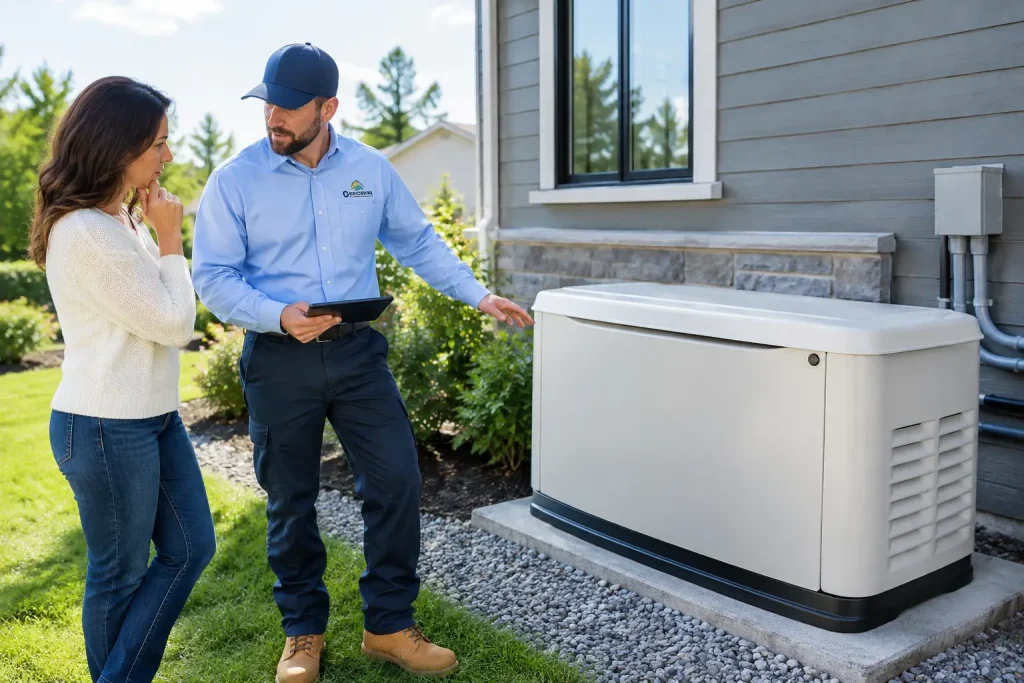
A permanently installed standby generator can start automatically when utility power fails and transfer power back when it returns. It requires correct placement, a suitable foundation, electrical connections, fuel connections, clearances, and local code compliance. The transfer equipment is just as important as the generator itself. It isolates the building from the utility supply, protecting utility workers and preventing dangerous backfeeding.
Leave Room for Real-World Conditions
A generator should not be selected to match a calculated load with no margin. Equipment changes over time. A new freezer, water-treatment upgrade, replacement furnace, or renovated basement can alter the electrical demand. A reasonable capacity margin helps the generator handle expected variation without operating at its limit every time a motor starts.
More capacity is not automatically better, though. Oversizing without a clear purpose can create an inefficient design and may not address the actual issue, such as poor circuit selection or an unaccounted-for starting load. The goal is a properly matched system with a thoughtful transfer strategy.
Load-management controls can also help. These devices prevent certain high-demand appliances from operating at the same time during generator use. For example, a system may temporarily delay an air conditioner or electric water heater when a well pump starts. This can allow a property to support more useful circuits without treating every appliance as a simultaneous load.
When a Professional Assessment Is Worth It
A professional assessment is particularly valuable if your property has a well pump, sump pump, septic pump, central air conditioning, heat pump, electric heat, multiple electrical panels, a detached building, or a combination of electrical and mechanical systems. It is also worthwhile for renovations and new construction, where generator provisions can be planned before walls are closed and equipment locations are finalized.
At SDR Electric, Plumbing & Heating, generator planning considers the complete property system: the electrical service, critical circuits, heating equipment, pumps, fuel source, and transfer equipment. That coordinated approach helps prevent gaps between trades and gives property owners a practical backup-power plan.
The right generator should make an outage less disruptive, not create another problem to manage. Start with the systems your household or business truly depends on, confirm their electrical demands, and build the installation around safe, reliable operation when the power is out.