A breaker that trips during dinner prep, a storm, or the first cold snap is more than an inconvenience. It is a safety device doing its job by cutting power when it detects a possible overload, short circuit, or ground fault. Knowing how to reset tripped breakers can restore power safely in some situations, but the reason it tripped matters just as much as the reset itself.
For homeowners, the key is to avoid treating a tripped breaker as something to force back on. A breaker that will not stay on, trips repeatedly, or is connected to signs of heat or damage needs professional electrical troubleshooting.
What a Tripped Breaker Looks Like
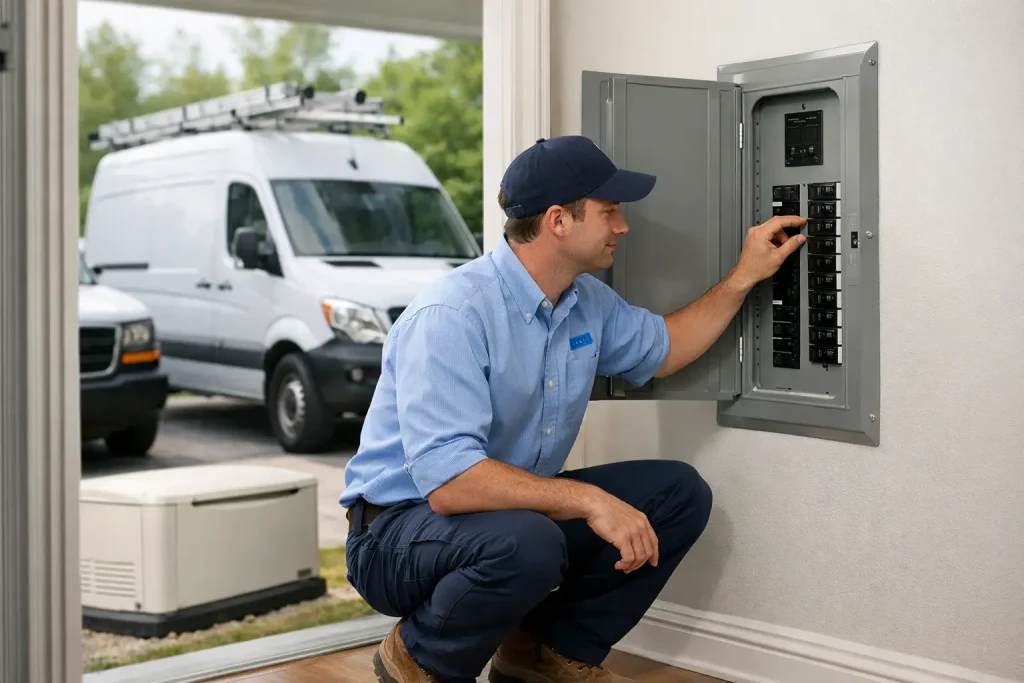
Your electrical panel contains breakers that protect individual circuits serving outlets, lights, appliances, and equipment. When a breaker trips, its handle may move fully to the OFF position, but it often stops in a middle position between ON and OFF. That middle position is the usual clue that it has tripped.
Before touching the panel, make sure you have dry hands and are standing on a dry floor. Use a flashlight if the area is dark. Do not use an open flame near an electrical panel, and do not remove the panel cover. The breaker handles are designed for homeowner operation. The wiring and components behind the cover are not.
It also helps to confirm that the issue is limited to your property. If lights are out throughout the neighborhood or your main breaker is off after a utility interruption, the cause may be outside the home. If only certain rooms, outlets, or appliances have lost power, a branch circuit breaker is the more likely source.
How to Reset Tripped Breakers Step by Step
Reset a breaker only when there are no immediate warning signs, such as a burning smell, smoke, buzzing, scorch marks, water near the panel, or unusual heat. If any of those conditions are present, leave the breaker off and arrange for licensed electrical service.
- Turn off or unplug devices on the affected circuit. Start with high-draw equipment, such as space heaters, kettles, microwaves, hair dryers, portable air conditioners, and power tools. If you do not know what is on the circuit, turn off lights and unplug devices in the affected area before resetting.
- Locate the tripped breaker. Look for a handle sitting out of line with the others or in the middle position. Panel labels can help, although labels in older homes are sometimes incomplete or inaccurate.
- Move the breaker firmly all the way to OFF first. A breaker cannot be properly reset from the middle position. Push it fully to OFF, then pause briefly.
- Move the breaker back to ON. Use one deliberate motion. Do not hold it in place or force it if it resists.
- Check whether power has returned. Turn on one light or plug in one low-demand device. Then reconnect other items gradually instead of switching everything on at once.
- Watch for another trip. If the breaker trips immediately or shortly after you restore power, turn it off and leave it off. Repeated tripping is a signal that requires investigation, not repeated resetting.
A single trip after several appliances were running at once may point to a simple overload. For example, a kitchen circuit may trip if a toaster, kettle, microwave, and coffee maker are all operating together. Reducing the load may prevent it from happening again. But if the breaker trips with little or nothing plugged in, the cause could be damaged wiring, a faulty outlet, moisture, or a failing appliance.
Check GFCI Outlets Too
Not every loss of power is caused by a panel breaker. Kitchens, bathrooms, garages, unfinished basements, laundry areas, and outdoor outlets often have ground-fault circuit interrupter, or GFCI, protection. A tripped GFCI outlet can shut off power to other outlets farther along the circuit.
Look for an outlet with TEST and RESET buttons. If the area is dry and there are no signs of damage, press RESET firmly. If it will not reset, or it trips again, do not keep trying. Moisture, a defective appliance, or a wiring issue may be involved.
GFCI protection is especially relevant around sump pumps, well equipment, exterior receptacles, and other areas exposed to damp conditions. If essential equipment has lost power, address the electrical issue promptly, but do not bypass the safety device to get the equipment running.
When You Should Not Reset a Breaker
There are situations where resetting a breaker is not the safe next step. Leave the circuit off and contact a licensed electrician if you notice burning or melting odors, a hot panel or breaker, crackling or buzzing, discolored outlets, visible sparks, or water inside or around the electrical panel.
The same applies if a breaker trips repeatedly, even after devices have been unplugged. An appliance with a damaged cord or internal fault can trip a breaker, but so can a loose connection, damaged cable, rodent damage, overloaded circuit, or aging electrical component. The panel is protecting the building from a more serious hazard.
Never replace a breaker with a larger one just because the existing breaker trips. Breaker size must match the wire size and the circuit design. Installing the wrong breaker can allow wiring to overheat before the breaker shuts off. Do not tape a breaker on, defeat a GFCI device, or repeatedly cycle a breaker in hopes that it will hold.
If your electrical panel is wet following a plumbing leak, flooded basement, storm damage, or condensation issue, stay clear of it. Water and electricity are a dangerous combination. If it is safe to do so without approaching water or damaged equipment, keep people away from the area and seek qualified help.
Why Breakers Trip in the First Place
A breaker can trip for several reasons, and the pattern provides useful clues. An overload usually happens when too many devices draw power from one circuit. It often occurs while several appliances are running and may stop once the load is reduced.
A short circuit happens when energized wiring contacts a neutral conductor or another unintended path. This can cause an immediate trip and may be related to a damaged cord, failed appliance, worn outlet, or wiring fault. A ground fault occurs when electricity takes an unintended path to ground, often through damaged insulation or moisture. GFCI devices are designed to react quickly to this condition.
Arc-fault circuit interrupter, or AFCI, breakers are common in many newer or updated homes. They are designed to detect dangerous arcing that ordinary breakers may not recognize. These breakers can be sensitive to damaged cords, loose connections, and certain appliance problems. If an AFCI breaker trips often, it deserves a proper diagnosis rather than a workaround.
In older Eastern Ontario homes, electrical changes made over many years can complicate troubleshooting. A room addition, finished basement, garage workshop, or updated kitchen may place new demands on circuits that were never intended to carry them. Accurate circuit labeling, appropriate dedicated circuits, and a panel assessment can make future issues easier to identify and safer to resolve.
Preventing Repeat Electrical Trips
Start by giving high-demand appliances the circuits they need. Equipment such as microwaves, dishwashers, refrigerators, laundry machines, electric heaters, well pumps, sump pumps, and workshop tools may require dedicated circuits depending on the equipment and installation. Extension cords and power bars are not permanent solutions for an outlet shortage.
Pay attention to patterns. If the same breaker trips when one appliance is used, stop using that appliance until it is checked. If it trips when a specific outlet is used, leave that outlet alone. If it happens only during heavy rain, snowmelt, or humid weather, moisture may be affecting an outdoor outlet, underground wiring, or another connection.
For renovations, additions, generator installations, and major appliance upgrades, electrical planning should happen before walls are closed or equipment is installed. Coordinating electrical needs with heating, plumbing, well, sump, and backup-power systems helps prevent overloaded circuits and avoids costly changes later.
A breaker reset is safe only when the panel and circuit show no warning signs and the trip appears isolated. When the cause is unclear, the safest choice is to leave the breaker off and have a licensed professional trace the problem. That protects your home, your equipment, and everyone who relies on the power coming back on.