A front porch display can look simple from the sidewalk, but it relies on electrical connections that must stand up to snow, rain, wind, freezing temperatures, and repeated use. Knowing how to plan safer outdoor Christmas lighting helps protect your family, guests, home, and electrical system before the first strand goes up.
The best time to make safety decisions is before decorating day. A quick plan prevents common problems such as overloaded receptacles, cords crossing walkways, damaged insulation, loose clips, and indoor-rated products exposed to weather. It also makes setup and takedown much easier when winter conditions arrive.
Start With the Outdoor Electrical Supply
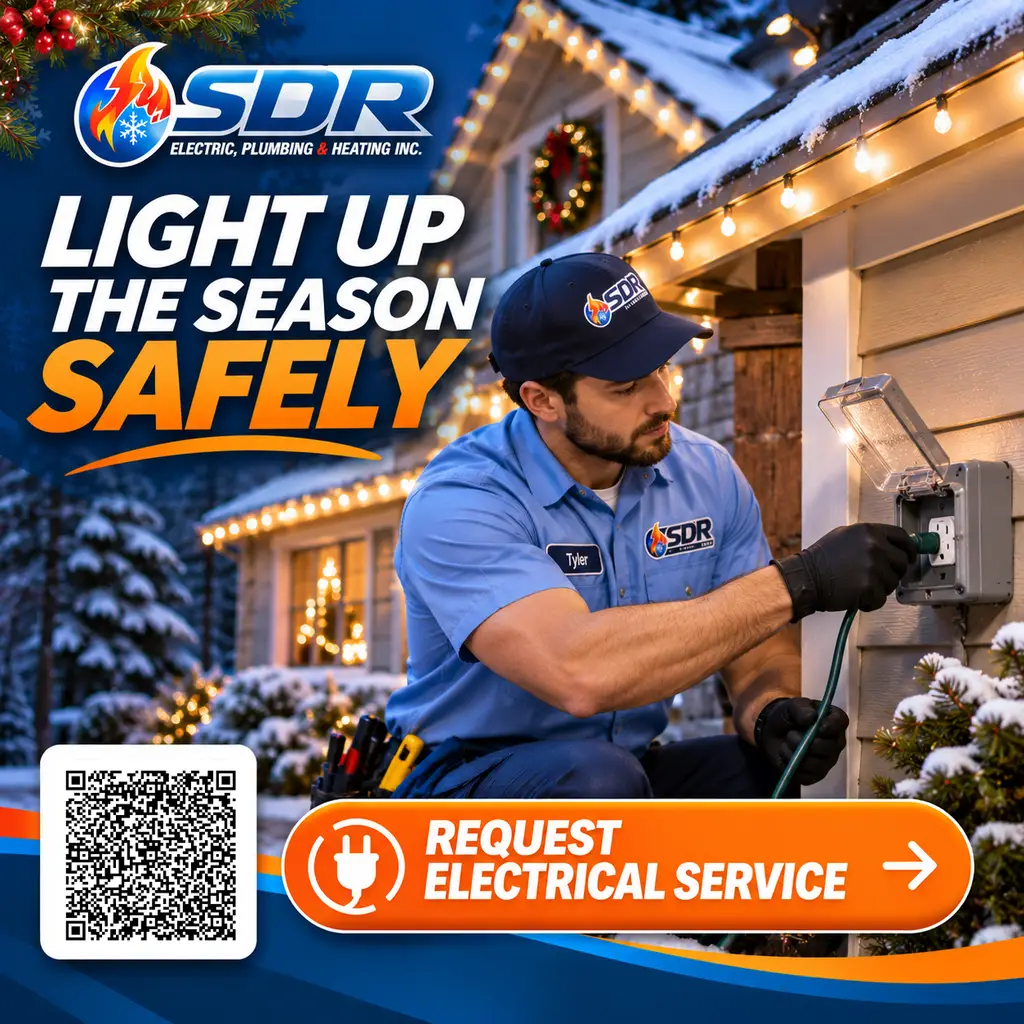
Look at where your display will receive power. Outdoor receptacles should be protected by a ground-fault circuit interrupter, commonly called a GFCI. This device shuts off power quickly if it detects a fault, which is especially important where moisture and electricity can meet.
Test the GFCI before decorating. Most have TEST and RESET buttons. Press TEST to confirm the power shuts off, then press RESET to restore it. If the receptacle will not reset, trips repeatedly, feels warm, shows damage, or has a loose cover, stop using it. A recurring trip is not a nuisance to work around – it is a signal that needs investigation.
If your property does not have suitable outdoor receptacles where you need them, avoid running long extension cords through windows, doors, garages, or across the yard as a permanent seasonal solution. Doors and windows can pinch cord insulation, and cords routed through traffic areas are easily damaged. A licensed electrician can assess whether a weather-protected outdoor receptacle, a dedicated circuit, or another upgrade makes sense for the property.
How to Plan Safer Outdoor Christmas Lighting by Zone
Divide the display into separate areas before buying or hanging anything. For example, you may have a front entry, roofline, shrubs, trees, pathway decorations, and a deck or fence. Each zone should have a clear power source, cord route, and shutoff point.
This approach keeps one outlet from becoming the center of the entire display. It also helps you see where cords may cross a sidewalk, driveway, gate, or frequently used entrance. In Eastern Ontario, snow removal and winter foot traffic deserve special attention. A cord hidden under fresh snow can be cut by a shovel, caught by a snowblower, or become a tripping hazard when conditions thaw.
Sketching the layout on paper is useful for larger displays. Mark outlets, timers, extension-cord paths, decorations, and areas that must remain accessible, such as doors, steps, utility equipment, and electrical panels. Keep lighting away from heat sources, dryer vents, furnace exhausts, and sharp metal edges.
Choose Products Made for Outdoor Conditions
Check every light set, extension cord, timer, splitter, and illuminated decoration for an outdoor-use rating. Indoor products are not built to handle moisture, ultraviolet exposure, or cold in the same way. Do not assume a product is suitable outdoors because it appears heavy-duty or because it worked last year.
LED holiday lights are often a practical choice because they use substantially less power than traditional incandescent strings and produce less heat. Lower energy use can make circuit planning easier, particularly when several areas are decorated. That said, LED lighting still needs proper cords, protected receptacles, and careful installation.
Before installation, inspect each item in daylight. Look for cracked sockets, brittle insulation, exposed wire, loose plugs, burned marks, missing bulbs, damaged seals, or corroded contacts. Replace damaged equipment rather than taping it, twisting wires together, or trying to force a worn plug into service.
Keep connection points off the ground where possible and protect them from standing water, melting snow, and direct spray. Weather-resistant connection covers can help, but they are not a substitute for outdoor-rated equipment or GFCI protection. Connections should remain accessible for inspection, not buried under mulch, snow, or decorations.
Match the Lighting Load to the Circuit
Every circuit has a limit. Even efficient lighting can add up when combined with inflatables, yard figures, heated decorations, tools, or other loads already running on the same circuit. The label or instructions for each product should state its wattage or amperage and how many strings can be connected end to end.
Follow the manufacturer’s connection limits exactly. Do not daisy-chain power strips, extension cords, or adapters to reach farther than the equipment is designed to go. A crowded receptacle can overheat, and a cord that is too small for the load can become a fire risk.
If a breaker trips or a GFCI shuts off during use, turn off and unplug the display before resetting anything. Check for moisture, damaged cords, overloaded connections, or a problem with a specific decoration. Repeated resetting without finding the cause is unsafe. A licensed electrician can troubleshoot whether the issue is in the display, receptacle, wiring, or circuit capacity.
Install Without Damaging the Home or the Wiring
Use clips and fasteners designed for holiday lights and the surface you are attaching them to. Plastic clips made for gutters, shingles, siding, railings, and other exterior features are safer than nails, screws, staples, or tacks that can pierce cord insulation.
Never staple through a cord or tightly pinch it under siding, trim, a door, or a window. A small puncture may not be visible, but it can expose conductors to moisture and create a fault later. Keep light strings supported at appropriate intervals so their own weight does not pull on sockets or plugs.
Roofline work calls for extra caution. Wet leaves, frost, snow, and cold roofing materials can make a ladder setup hazardous. Avoid working alone, use a stable ladder on firm ground, and keep ladders clear of overhead electrical lines. If the setup requires reaching beyond safe ladder position or accessing a steep, icy roof, scale the plan back or have the work handled safely.
Trees and shrubs require a lighter touch than many homeowners expect. Do not wrap cords so tightly that they can damage branches, and do not attach lighting where it may interfere with pruning, gates, or seasonal maintenance. Leave enough slack for wind movement without allowing wires to drag across the ground.
Use Timers, But Keep Control Accessible
An outdoor-rated timer can reduce energy use and prevent lighting from running all night. It also helps avoid the daily task of plugging and unplugging cords in winter weather. Choose a timer rated for the intended outdoor load and set it where it can be reached without climbing, stretching over railings, or walking through snow-covered landscaping.
Smart controls can be convenient, but they do not eliminate the need for physical inspection. Check the display after heavy rain, wet snow, high winds, and freeze-thaw cycles. Look for sagging lines, open connection covers, cords pulled loose from clips, and decorations that have shifted toward walkways or vehicles.
Make a Takedown Plan Before the Season Ends
Safe planning continues after the holidays. Turn off and unplug the display before removing it. Take down lights in dry conditions when possible, and avoid pulling cords free by the wire. Coil each set loosely, label zones if the display is large, and store equipment in a dry location away from pests and extreme heat.
Inspecting lights as you put them away makes next year’s setup safer and faster. Set aside anything with damage rather than placing it back in storage with the working equipment. This simple habit prevents rushed decisions when decorating season returns.
A well-planned display should bring attention to the lights, not to the cords, outlets, or hazards behind them. When an outlet trips, exterior wiring looks worn, or the display has outgrown the available power, SDR Electric, Plumbing & Heating can help assess the electrical side so your holiday setup has a safer foundation.