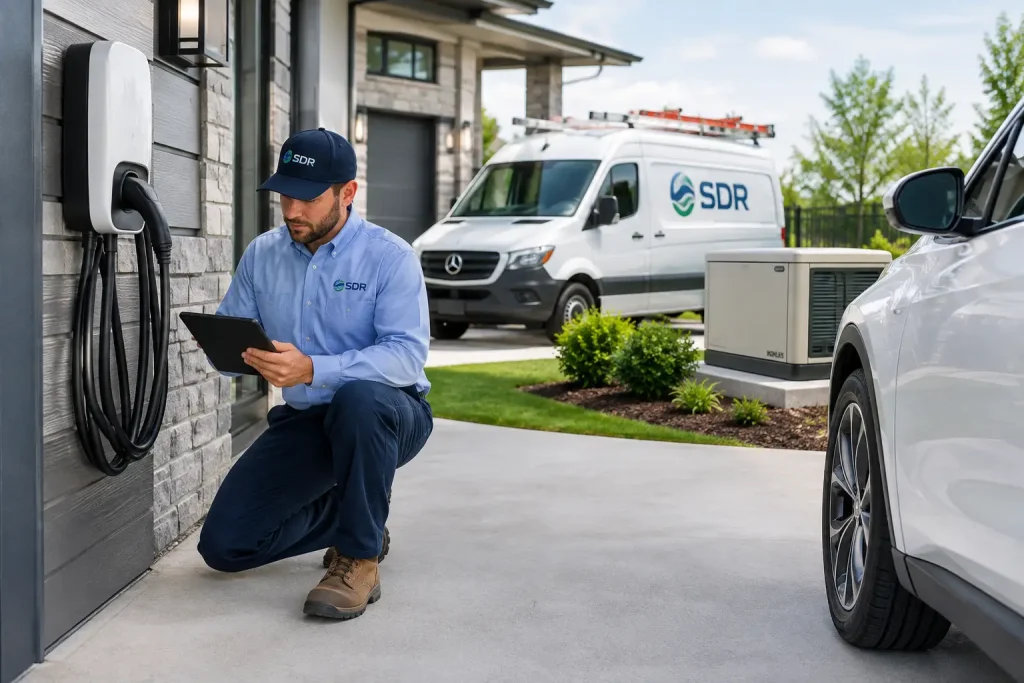
An EV charger may look like a simple addition to the garage wall, but it connects to one of the highest-demand electrical loads in your home. This guide to EV charger permits explains what needs to happen before installation so your charger is safe, properly inspected, and ready for dependable daily use.
For homeowners in Eastern Ontario, the permit process is not paperwork for paperwork’s sake. It confirms that the wiring, breaker, equipment, and electrical capacity can support the charger without overheating conductors, overloading a panel, or creating a hidden problem that surfaces months later.
Why EV Charger Permits Matter
A Level 2 EV charger is usually a 240-volt, dedicated electrical circuit. Depending on the charger and vehicle, it may draw a substantial amount of power for several hours at a time. That is different from plugging a phone into an outlet or adding a small appliance to an existing circuit.
Permits and inspections are intended to verify the full installation, not just whether the charger turns on. The inspector may look at circuit sizing, breaker selection, wire type, grounding, equipment location, clearances, panel capacity, and the quality of the final connections.
A permitted installation also creates a useful record of work completed at the property. That can matter during a renovation, insurance review, or future sale. More immediately, it gives the homeowner confidence that the charger has been installed around the real limits of the electrical system rather than assumptions about what the panel can handle.
Who Handles the Permit?
In Ontario, electrical installation permits are generally handled through the Electrical Safety Authority, often referred to as ESA. A licensed electrical contractor can normally manage the permit notification and coordinate the required inspection as part of the installation process.
That does not always mean there are no other approvals to consider. The details depend on the property. A detached home is usually more straightforward than a condominium, rental property, multi-unit building, commercial site, or a home undergoing a major renovation.
If you live in a condominium or strata-style community, the charger may affect common elements, parking infrastructure, or building electrical capacity. Written approval from the property manager or board may be required before electrical work begins. Landlords and tenants should also clarify who owns the charger, who authorizes the work, and how electricity use will be managed.
For commercial properties, the permit conversation can be broader. A charger installation may involve parking layout, accessible parking requirements, load management, utility coordination, trenching, bollards, signage, or future charging expansion.
What Is Checked Before the Permit Is Filed?
The best permit process begins with a site assessment, not a guess based on the number printed on the electrical panel door. An electrician needs to understand how electricity is currently used throughout the home.
A proper review considers your main service size, the capacity of the panel, available breaker space, existing major loads, and the route from the panel to the proposed charger location. Electric heating, air conditioning, hot tubs, electric water heaters, dryers, ranges, well pumps, and workshop equipment can all affect the calculation.
The electrician will also confirm the charger’s electrical requirements. Many chargers are adjustable, but the circuit must be sized for the charging setting actually used. A charger that operates continuously at a high amperage needs appropriately sized conductors and overcurrent protection. Selecting a larger breaker without upgrading the wire is unsafe and noncompliant.
Before work starts, it helps to have four details ready:
- The EV make and model, if you already own the vehicle
- The charger make, model, and desired charging amperage
- Photos of the electrical panel and the proposed parking location
- Information about major electrical equipment, planned renovations, or a future second EV
Those details let the contractor plan the right solution before filing the permit or opening walls.
When a Panel Upgrade or Load Management May Be Needed
Not every EV charger requires a panel upgrade. Many homes have sufficient capacity for a Level 2 charger after a proper load calculation. Others may need a panel upgrade, a service upgrade, or an approved energy management system that prevents the charger from overloading the service when other large loads are operating.
This is where the lowest-effort approach can become the wrong approach. Installing a charger at the maximum output simply because the charger is capable of it may create unnecessary electrical work. On the other hand, choosing a lower charging rate without considering your daily driving needs can be frustrating.
The practical answer depends on how far you drive, when the vehicle is parked, your service capacity, and whether additional electrical upgrades are planned. A homeowner who charges overnight and drives modest daily distances may be well served by a lower charging setting. A household with two EVs, long commutes, or limited overnight parking time may need a more substantial electrical plan.
Planning ahead matters. If you expect to add a heat pump, electric water heater, workshop, pool equipment, or another EV later, tell the electrician during the assessment. Coordinating those decisions early can avoid repeating electrical work down the road.
The EV Charger Permit and Inspection Process
Once the installation approach is clear, the electrical contractor files the required permit notification before work proceeds. The exact timing and inspection steps can vary with the scope of work, but the process generally follows a clear sequence.
First, the contractor assesses the home and identifies the charger location, circuit requirements, and any capacity upgrades. Next, the permit is filed and installation begins using approved equipment and materials. The work may include a new dedicated breaker, conduit or cable routing, a disconnect where required, charger mounting, and protective measures for the charger location.
After the installation is complete, an inspection is arranged according to the applicable process. If corrections are identified, they should be addressed before the installation is considered complete. Keep the final permit and inspection documentation with your home records.
An inspection is not a substitute for careful installation, and careful installation is not a reason to skip inspection. Both are part of a safe electrical upgrade.
Common Issues That Can Delay an Installation
The most common delays are usually predictable. A full panel, an undersized service, difficult wire routing, finished walls, a detached garage, or a charger location far from the electrical panel can all change the scope of work.
Outdoor chargers and driveway-side installations deserve particular attention. Equipment must be rated for the environment, wiring needs physical protection, and the placement should reduce the risk of impact from vehicles. In some cases, bollards or other protective measures may be appropriate.
Detached garages can add another layer of planning. The existing feeder may not have enough capacity for both the garage loads and an EV charger. Trenching or upgrading the feeder can be necessary, especially where the garage also has tools, heating, or a subpanel.
Do not assume an existing dryer outlet or general-purpose receptacle is suitable for vehicle charging. Outlet type, circuit condition, continuous load requirements, wiring condition, and equipment compatibility all matter. Extension cords are not an acceptable long-term charging plan for a Level 2 charger.
Choosing the Right Contractor for the Work
An EV charger installation is electrical work first and charging equipment second. Choose a licensed electrical contractor that will assess the existing system, explain the options in plain language, manage the permit process, and stand behind the finished work.
Clear communication matters when the charger is part of a larger project. If you are renovating a garage, adding a generator, upgrading HVAC equipment, or planning a new build, the electrical plan should account for those systems together. SDR Electric, Plumbing & Heating Inc. can help coordinate interconnected electrical and mechanical work so separate upgrades do not work against each other.
Ask how the contractor will verify capacity, where the charger will be located, what the inspection process involves, and what documentation you will receive after completion. Straight answers are a good sign that the work is being planned rather than rushed.
A properly permitted EV charger should feel uneventful once it is installed: park, connect, charge, and get on with your day. Taking the time to assess capacity, obtain the right permit, and complete the inspection is what helps keep it that way.