A new EV can make the garage feel like part of your daily transportation plan. The first question is usually simple: should you use an EV charger versus standard outlet? Both can charge a vehicle at home, but they serve very different needs. The right choice depends on how far you drive, how long the vehicle sits at home, and whether your electrical system can safely support the load.
EV Charger Versus a Standard Outlet: The Real Difference
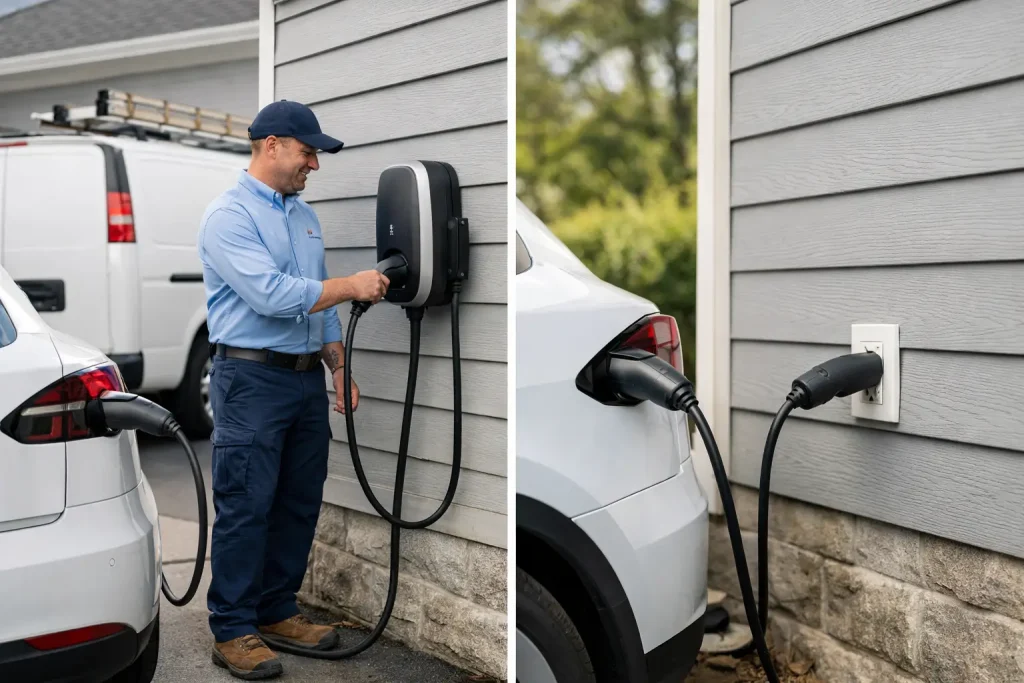
A standard household outlet supplies 120-volt power. When used for EV charging, this is commonly called Level 1 charging. Most electric vehicles include a portable charging cord designed for this purpose, so it can be a practical starting point when a proper receptacle is available near where the vehicle is parked.
A dedicated home EV charger typically supplies 240-volt power, known as Level 2 charging. Although people often call the wall-mounted unit a charger, the vehicle contains the equipment that manages battery charging. The wall unit safely delivers power and communicates with the vehicle.
The practical difference is charging speed. A Level 1 connection generally adds only a few miles of driving range per hour. A Level 2 EV charger can add substantially more range in the same time, making it much easier to recharge overnight after a regular commute, multiple errands, or a longer drive.
When a Standard Outlet Can Be Enough
Level 1 charging can work well for a household with modest daily driving and plenty of time between trips. If the vehicle is parked for 10 to 12 hours most nights and only needs a small amount of range restored, a standard outlet may keep up with daily use.
It can also be useful as a temporary solution while planning a garage renovation, panel upgrade, or dedicated EV circuit. For some plug-in hybrid owners, Level 1 charging may be sufficient because the battery capacity is smaller than that of a fully electric vehicle.
That said, not every outlet is suitable for continuous EV charging. The receptacle, wiring, circuit breaker, and connections all need to be in good condition and correctly matched. A loose or worn outlet can overheat under a sustained load, even if it works normally for a vacuum, lamp, or occasional tool.
EV charging is considered a continuous electrical load because it can run for several hours at a time. The circuit must be sized accordingly. A licensed electrician can verify whether an existing receptacle and circuit are appropriate instead of assuming an outlet in the garage is ready for the job.
Why Many Homes Benefit From Level 2 Charging
A Level 2 charger gives homeowners more flexibility. Instead of planning around a full day or more of charging, you can usually recover a typical day’s driving overnight. That matters when schedules change, winter weather reduces battery range, or more than one driver uses the vehicle.
In Eastern Ontario, cold temperatures are a real consideration. Battery conditioning and cabin heating can increase energy use in winter, which means a vehicle may return home needing more charge than it did during mild weather. A Level 2 setup provides a better margin for those conditions.
Level 2 charging is also useful for households that expect their driving needs to grow. A new job, a longer commute, frequent family trips, or a second EV can quickly expose the limits of a standard outlet. Installing a properly planned dedicated circuit now can help avoid reworking the electrical installation later.
Electrical Requirements for a Home EV Charger
An EV charger installation is more than mounting equipment on a garage wall. The circuit needs to be planned around the vehicle’s charging requirements, the charger rating, the distance from the electrical panel, and the available capacity in the home’s electrical service.
A licensed electrician starts by reviewing the panel and performing a load calculation. This helps determine whether the home can support the new continuous load along with existing equipment such as electric heat, air conditioning, a range, a water heater, a well pump, or a hot tub. A panel that appears to have open breaker spaces may still require upgrades if the electrical service is already close to its capacity.
The charger should be supplied by a dedicated circuit. Depending on the equipment and installation method, this may involve a hardwired connection or a properly installed receptacle intended for EV charging. The wiring, breaker, receptacle, and protective devices must all be selected and installed to meet applicable electrical requirements.
Hardwired chargers are often a strong option for a permanent installation. They eliminate one connection point and can provide a clean, durable setup, especially in a garage or exterior parking area. A plug-in unit can also be appropriate when the correct receptacle is installed and the equipment is matched to it.
The Garage Layout Matters Too
Where the vehicle parks affects the scope of the installation. The charging cable needs to reach the vehicle’s charge port without stretching across a walkway, driveway, or door opening. The unit should be mounted where it is protected from accidental impact and where the cable can be stored safely when not in use.
For outdoor charging, equipment must be rated for the location and installed to withstand moisture, temperature changes, and physical wear. Cable management is not just about appearance. Keeping the cable off the ground reduces trip hazards and helps protect the equipment.
If a renovation is planned, it is often worthwhile to coordinate EV charging with other electrical work. Adding a charger while upgrading a panel, finishing a garage, installing a generator connection, or planning a new mechanical room can reduce disruption and produce a more organized result.
Safety Issues to Avoid With EV Charging
The safest charging setup is one designed for the load and installed with the property as a whole in mind. Several common shortcuts can create unnecessary risk:
- Do not use extension cords or power bars for routine EV charging.
- Do not assume an older garage outlet is safe because it appears to work.
- Do not share an EV charging circuit with other garage equipment.
- Do not select a charger rating before confirming the electrical service can support it.
Heat is an early warning sign that should never be ignored. If a plug, outlet, cord, or breaker feels warm, charging should stop until the equipment has been inspected. Tripped breakers, discoloration around a receptacle, intermittent charging, and burning odors also require prompt attention.
A proper installation protects more than the charger. It helps protect the electrical panel, wiring, vehicle, and people using the space. That is particularly important in garages that also contain tools, storage, lawn equipment, fuel containers, or mechanical equipment.
Choosing the Right Setup for Your Driving Habits
There is no single answer for every homeowner. A standard outlet may be reasonable if you drive short distances, can charge for long periods, and have a verified circuit in good condition. It is a slower approach, but it may meet a limited daily charging need.
A Level 2 charger is usually the better long-term choice for fully electric vehicles, busy households, frequent drivers, and anyone who wants reliable overnight charging. It gives you more usable range by morning and less need to think about whether the vehicle will be ready for the next day.
Before selecting equipment, consider your vehicle’s maximum charging capability, your typical daily mileage, where you park, and other major electrical loads in the home. If you may add another EV in the future, mention that during planning. An electrician can assess whether it makes sense to prepare the panel, conduit route, or garage layout for future capacity.
For homeowners in Brockville, Leeds and Grenville, and nearby communities, SDR Electric, Plumbing & Heating can assess your existing electrical system and recommend a charging setup that fits the way you actually use your vehicle. A well-planned EV connection should feel uncomplicated: park, plug in, and start the next morning with the range you need.