The holiday guests have gone home, the decorations can wait another day, and your house is finally quiet. That makes Boxing Day home maintenance check-in work surprisingly useful. A short, practical walk-through can catch the small warning signs that often turn into no-heat calls, frozen pipes, water damage, or electrical safety issues during the hardest part of winter.
You do not need to take apart equipment or diagnose every sound yourself. The goal is to notice changes, test the features designed for safety, and make a clear plan for anything that needs professional attention. For homeowners in Eastern Ontario, that is particularly valuable when cold temperatures, snow, and holiday travel put extra strain on a property.
Why a Boxing Day home maintenance check-in makes sense
Winter problems rarely announce themselves at a convenient time. A sump pump may sit unused until a thaw or heavy rain. A furnace may continue running while becoming less efficient. A minor leak beneath a sink can go unnoticed until a cabinet, floor, or ceiling is damaged.
A check-in after holiday use gives you a realistic picture of how the home is performing. More people in the house can mean more hot-water demand, more cooking, more bathroom use, and more electrical load from lights, appliances, and seasonal decorations. If something is not keeping up, it is better to address it now than wait for a system failure in January.
8 areas to check around the house
1. Look for plumbing leaks and slow drains
Start under kitchen and bathroom sinks, around toilets, near the dishwasher, and at exposed plumbing in utility areas. Look for moisture, staining, swollen cabinet materials, corrosion on fittings, or a musty smell. A toilet that runs periodically without being flushed can also waste a significant amount of water and point to a worn internal component.
Run water at sinks, showers, and tubs while you are checking. Slow drainage, gurgling, or water backing up in another fixture deserves attention. A single slow drain may be a local blockage, while multiple affected fixtures can indicate a larger drain issue.
2. Pay attention to water pressure and water quality
Low pressure at one fixture may be caused by a clogged aerator or showerhead. Low pressure throughout the home is different. It can relate to a pressure tank, well pump, water treatment equipment, a valve issue, or plumbing restrictions, depending on the property.
Watch for changes in water color, odor, or taste as well. Homes supplied by wells should take these changes seriously, especially if they occur suddenly. If water treatment equipment has alarms, low salt, filter reminders, or unusual cycling behavior, record what you see rather than resetting it repeatedly. That information helps a technician identify the cause.
3. Check the sump pump before you need it
A sump pump is easy to forget when the basement is dry. It is also one of the most stressful systems to discover has failed during a thaw, storm, or power outage. Make sure the pump is plugged into a working outlet, the pit is reasonably clear of debris, and the discharge line is directed away from the foundation.
If your pump has a test function or accessible float, follow the manufacturer instructions to confirm that it activates and discharges properly. Do not run a dry pump for an extended period. If the pump does not start, runs continuously, makes unusual noise, or has no backup plan for outages, arrange service before spring conditions arrive.
4. Listen to your heating system
Your heating equipment does not need to be silent, but it should operate predictably. Note rooms that stay colder than the rest of the house, frequent cycling, weak airflow, banging noises, burning odors that persist beyond first seasonal use, or a thermostat that cannot hold the set temperature.
Replace or clean filters where applicable, using the correct type and size for the system. A very restrictive filter is not automatically the best choice if the equipment is not designed for it. When in doubt, use the manufacturer recommendation or ask a qualified HVAC technician. Keep supply and return vents open and clear of furniture, rugs, and holiday storage.
5. Test smoke and carbon monoxide alarms
Press the test button on every smoke and carbon monoxide alarm. Confirm that household members know what the alarms sound like and where to go in an emergency. Replace batteries if the unit uses them and check the manufacturing date on the back of the device. Alarms have a service life and should be replaced when they reach the manufacturer’s stated limit.
Carbon monoxide protection is especially critical in homes with fuel-burning heating equipment, fireplaces, attached garages, or generators. If an alarm sounds, move everyone outside to fresh air and follow emergency guidance. Do not assume it is a false alarm because no one feels sick.
6. Inspect electrical cords, outlets, and panels
Holiday lights and portable heaters can expose overloaded circuits, loose outlets, or worn extension cords. Unplug seasonal equipment before inspecting it. Remove any cords that are cracked, warm during use, pinched in doors or windows, or showing scorch marks.
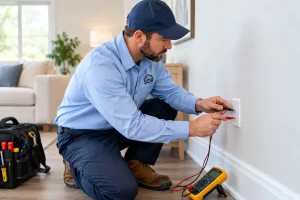
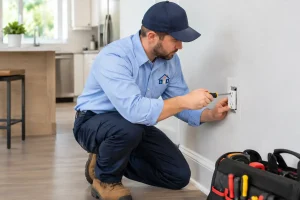
Test ground-fault circuit interrupter outlets in bathrooms, kitchens, garages, unfinished basements, and exterior locations using the test and reset buttons. If an outlet will not reset or trips repeatedly, do not bypass it. Repeated tripping can indicate moisture, a damaged device, or a circuit problem that requires licensed electrical service.
At the electrical panel, look only for visible concerns such as moisture, rust, unusual heat, buzzing, or a burning smell. Keep the area accessible and never remove the panel cover yourself. If breakers trip often, make a note of what was running at the time rather than continually resetting them.
7. Walk the exterior with winter in mind
Check that downspouts direct water away from the foundation and are not blocked by ice, leaves, or packed snow. Look for loose exterior vents, damaged hose connections, and signs of water collecting close to the house. Clear snow carefully from furnace, water-heater, and other approved exterior vent terminations so combustion equipment can vent properly.
Do not block generator exhaust areas or run a portable generator in a garage, shed, or near windows and doors. If your home has standby backup power, make sure you know which circuits it supports and that the area around the unit remains clear. Backup power is most useful when the system has been maintained and the household understands how it operates.
8. Make a repair list and set priorities
Write down what you find while it is fresh. Separate urgent safety issues from items that can be scheduled. No heat, no water, an active leak, a sewage backup, an electrical burning smell, or a carbon monoxide alarm require immediate action. A dripping faucet, uneven heating, or an aging fixture may not be an emergency, but these issues are easier to plan for before they become disruptive.
This is also the right time to consider how systems overlap. For example, a basement finishing project may involve plumbing relocation, electrical circuits, heating and cooling adjustments, sump pump protection, and possibly backup power. Coordinating those needs early reduces the risk of rework and helps the project move in the right order.
When a professional check is the safer choice
Homeowners can handle observations and basic upkeep, but some tasks are not do-it-yourself work. Electrical panel concerns, recurring breaker trips, water pressure problems, well and pump issues, hidden plumbing leaks, fuel-burning equipment concerns, and generator servicing all need trained assessment.
A licensed multi-trade team can be particularly helpful when the source of a problem is unclear. Low water pressure might not be a simple plumbing repair. A cold room might involve ductwork, controls, insulation, or equipment performance. A wet basement may involve drainage, a sump pump, plumbing, or more than one contributing issue.
The most helpful outcome of a Boxing Day check-in is not a perfect house. It is a clearer understanding of what is working, what needs watching, and what should be fixed before winter puts your home under greater pressure. A few notes and a timely service call can protect the systems you rely on every day.