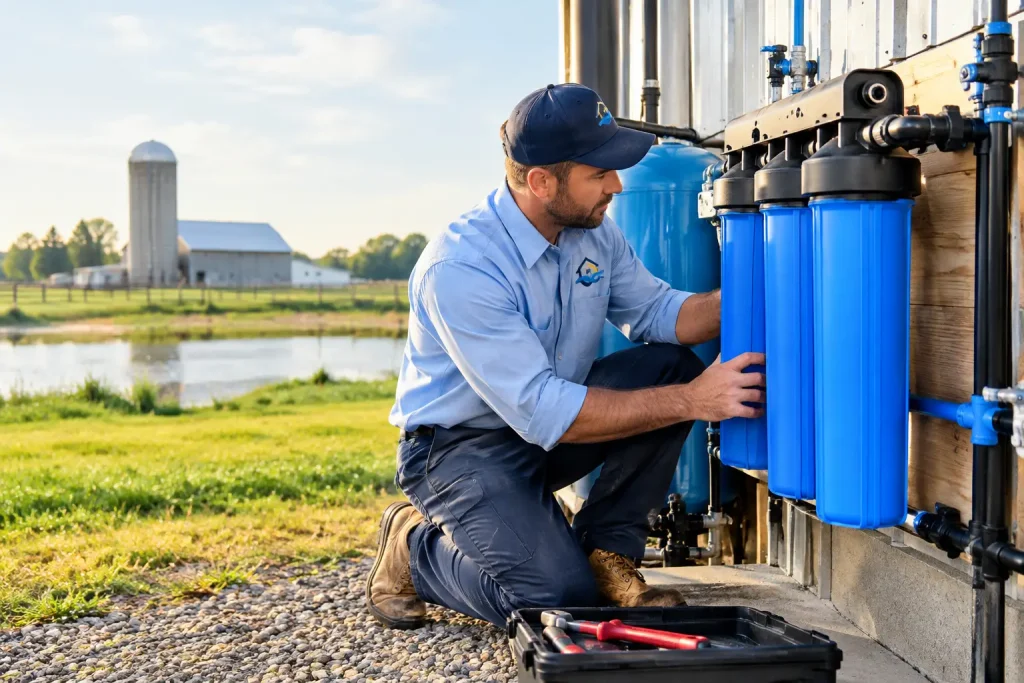
A farm can have plenty of water and still have a water problem. A stained stock tank, plugged pressure switch, sulfur smell at the kitchen tap, or scale building inside plumbing can all point to water quality concerns. Farm water filtration starts with identifying what is actually in the water, then choosing treatment that fits the well, the farm operation, and the property’s plumbing system.
For rural properties, water treatment is rarely a one-size-fits-all upgrade. The right approach depends on whether the water is used for a farmhouse, livestock, wash bays, irrigation, or a combination of all four. A properly planned system protects equipment, supports reliable water pressure, and gives property owners clearer answers when water looks, smells, or behaves differently.
Start With a Water Test, Not a Filter
The symptoms can be obvious, but their cause is not always obvious. Orange staining may come from iron, while black staining can point to manganese. A rotten-egg odor is often associated with hydrogen sulfide. White crust on fixtures and water heaters commonly indicates hardness minerals such as calcium and magnesium.
A water test gives the treatment plan a foundation. For a private well, testing should consider both water chemistry and bacteriological safety. Depending on the concern, a qualified provider may recommend testing for hardness, iron, manganese, pH, total dissolved solids, sulfur, bacteria, nitrate, and other local contaminants.
This matters because different treatment equipment solves different problems. A sediment filter can catch sand and debris, but it will not remove dissolved hardness. A water softener can manage hardness, but it is not a substitute for UV disinfection when bacteria is a concern. Installing equipment before testing can leave a farm owner with a system that works hard without solving the actual issue.
Water quality can also change over time. Heavy rainfall, seasonal groundwater conditions, well repairs, a new pump, or changes in farm activity can affect what reaches the pressure tank and fixtures. Retesting is sensible when there is a noticeable change in taste, odor, staining, pressure, or water appearance.
Common Farm Water Filtration Problems
Farm properties place demands on water systems that a typical home may not. A farmhouse may need clean, conditioned water for drinking, bathing, laundry, and appliances, while the same well may also supply barns, livestock troughs, outdoor hydrants, and utility sinks. The water treatment equipment needs to be sized for real demand, not just the number of bathrooms in the house.
Sediment, sand, and well debris
Sediment is common in private well systems, particularly after drilling work, pump service, periods of high water use, or changes in groundwater conditions. Fine particles can wear on fixtures, clog valves, affect pressure switches, and shorten the service life of pumps and appliances.
A sediment filter is often installed early in the treatment train to protect downstream equipment. The filter type and micron rating should match the material being captured. A filter that is too fine may restrict flow and require frequent replacement. A filter that is too coarse may allow damaging particles through.
Hard water and mineral scale
Hard water is especially hard on plumbing and mechanical equipment. Scale can accumulate in water heaters, tankless units, fixtures, dishwashers, washing machines, and livestock watering equipment. It may also reduce soap performance and leave residue on glassware, sinks, and shower doors.
A properly sized water softener exchanges hardness minerals for sodium or potassium ions. The system needs enough capacity for the property’s daily water use and must be set up with the correct regeneration cycle. On a farm, that sizing discussion should include barn use and seasonal demand, not just household use.
Iron, manganese, and sulfur odors
Iron and manganese are often aesthetic issues at first, but they can become operational issues when deposits clog filters, restrict plumbing, stain fixtures, and foul treatment equipment. Hydrogen sulfide can produce an unpleasant odor and may contribute to corrosion under certain conditions.
Treatment may involve oxidation, filtration media, specialized iron removal equipment, or a combination of methods. The best choice depends on contaminant levels, pH, flow rate, and whether the issue is isolated to the well water or connected to plumbing components. This is where testing and a site-specific assessment prevent guesswork.
Bacteria and changing well conditions
Private wells are the property owner’s responsibility. If bacteria is present, the first step is to investigate the well, cap, casing, drainage, and possible pathways for surface water to enter. Disinfection may be required, but treatment should address the source of contamination where possible.
UV systems can provide an added layer of protection against microorganisms when installed and maintained correctly. They require clear water to work effectively, which is why sediment and iron treatment may need to come before the UV unit. The lamp, sleeve, power supply, and flow rate all matter. A UV system is not a fit-and-forget device.
Designing a Farm Water Filtration System
A dependable treatment setup follows the path of the water. Water enters from the well, passes through the pressure system, then moves through treatment equipment before reaching fixtures and farm-use points. Each component has a job, and the sequence matters.
A typical arrangement may include a sediment stage, equipment for iron or sulfur reduction, a water softener, and UV disinfection for treated household water. Not every property needs each component. Some farms need only sediment protection and softening. Others require more involved treatment because of iron, bacteria, odor, or high-volume usage.
Flow rate is one of the biggest design considerations. A system that is adequate for a kitchen sink may struggle when a household shower, livestock trough, and wash station are used at the same time. Pressure loss through undersized filtration can create complaints that feel like a pump issue, even when the pump is functioning normally.
It is also worth separating water needs where practical. Water used for irrigation may not need the same treatment as water used inside the home. Conversely, water that serves animal watering systems still needs consideration for sediment, mineral buildup, and safety based on the animals, equipment, and use case. The goal is not to over-treat every gallon. It is to deliver appropriate water quality where it is needed.
Protect the Well Pump and Plumbing Equipment
Water treatment and well equipment are connected. A failing pressure tank, incorrect pressure switch setting, clogged filter, or damaged check valve can all affect water delivery. If pressure is inconsistent, the solution may involve filtration, pump service, plumbing repairs, or several of these items together.
This is particularly relevant during renovations and farm building upgrades. Adding a wash bay, bathroom, livestock area, or new mechanical equipment increases demand on the well system. Before connecting new fixtures, assess whether the pump, pressure tank, electrical supply, water lines, and treatment system can support the added load.
Electrical safety also belongs in the conversation. Well pumps, UV systems, control panels, and water treatment equipment need correct wiring, grounding, and protection. A coordinated plumbing and electrical review can identify issues before they become a no-water emergency or equipment failure.
Maintenance Keeps Treatment Working
Farm water filtration needs routine attention. Filters need replacement, softeners need salt or other specified media, UV lamps need scheduled service, and treatment controls need periodic checks. The exact schedule depends on water quality, usage, filter size, and the equipment installed.
Watch for reduced water pressure, sudden staining, unusual odor, changes in regeneration cycles, or frequent filter plugging. These are service signals, not inconveniences to ignore. They can indicate a depleted treatment media, a plugged cartridge, a changing water source, or a problem with the pump and pressure system.
Keep records of water tests, treatment service, and filter changes. That history helps when troubleshooting a change in water quality and supports better decisions when equipment is due for replacement or expansion.
For farms and rural homes across Leeds and Grenville, a practical water treatment plan begins with clear testing and a full look at the well, plumbing, pump, and daily demand. SDR Electric, Plumbing & Heating Inc. can help property owners assess the connected systems, plan the right treatment approach, and keep the water supply dependable for the work happening on the property.