A ductless heat pump that used to heat or cool a room quickly can start feeling underpowered for a simple reason: its indoor filters are loaded with dust. When you clean ductless heat pump filters regularly, you help the unit move air properly, maintain comfort, and avoid unnecessary strain on the system.
For homeowners who rely on mini-splits through Eastern Ontario’s heating and cooling seasons, this is one of the most useful maintenance tasks you can do between professional visits. It takes only a few minutes, but the right method matters. Filters that are handled roughly, put back wet, or cleaned with harsh products can create a different problem.
Why dirty filters affect ductless heat pumps
The indoor head of a ductless heat pump pulls room air through washable mesh filters before it passes over the indoor coil. Those filters collect everyday debris such as household dust, pet hair, lint, pollen, and cooking residue. That is their job, but eventually the buildup restricts airflow.
Restricted airflow makes it harder for the system to distribute heated or cooled air. You may notice that the room takes longer to reach the set temperature, airflow feels weak, or the unit runs longer than usual. In heating mode, a neglected filter can be especially noticeable during cold weather, when the equipment is already working hard to maintain indoor comfort.
A dirty filter does not automatically mean the heat pump needs a repair. However, leaving it dirty for months can contribute to coil buildup, drainage issues, odors, and extra wear on components. Cleaning the filters is a practical first step when performance seems to have changed.
How often should you clean ductless heat pump filters?
Most homes benefit from checking filters every two to four weeks and cleaning them whenever there is visible dust or debris. A light-use unit in a clean room may not need cleaning every two weeks. A unit in a main living area with pets, active children, carpeting, or frequent cooking may need attention more often.
Check filters more frequently during periods of heavy heating or cooling use. Spring pollen, summer humidity, fall dust from open windows, and wintertime closed-house living can all increase what the filters collect.
Do not rely only on a maintenance reminder light if your model has one. The reminder follows a time interval, not necessarily the actual condition of the filters. A quick visual check gives you a better answer.
How to clean ductless heat pump filters
Before opening the indoor unit, turn it off with the remote. If you are concerned about accidental operation while you work, turn off power at the appropriate disconnect or breaker. Never spray water or cleaner into the wall-mounted indoor head.
1. Open the front panel carefully
Stand on a stable step stool if the unit is mounted high on the wall. Lift the front panel slowly from the designated points. Most panels hinge upward and remain open, but forcing one can crack the plastic or damage its clips.
The washable filters are usually the large mesh screens immediately behind the front cover. Some models also have smaller deodorizing, electrostatic, or air-purifying inserts. Refer to your unit manual if you are unsure which parts are washable. Not every secondary filter can be rinsed.
2. Remove loose dust first
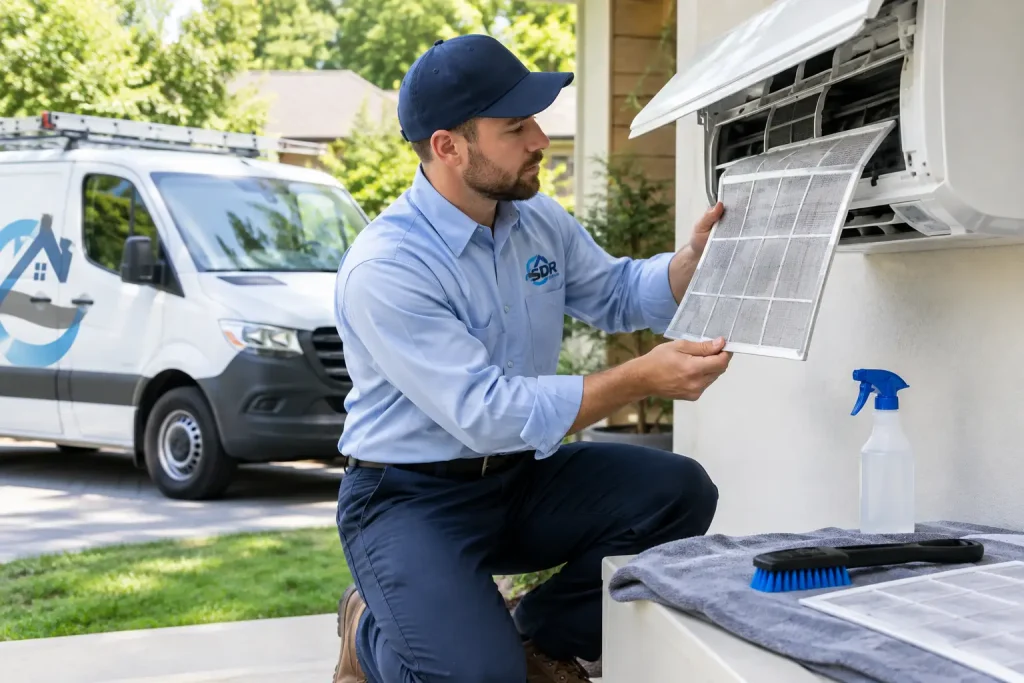
Slide the mesh filters out gently. If they have only a light coating of dust, use a vacuum with a soft brush attachment on low suction. This is often enough for a routine cleaning and reduces the amount of water needed.
Vacuum both sides without pressing hard into the mesh. Bent or torn filter material should be replaced rather than patched. A damaged filter may allow debris to reach the indoor coil.
3. Rinse and wash when needed
For more noticeable buildup, rinse the filters with lukewarm water. A small amount of mild dish soap can help remove greasy residue, especially in units installed near kitchens. Do not use bleach, strong degreasers, abrasive brushes, or very hot water. These products can damage the filter frame or leave fumes and residue inside the air handler.
Rinse until the water runs clear. Let the filters air-dry completely in a clean, shaded area before reinstalling them. Direct high heat can warp plastic frames, and reinstalling damp filters can encourage musty odors or moisture problems inside the unit.
4. Wipe the accessible surfaces
With the filters removed, wipe the front panel and accessible plastic surfaces with a dry or lightly damp microfiber cloth. Keep water away from electrical components, circuit boards, and the coil fins behind the filters.
It can be tempting to reach deeper into the unit with a brush or spray bottle. Avoid that. The indoor coil fins are delicate, and the drain pan, blower wheel, and electronics require a different cleaning approach than the filters do.
5. Reinstall and test the unit
Once the filters are fully dry, slide them back into their tracks and close the front panel securely. Restore power if needed, start the system, and confirm that the panel closes properly and airflow feels normal.
If your heat pump has a filter indicator, reset it according to the manufacturer instructions. This does not clean the filter for you, but it can help you remember the next inspection.
What filter cleaning will not fix
Cleaning filters can improve normal airflow problems, but it is not a cure for every ductless heat pump issue. Call for qualified HVAC service if the unit still has weak airflow after filter cleaning, does not heat or cool effectively, leaks water indoors, produces a persistent musty smell, or displays an error code.
A dirty blower wheel, blocked condensate drain, frozen coil, refrigerant issue, failing fan motor, or control problem can create symptoms that look similar to a dirty filter. These repairs should not be handled by removing covers or trying chemical cleaners at home. Ductless systems contain electrical components and refrigerant piping that require proper tools and training.
Odors deserve particular attention. A brief dusty smell when starting a system after a long break can be normal. Ongoing mildew-like odors, water dripping from the indoor head, or visible staining around the unit may point to a drainage or internal-cleaning issue. Cleaning only the mesh filters will not remove buildup from a blower wheel or drain pan.
Keep the area around the indoor head clear
Filter cleaning works best alongside a few simple habits. Keep furniture, curtains, and tall shelving away from the discharge air path so conditioned air can circulate through the room. Avoid hanging clothing over the indoor unit or storing items where they block the return air openings.
If you use the heat pump year-round, schedule regular professional maintenance as well. A trained technician can inspect electrical connections, clean components that are not safely accessible during homeowner maintenance, verify drainage, assess overall operation, and identify concerns before they interrupt heating or cooling.
For multi-zone systems, remember that each indoor head has its own filters. One dusty bedroom unit can perform poorly even while the living-room head seems to be working normally. Check every head, including units in guest rooms, basements, and additions that may not get daily attention.
A small maintenance task with a real payoff
Clean filters help a ductless heat pump do what it was installed to do: deliver steady, comfortable air without working harder than necessary. Make a quick filter check part of your household routine, and pay attention to changes that cleaning does not solve. When the issue goes beyond the filter, SDR Electric, Plumbing & Heating can provide practical troubleshooting and professional HVAC service to help protect the comfort and reliability of your home.