A boiler usually gives warning before it stops heating your home. A new banging sound, uneven room temperatures, a pressure change, or water near the unit can all point to a problem that needs attention. This guide to boiler maintenance explains the checks homeowners can handle safely, the work that belongs to a licensed heating technician, and the signs that should never wait.
For homes with hydronic heat, the boiler is more than one appliance. It works with circulator pumps, piping, radiators or baseboards, thermostats, vents, zone valves, and sometimes a domestic hot-water system. A small fault in one part can affect comfort throughout the property. Regular attention helps prevent surprise shutdowns during cold weather and supports safer, more efficient operation.
Start With Safe, Simple Boiler Checks
Homeowners should not remove boiler panels, adjust gas controls, or attempt combustion-related repairs. However, a brief visual check every month during heating season can help identify issues early.
Begin by looking around the boiler and its connected piping. The area should be dry, reasonably clean, and clear of storage. Boxes, paint cans, cleaning products, and other combustible materials do not belong near a fuel-burning appliance. Keep access open so service technicians can inspect the equipment and so you can notice leaks or unusual conditions quickly.
Look for water beneath the boiler, around valves, at circulator pumps, or along nearby pipes. A small drip can eventually lower system pressure, damage finishes, or corrode components. Also check for greenish staining on copper piping, rust around fittings, or white mineral buildup. These are not always emergencies, but they are good reasons to schedule service before a minor leak becomes a larger repair.
Pay attention to the boiler display or pressure gauge. The normal pressure range varies by system, especially between cold and operating conditions, so use the manufacturer guidance and the settings established by your technician as the reference. A sudden pressure drop, repeated need to add water, or frequent pressure-relief discharge needs professional diagnosis. Adding water over and over is not a repair. It can introduce minerals and oxygen that contribute to corrosion inside the system.
Check the Thermostat and Heating Zones
If one part of the home is cold while other areas are comfortable, the boiler itself may not be the only cause. Confirm the thermostat is set to heat and has a reasonable temperature setting. If it uses batteries, replace them as needed. Then note whether the issue affects one room, one zone, or the entire building.
A single cold zone may involve a thermostat, zone valve, circulator pump, air in the line, or a flow issue. Cold baseboards or radiators can also result from air trapped in the system. Bleeding radiators may be appropriate on certain systems, but the method depends on the boiler design and pressure requirements. If you are unsure, do not guess. Incorrect bleeding or refilling can create a pressure problem or leave the system unable to heat properly.
Listen for Changes in Your Boiler
Boilers are not silent, but their normal operating sounds should be familiar. A low mechanical hum from a circulator pump or the occasional sound of water moving through pipes can be normal. New or aggressive noises deserve attention.
Banging or knocking may be caused by air, changing pipe temperatures, pump issues, or restricted water flow. A kettle-like rumbling sound can indicate mineral buildup or overheating conditions. Whistling may point to a valve or pressure concern. Clicking without ignition, repeated startup attempts, or a burner that shuts down soon after starting can involve controls, sensors, venting, fuel supply, or combustion issues.
Do not attempt to silence a boiler by turning random valves or resetting it repeatedly. A reset may be appropriate once if the manufacturer instructions specifically allow it, but a boiler that locks out again is reporting a fault. Continued resets can delay the proper repair and may place additional strain on the equipment.
Annual Boiler Maintenance Is Professional Work
A homeowner inspection is helpful, but it does not replace a scheduled annual boiler service. Fuel-burning equipment needs a qualified technician to assess the components that cannot be safely evaluated from the outside.
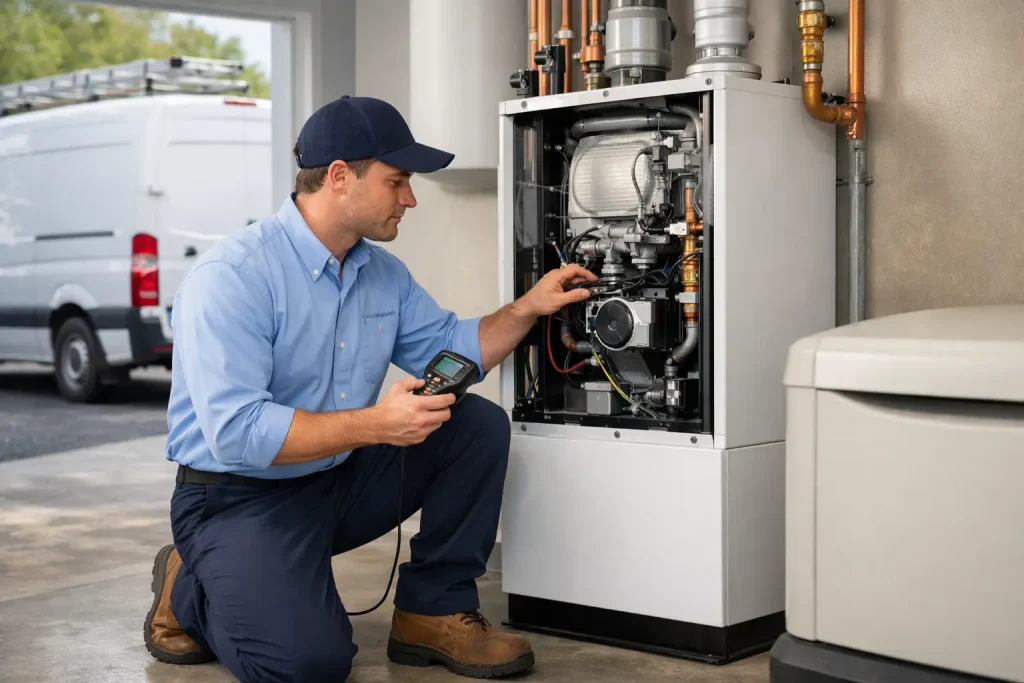
During a professional maintenance visit, the technician may inspect the burner, heat exchanger, ignition system, venting, condensate drain on high-efficiency equipment, safety controls, expansion tank, pumps, wiring, and system pressure. They can check for combustion concerns, confirm proper operation, and identify worn components before they fail during the heating season.
The exact service scope depends on the boiler type. A conventional gas boiler, oil-fired boiler, electric boiler, combi boiler, and high-efficiency condensing boiler have different maintenance needs. Condensing equipment, for example, relies on proper condensate drainage and venting. An oil-fired system has fuel and burner components that require specialized attention. The best maintenance plan follows the equipment manufacturer requirements while accounting for the age, usage, water conditions, and layout of the heating system.
For landlords, commercial property owners, and facilities with multiple heating zones, documenting service visits is especially useful. A record of pressure problems, recurring fault codes, pump replacements, and control issues gives the technician a clearer picture when a future problem occurs.
Keep the Rest of the Heating System in Good Condition
Boiler maintenance is also system maintenance. Even a well-serviced boiler cannot deliver consistent heat if the piping, controls, or heat emitters are not working as intended.
Walk through the home when the heat is running. Check whether rooms heat evenly and whether baseboards, radiators, or in-floor heating zones respond to thermostat changes. Make note of persistent cold spots, noisy pipes, or rooms that overheat. These concerns may be caused by balancing issues, stuck valves, air, undersized equipment, control settings, or changes made during a renovation.
If your boiler also provides domestic hot water, watch for changes in hot-water recovery or temperature stability. A sudden lack of hot water may be connected to the boiler, an indirect tank, a mixing valve, a circulator, or another plumbing component. Coordinated troubleshooting matters because plumbing and heating systems often share equipment and water connections.
Water quality can matter as well. Hard water and mineral content can affect certain components, while system water that is repeatedly topped up can contribute to internal corrosion. Homes with well water or water treatment equipment may benefit from evaluating the complete setup when boiler problems keep returning.
Warning Signs That Need Prompt Service
Some boiler conditions can wait for a planned appointment. Others call for immediate action. Schedule prompt professional service if you notice repeated shutdowns, a loss of heat, frequent pressure changes, visible leaks, unusual burner behavior, or persistent error codes.
Treat possible combustion or carbon monoxide concerns as urgent. If you smell gas, leave the building, avoid operating electrical switches or appliances, and contact the gas utility or emergency services from a safe location. If a carbon monoxide alarm sounds, get everyone outside immediately and contact emergency services. Do not re-enter until the property has been cleared.
A yellow or unstable burner flame, soot, scorch marks, or exhaust odors near the boiler also require professional assessment. A properly operating gas burner flame is typically blue, but homeowners should not remove panels to inspect it. If something looks or smells wrong, shut the system down only if it is safe to do so and follow the equipment instructions while arranging service.
Prepare Your Boiler for Winter and Summer
The best time for annual service is before sustained cold weather, when technicians can address concerns before the heating system is under daily demand. In Eastern Ontario, that means planning ahead rather than waiting for the first hard freeze.
Before winter, confirm thermostats operate correctly, exterior vent terminations are clear, and the boiler room is accessible. Keep snow, ice, leaves, and debris away from outdoor intake and exhaust terminations where applicable. Blocked vents can cause boiler shutdowns and create a serious safety concern.
During summer, do not assume the system can be ignored. If the boiler serves hot water, it may operate year-round. If it is shut down seasonally, follow the manufacturer instructions and your technician’s advice. Homes left vacant during winter need a separate plan for heat, plumbing protection, and monitoring. A boiler failure in an unoccupied property can quickly become a frozen-pipe and water-damage event.
When Repairs Point Toward an Upgrade
Maintenance extends equipment life, but it cannot make every older boiler the right long-term fit. Frequent breakdowns, hard-to-find parts, poor comfort across zones, repeated leaks, or an appliance that no longer meets the home’s needs may justify a replacement discussion.
That conversation should look beyond the boiler alone. A renovation, addition, basement finishing project, or change in hot-water demand can affect sizing and system design. Electrical capacity, venting routes, pumps, piping, thermostats, and domestic hot-water equipment may all need to be considered together. SDR Electric, Plumbing & Heating can assess these connected systems and provide practical recommendations based on how the property is actually used.
A well-maintained boiler should not demand constant attention. Keep the area clear, watch for changes, arrange annual professional service, and act early when something does not seem right. That steady approach gives you the best chance of reliable heat when your home needs it most.