A burst pipe rarely starts with a dramatic warning. It often begins in a quiet area of the house – a basement ceiling, crawlspace, exterior wall, garage, or vacant room – where cold air reaches plumbing before anyone notices. Taking a few practical steps to prevent frozen pipes can protect your home from water damage, service interruptions, and an urgent repair during the coldest part of an Eastern Ontario winter.
Frozen pipes are not only a concern for older homes. Newer homes can also have vulnerable sections of plumbing where pipes run near exterior walls, pass through unheated spaces, or serve additions, garages, utility rooms, and rarely used bathrooms. The right prevention plan depends on your home’s layout, insulation, heating system, and whether anyone will be there during a cold spell.
Why pipes freeze and where problems start
Water expands as it freezes. If ice forms inside a pipe, it can block water flow and build pressure between the blockage and a closed faucet or fixture. That pressure can split copper, plastic, or other piping materials. The pipe may not leak until temperatures rise and the ice begins to thaw, which is why water damage can appear after a cold snap seems to have passed.
The most at-risk pipes are not always the ones you can see. Look for plumbing in unheated basements, crawlspaces, attics, garages, exterior walls, under kitchen and bathroom cabinets, and near rim joists. Pipes serving outdoor faucets, laundry areas, additions, and rooms over garages deserve particular attention.
Cold air leaks make the problem worse. A small gap around a pipe penetration, dryer vent, wiring route, foundation opening, or poorly sealed window can expose nearby plumbing to freezing temperatures. In many cases, the durable solution is not simply adding pipe insulation. It is correcting the cold-air pathway while ensuring the area has appropriate heat.
How to prevent frozen pipes at home
Keep indoor heat steady
During winter, keep the building heated day and night, including rooms that are used less often. Turning the thermostat down too far overnight or while away can put plumbing at risk, especially when temperatures drop quickly or strong winds affect exposed walls.
There is no single safe thermostat setting for every property. A well-insulated home with centrally located plumbing may tolerate lower temperatures than a house with pipes in exterior walls or a crawlspace. The key is consistency. Avoid shutting off heat to a section of the home that contains water lines, and make sure supply registers, radiators, or baseboard heaters are not blocked by furniture, storage, or closed doors.
If you use a heat pump, furnace, boiler, or other central heating equipment, address unusual noises, weak heat, short cycling, or uneven room temperatures before severe weather arrives. A heating issue and exposed plumbing can quickly become one larger problem.
Insulate accessible pipes, but do not stop there
Foam pipe insulation can help slow heat loss from accessible water lines in unheated areas. It is especially useful on pipes near exterior walls, in basements, and in utility spaces. Fit insulation securely and cover bends, valves, and exposed sections as completely as practical.
Pipe insulation is helpful, but it cannot compensate for a space that is consistently below freezing. If the surrounding area has cold drafts, poor insulation, or no heat source, a licensed professional may need to assess the pipe route and recommend a more permanent correction. That could involve air sealing, adding insulation, relocating a vulnerable pipe, or extending heat to the space.
Use heat tape or heat cable only when it is specifically rated for plumbing use and installed according to the manufacturer’s instructions. Improper products, damaged cords, overloaded circuits, or poorly installed electrical connections create a safety risk. This is one situation where plumbing and electrical work can overlap, and professional installation is often the safer choice.
Protect pipes behind cabinets and appliances
Kitchen and bathroom sink cabinets along exterior walls can trap cold air around supply lines and drain pipes. On especially cold nights, open the cabinet doors so warmer room air can circulate around the plumbing. Remove stored items that are pressing against pipes or blocking airflow.
Check around appliances as well. A dishwasher, refrigerator water line, washing machine, or vanity may conceal a cold, drafty wall. If you have noticed frost, condensation, or recurring cold spots in the area, treat that as a warning sign rather than an inconvenience.
Disconnect and drain outdoor connections
Before sustained freezing weather, disconnect garden hoses from outdoor faucets. A connected hose can trap water and transfer freezing conditions back into the faucet and the indoor piping. Drain the hose, store it, and confirm the outdoor faucet is fully shut off.
If your home has an interior shutoff for an exterior faucet, close it and open the exterior tap to drain the remaining water. Not every faucet is configured the same way, so do not force a valve that is seized or leaking. A frost-free outdoor faucet also needs proper installation and should not be assumed to be freeze-proof in every condition.
Let a vulnerable faucet drip when necessary
During an extreme cold event, allowing a small trickle of water through a known vulnerable faucet can reduce the chance of freezing. Moving water is less likely to freeze than stagnant water, and an open faucet can relieve pressure if ice begins to form.
This is a short-term protective measure, not a fix for poor insulation or a cold air leak. Use it selectively for pipes with a known history of freezing or for areas you cannot improve before a sudden cold snap. If several fixtures need to run every winter, it is time to investigate the underlying cause.
Prepare a vacant home, rental, or seasonal property
An occupied home benefits from regular water use and someone noticing trouble quickly. Vacant homes, rentals between tenants, cottages, and buildings under renovation need a more deliberate plan. Keep heat on, arrange regular interior checks, and make sure someone can respond if a heating system fails or a leak alarm is triggered.
For a property that will be unoccupied for an extended period, shutting off the main water supply and properly winterizing plumbing may be the safer option. Winterizing can involve draining water lines, fixtures, pumps, and other components, depending on the building’s plumbing layout. Homes with well systems, water treatment equipment, sump pumps, boilers, or hydronic heating need extra care because not every system can simply be turned off and drained.
Property owners should also know where the main water shutoff is located and confirm that it operates. Labeling the valve and making sure responsible occupants can access it can limit damage if a pipe leaks.
Warning signs that a pipe may be freezing
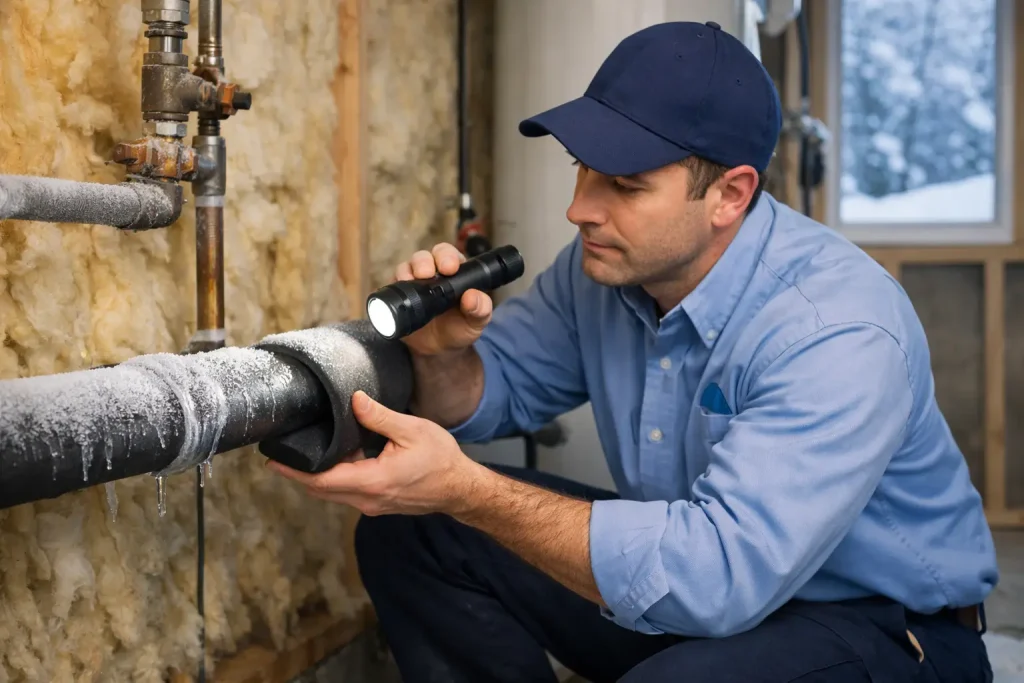
A faucet that only produces a trickle, no water at one fixture, frost on a visible pipe, or an unusually cold wall or cabinet can all indicate a developing freeze. Do not ignore a new whistling sound, bulge, crack, or damp area near plumbing either. A pipe can be partially frozen even when some water still flows.
If you suspect a pipe is frozen, open the affected faucet so water and pressure have somewhere to go as the pipe thaws. Keep the area warm by opening cabinet doors or raising the room temperature. A hair dryer may be used carefully on an exposed, accessible section of pipe, starting near the faucet and moving toward the suspected frozen area.
Never use an open flame, propane torch, charcoal heater, or other combustion appliance to thaw a pipe. These methods can damage piping, ignite nearby materials, introduce carbon monoxide, and create a much more dangerous emergency. Avoid using high-wattage electrical equipment near standing water or a leak.
If the pipe is concealed in a wall, ceiling, or floor, if you cannot locate the freeze, or if there is any sign of cracking or water damage, stop and call for professional help. For homes with electrical concerns near a leak, do not touch wet outlets, panels, or equipment. Keep clear of the area and seek qualified assistance.
When prevention calls for a permanent repair
A pipe that freezes once may have been exposed to an unusual weather event. A pipe that freezes repeatedly has a design, insulation, air-sealing, or heating issue that deserves a permanent solution. The best repair depends on access and the source of the cold, but it may include rerouting a water line, insulating an exterior wall, sealing penetrations, adding a heat source, or correcting an improperly installed outdoor connection.
This is also a good time to look at related systems. A cold basement may point to insulation gaps or heating distribution problems. A vulnerable well line or pump room may need both plumbing protection and dependable electrical service. Coordinating those details before winter is safer and less disruptive than dealing with a burst pipe after the fact.
If a cold area, aging pipe, or recurring freeze has you concerned, SDR Electric, Plumbing & Heating can assess the plumbing and the connected building systems together. A careful inspection now gives you a clearer plan for protecting the parts of your property that winter finds first.