Hard water often shows up long before a homeowner calls for help. It can be the white buildup around a faucet, stiff laundry, water spots on clean dishes, or a shower door that never seems to stay clear. For homeowners researching a water softener Spencerville solution, the right first step is not choosing a unit from a shelf. It is finding out what is actually in the water and how it is affecting the plumbing system.
A properly selected water softener can protect fixtures, improve cleaning results, and reduce the mineral scale that builds inside water-using equipment. But softening is not a cure-all for every well-water concern. Iron staining, sulfur odors, sediment, bacteria, and low water pressure each require their own assessment. A water test and a practical review of the home’s plumbing setup help ensure the treatment system matches the problem.
What Hard Water Does Inside a Home
Hard water contains dissolved minerals, mainly calcium and magnesium. These minerals are common in well water and can also be present in municipal water supplies. They are not always obvious in a glass of water, but they become noticeable as water is heated, evaporates, or mixes with soap.
Scale is one of the most common results. It can collect on faucet aerators, showerheads, kettle elements, dishwasher components, and water-heater parts. Over time, scale can restrict flow through small openings and make equipment work harder than it should. A homeowner may first notice weaker spray from a showerhead or a tap that seems to have lost pressure, even though the main water supply is functioning normally.
Soap performance is another clue. Hard water makes it more difficult for soap to rinse cleanly, which can leave a film on skin, hair, dishes, glassware, and fabrics. More detergent does not always solve the problem. In fact, it can leave more residue behind.
Hardness alone does not mean a property needs a softener immediately. The decision depends on the measured hardness level, the condition of the home’s equipment, household water use, and the owner’s priorities. A household with a water heater, dishwasher, several bathrooms, and frequent laundry use may see more benefit from treatment than a lightly used seasonal property.
How a Spencerville Water Softener Works
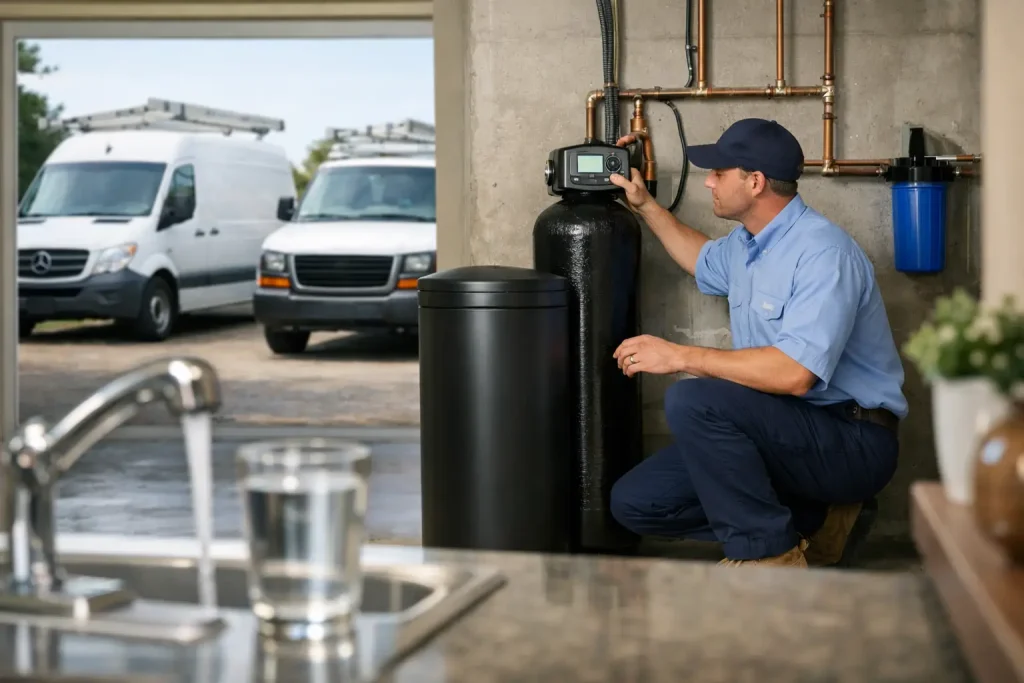
Most residential water softeners use ion exchange. Water passes through a resin tank containing small resin beads. The beads attract hardness minerals and exchange them for sodium or potassium ions. Once the resin has collected its working capacity of hardness minerals, the system runs a regeneration cycle using brine from a separate salt tank.
During regeneration, the system flushes accumulated minerals to a drain and restores the resin so it can continue softening water. Modern demand-initiated systems can meter household water use and regenerate based on actual demand rather than following a fixed schedule. That can reduce unnecessary water and salt use compared with older timer-based equipment.
A softener needs several practical connections to work correctly: a reliable incoming water line, a properly sized drain connection for regeneration, an electrical supply for the control valve, and a bypass. The bypass matters because it allows a technician to isolate the treatment unit when it needs service without shutting off water to the entire home.
In a well-water home, placement also matters. The treatment equipment needs to work with the pressure tank, well pump controls, sediment filtration, and any other treatment components already in place. If water quality issues are more involved, the order of equipment can determine whether the system performs well or creates ongoing maintenance problems.
Start With Water Testing, Not Assumptions
White scale suggests hardness, but it does not tell the whole story. A useful water analysis can identify hardness and may also reveal iron, manganese, pH concerns, turbidity, sulfur-related odor issues, or other conditions that affect equipment selection.
This is especially important for private wells. One home may have hard water with no iron, while a nearby property has hardness, staining, and sediment. Installing a standard softener without addressing the broader water profile can leave the homeowner disappointed. High iron levels, for example, can foul softener resin and may call for pretreatment before water reaches the softener.
Water testing is also valuable when a home’s water has changed. A new odor, a sudden increase in staining, or a noticeable loss in pressure can point to a change in the water source, pressure tank operation, well pump performance, or plumbing condition. It is better to investigate the cause than assume the existing treatment equipment has simply worn out.
Softening Is Different From Filtration and Disinfection
A water softener is designed to reduce hardness minerals. It is not intended to disinfect water or solve every water-quality issue. If a test identifies bacteria concerns, a properly designed disinfection solution may be needed. If the water has sediment, a sediment filter may be appropriate. Strong sulfur odor or iron staining may require specialized treatment ahead of, or alongside, a softener.
Some homes need only a softener. Others need a coordinated treatment setup with multiple components. This is where an on-site review makes a real difference. The goal is not to add equipment unnecessarily. It is to build a system that addresses the specific water conditions while remaining serviceable in the space available.
Choosing the Right System Capacity
Softener size is not just about the physical tank. It is based on the home’s hardness level, the number of people using water, daily water demand, and whether iron is present. An undersized system can regenerate too often and may struggle during periods of high water use. An oversized system is not automatically better if it is programmed poorly or installed without considering the home’s actual needs.
A practical assessment should account for common household demands such as multiple showers, laundry, dishwashing, and larger tubs. It should also consider whether the property is a full-time residence, rental, business location, or seasonal home. Commercial and multi-unit properties may require a different approach than a typical single-family home because water use can be less predictable and more continuous.
The controls should be programmed to the measured water conditions and the equipment capacity. This setting affects regeneration frequency and overall performance. A qualified installer can explain the maintenance routine, where salt is added, how the bypass operates, and what normal regeneration sounds or water use look like.
Installation Details That Should Not Be Overlooked
Water treatment equipment is part of the plumbing system, not a stand-alone appliance. A correct installation protects the home and makes future service easier. Before work begins, the installer should confirm the available floor space, drainage route, pipe condition, shutoff access, and whether the equipment needs protection from freezing temperatures.
The system should be installed after the point where water enters the home but in a location that makes sense for the plumbing layout. Many homeowners prefer untreated water at an outdoor tap, and some may choose to keep a dedicated cold-water drinking line untreated. The best arrangement depends on the property and should be planned rather than assumed.
A sound installation also includes attention to these details:
- A bypass that is accessible and clearly understood by the homeowner.
- An appropriate regeneration drain connection with proper air-gap protection where required.
- Secure piping and shutoffs that allow the unit to be serviced without disrupting the whole home.
- Control settings matched to the water test and the household’s expected water use.
These details are not cosmetic. Poor drainage, incorrect settings, inaccessible valves, or an awkward equipment location can turn a useful water treatment upgrade into a recurring maintenance issue.
Maintaining a Water Softener After Installation
Most softeners need routine salt checks and periodic inspection. Salt should be kept at an appropriate level in the brine tank, but the tank should not be ignored for years. Salt bridging can occur when a hardened crust forms and prevents salt from reaching the water below. The system may appear full while it is no longer producing brine correctly.
If softened-water symptoms return, do not assume the unit needs replacement. Check the bypass position, salt level, control display, and whether the household recently used significantly more water than normal. A technician can then assess the resin, control valve, injector, brine line, and regeneration cycle. Changes in well-water quality may also be part of the issue.
For properties with connected plumbing, well pump, pressure tank, electrical, and water treatment needs, coordinated service helps prevent one repair from creating a problem elsewhere. SDR Electric, Plumbing & Heating can assess those connected systems and provide practical recommendations based on the water test and the way the property is used.
A water softener should make daily life easier without becoming another mystery in the mechanical room. When the equipment is selected for the actual water conditions, installed with service access in mind, and maintained as part of the home’s plumbing system, it can provide reliable protection for the fixtures and equipment your household depends on.