When an air conditioner not cooling turns a comfortable home into a hot, humid space, the cause may be as simple as a thermostat setting or as serious as a failed component. A few safe checks can help you understand what is happening. But because cooling equipment combines electricity, moving parts, pressurized refrigerant, and condensate drainage, some problems should be left to a licensed HVAC technician.
Why Is Your Air Conditioner Not Cooling?
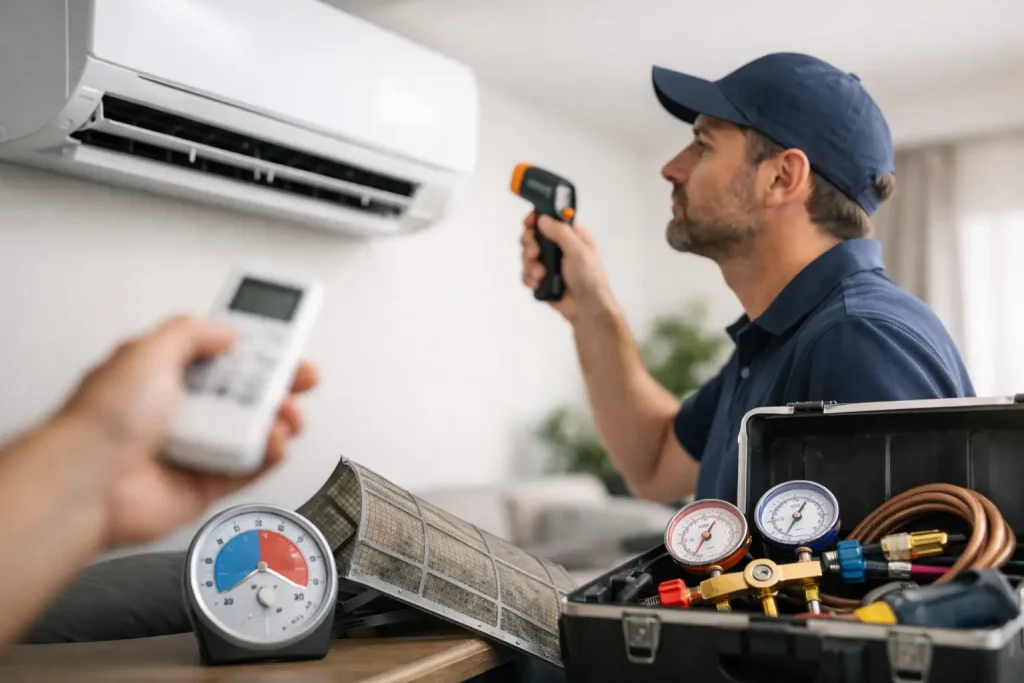
Your air conditioner does not create cold air. It moves heat out of your home. The indoor unit pulls warmth and humidity from household air, while the outdoor unit releases that heat outside. For that process to work, the thermostat, blower, filter, coil, refrigerant circuit, electrical controls, and outdoor condenser all need to operate together.
That is why the symptoms matter. Air coming from the vents that is slightly cool but not cold may point to airflow, maintenance, or capacity concerns. No air movement at all often involves the thermostat, indoor blower, electrical supply, or a safety switch. A system that starts and stops repeatedly, freezes up, leaks water, or makes unusual sounds needs more careful attention.
Before arranging service, start with the checks that do not require removing panels, handling wiring, or touching refrigerant lines.
7 Safe Checks When Your AC Is Not Cooling
- Confirm the thermostat mode and setpoint. Set the thermostat to COOL, not HEAT, FAN, or AUTO with an unexpectedly high setpoint. Lower the set temperature several degrees below the current room temperature and wait a few minutes. If the thermostat uses batteries, replace weak batteries. A blank display can indicate a battery, wiring, or power issue.
- Check whether the indoor blower is moving air. Hold your hand near a supply register. If there is no airflow, or airflow is very weak, do not assume the outdoor unit is the problem. The furnace or air handler blower may not be running, or a dirty filter may be restricting the system.
- Inspect and replace a dirty air filter. A heavily loaded filter restricts airflow across the indoor coil. This can reduce cooling, increase operating strain, and sometimes cause the coil to freeze. Replace a disposable filter with the correct size and airflow rating. If it is reusable, clean it according to the manufacturer’s instructions and let it dry completely before reinstalling it.
- Make sure registers and return vents are open and clear. Furniture, rugs, curtains, and storage can block supply registers and return grilles. Open the registers in regularly used rooms and clear the return-air path. Closing many vents to force more cooling into one area often makes airflow problems worse.
- Look at the outdoor unit from a safe distance. The condenser needs room to reject heat. Remove loose leaves, grass clippings, and other debris from around it, keeping plants and stored items well back from the unit. Do not insert tools through the grille or attempt to straighten fins, remove panels, or wash electrical components yourself.
- Check the electrical panel once. If the cooling system has no response, look for a tripped breaker. You can switch it fully OFF and then back ON once. If it trips again, leave it off and arrange service. Repeated resets can damage equipment and may indicate a wiring, motor, compressor, or electrical fault.
- Look for signs of water or ice. Water near the indoor equipment can mean a blocked condensate drain or a drain safety switch that has stopped cooling to prevent overflow. Ice on the refrigerant line, indoor coil, or outdoor unit is also a warning sign. Turn the cooling mode off, set the fan to ON if it will run, and contact an HVAC professional. Running an air conditioner with a frozen coil can lead to more extensive damage.
Common Causes of an Air Conditioner Not Cooling
A clogged filter is common, but it is not the only reason cooling performance drops. Outdoor coils can become coated with dirt and debris, limiting the system’s ability to release heat. Indoor evaporator coils can also collect dust when filter changes are missed. Both issues reduce efficiency and can make the home feel humid even when the system is running.
Refrigerant problems are another possibility. Refrigerant is not consumed during normal operation. If the charge is low, there may be a leak that needs to be located and repaired before the system is properly recharged. Adding refrigerant without addressing the leak is not a lasting solution. This work requires trained handling, appropriate tools, and a full assessment of the system.
Electrical and control faults can stop part of the system while another part still appears to work. For example, the indoor blower may run while the outdoor condenser does not start. A failed capacitor, contactor, compressor component, disconnect issue, or thermostat control problem can create this symptom. These parts should be diagnosed by a qualified technician because they involve live electrical circuits and stored electrical energy.
A failed blower motor or blower capacitor can cause weak or absent airflow. In homes with a furnace and central AC, the same blower moves heated and cooled air. That connection is one reason HVAC troubleshooting often involves both the cooling equipment and the indoor heating unit.
Cooling problems can also be related to sizing, ductwork, insulation, or persistent air leakage. If the system has always struggled on the hottest days but works reasonably well in mild weather, the issue may not be a sudden equipment failure. A technician may need to assess system capacity, duct distribution, attic heat gain, window exposure, and whether renovations have changed the home’s cooling load.
When to Stop Troubleshooting and Call for Service
Arrange professional HVAC service promptly if the breaker trips again, you smell burning, hear grinding or loud buzzing, see ice, notice refrigerant-line damage, or find ongoing water leakage around indoor equipment. Turn the system off if you notice smoke, an electrical burning smell, or significant water near electrical components.
A service visit is also the right next step when the outdoor unit runs but the house stays warm, the air feels humid, only some rooms cool properly, or the system runs continuously without reaching the thermostat setting. Those concerns can involve airflow measurements, electrical testing, coil condition, refrigerant diagnostics, or ductwork evaluation. They cannot be confirmed accurately by guessing from one symptom.
For homes in Brockville, Prescott, Kemptville, and surrounding Eastern Ontario communities, cooling problems can become urgent during a heat wave, particularly for older adults, young children, pets, and anyone with health concerns. Use fans, close blinds on sunny windows, limit heat-producing appliances, and move to a cooler location if necessary while service is arranged. Do not rely on an unsafe extension-cord setup or attempt a temporary electrical repair.
Prevent Cooling Breakdowns Before Summer
Regular maintenance is the most practical way to reduce surprise failures. Replace filters on schedule, keep the outdoor unit clear, and have the system inspected before sustained hot weather arrives. A professional maintenance visit can identify worn electrical parts, drainage concerns, coil buildup, and declining cooling performance before they become a no-cooling call.
If your air conditioner is older or has required repeated repairs, ask for a condition assessment rather than assuming replacement is the only answer. The right recommendation depends on the equipment’s condition, the home’s comfort needs, the duct system, and planned renovations. SDR Electric, Plumbing & Heating can assess the cooling system and the connected electrical and mechanical components so the repair plan fits the property.
A cooling issue rarely improves by running the equipment harder. Start with the safe checks, stop when you see signs of electrical, drainage, or ice-related trouble, and get a qualified technician involved before a small fault becomes a larger interruption.