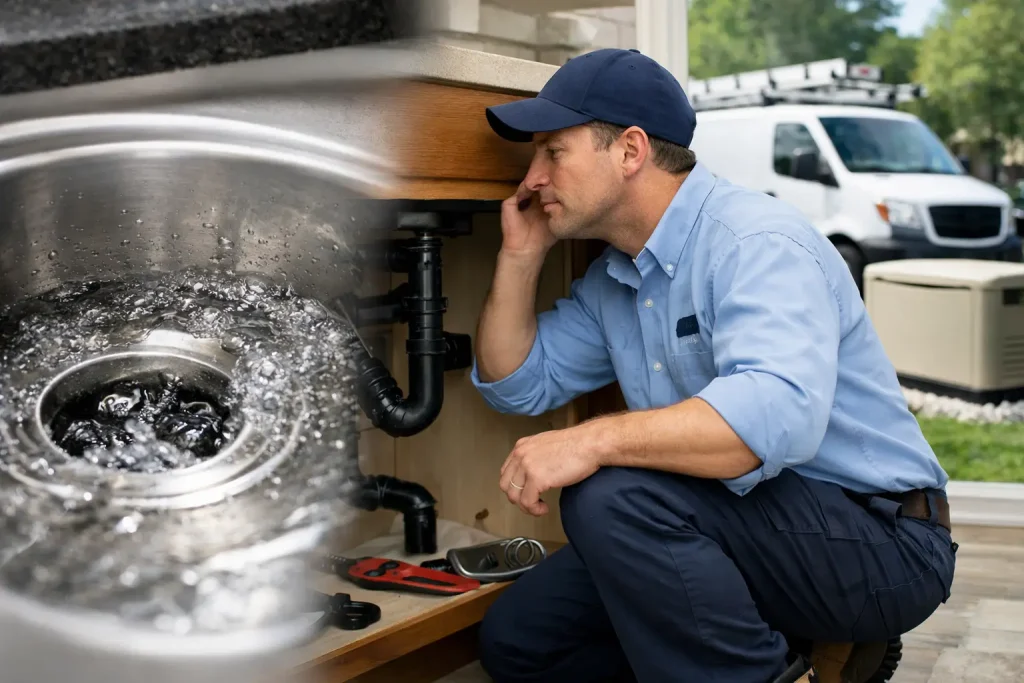
A drain that gurgles after the sink empties, the toilet flushes, or the washing machine runs is telling you something about airflow in the plumbing system. Understanding why drains gurgle can help you separate a minor fixture issue from a developing drain or vent problem that needs prompt attention.
The sound itself comes from air moving where water should be moving freely, or water moving through a pipe that cannot draw in enough replacement air. A brief, isolated sound may not be urgent. Repeated gurgling, multiple affected fixtures, slow drainage, sewage odors, or water backing up are different. Those signs call for professional plumbing diagnosis before a partial blockage becomes a full backup.
Why Drains Gurgle: The Plumbing Explanation
Your plumbing drains are designed to move wastewater away while a vent system allows air to enter and exit the piping. That balance matters. As water travels down a drain, it creates suction behind it. Plumbing vents relieve that suction so the flow remains smooth and the water held in each fixture trap stays where it belongs.
When a blockage, restricted vent, incorrect pipe connection, or drainage issue disrupts that balance, air may be pulled through the water in a trap. That produces the familiar bubbling or gurgling noise. In some cases, you may hear it in a nearby fixture rather than the fixture that caused it. For example, flushing a toilet may make the bathtub drain gurgle because both fixtures connect to the same branch drain.
The water in a trap is not just there to stop small objects from falling into the pipe. It creates a water seal that keeps sewer gases from entering the building. Persistent gurgling can weaken or pull water from that seal, which is one reason the issue should not be ignored.
Common Reasons a Drain Starts Gurgling
A Partial Drain Clog Is Restricting Flow
A partial clog is one of the most common causes. Grease, food debris, soap residue, hair, wipes, mineral scale, and sediment can narrow the inside of a pipe over time. Water may still drain, but it has to push past the restriction, displacing air and creating noise.
Kitchen sinks often develop buildup from fats and food waste. Bathroom drains are more likely to collect hair and soap. In homes served by hard water or well water, mineral deposits can also contribute to restricted flow over the long term.
A plunger may help with a simple, localized obstruction. However, repeated use of chemical drain cleaners is not a dependable solution. Those products may fail to reach the real blockage, can damage certain pipes or fittings, and create a safety concern for anyone who later opens the drain line. Mechanical cleaning and proper diagnosis are safer ways to address a recurring issue.
The Plumbing Vent Is Blocked or Restricted
A plumbing vent usually extends through the roof and allows the drainage system to breathe. Leaves, nests, frost, snow, debris, or deterioration can restrict the opening. In Eastern Ontario, winter conditions can make vent performance especially relevant, particularly when frost accumulates around a roof penetration.
A vent restriction can cause several fixtures to gurgle, drain slowly, or produce sewer-like odors. The toilet may bubble when a sink drains, or a sink may gurgle after the washing machine discharges. Because roof work involves fall risks and vent issues can be mistaken for drain clogs, this is generally a job for a qualified plumbing professional.
A Main Drain or Sewer Line Has a Developing Blockage
When gurgling affects more than one fixture, the concern may be farther downstream. A developing blockage in the building drain or sewer line can prevent wastewater and air from moving normally. Tree roots, accumulated debris, damaged piping, shifted joints, wipes, or a collapsed section of older pipe can all create this type of restriction.
Watch for a pattern. If the lowest drain in the building – often a basement floor drain, shower, or tub – gurgles when an upstairs toilet flushes, the issue may involve the main drain. If water starts appearing in that lowest fixture, stop using water fixtures where practical and arrange service. Continuing to run dishwashers, washing machines, showers, or toilets can turn a manageable problem into a wastewater backup.
A Fixture Trap Is Dry, Dirty, or Losing Its Water Seal
A floor drain, utility sink, or rarely used bathroom fixture may gurgle because its trap has dried out. This is common in seasonal spaces, vacant units, basements, and rooms that are not used often. Without water in the trap, air can move more freely through the drain and sewer odors may enter the room.
For an infrequently used drain, slowly pour water into it to restore the trap seal. If the water disappears quickly, the drain keeps gurgling, or odors return, there may be a venting or trap issue that needs inspection. A trap should hold water, not continually empty itself.
The Drainage System Was Altered or Installed Incorrectly
Gurgling sometimes appears after a renovation, fixture relocation, basement finishing project, or new appliance installation. Drain pipes need correct slope, sizing, and venting. Improper connections can create poor drainage and air-pressure problems even if the piping appears to work at first.
This is where coordinated planning matters. Plumbing changes can intersect with electrical work for pumps or appliances, HVAC condensate drainage, and mechanical-room upgrades. Addressing the underlying layout rather than repeatedly clearing one drain provides a more dependable result.
When a Gurgling Drain Needs Prompt Service
One brief gurgle from a slow bathroom sink may be a localized issue. Still, certain symptoms should move the problem higher on your priority list. Contact a plumbing professional promptly when you notice multiple drains gurgling, toilets bubbling, sewage odors, standing water, slow drainage throughout the property, or wastewater backing up through a lower-level fixture.
Be especially cautious if a sump pit, floor drain, laundry drain, or basement bathroom is involved. Water in these areas can damage finishes, create sanitation concerns, and affect electrical equipment or stored belongings. If wastewater is backing up, avoid using the affected plumbing system until it has been assessed.
Commercial properties and multi-unit buildings should also act quickly when drain sounds occur across more than one washroom, suite, or service area. A shared drain issue can disrupt operations and affect tenants before there is visible flooding.
What You Can Safely Check Before Calling
Start by identifying which fixture makes the sound and what activity triggers it. Does the kitchen sink gurgle only when it drains? Does the tub react when the toilet flushes? Does the basement floor drain make noise when the washing machine empties? These details help narrow down whether the issue is local or farther along in the drainage system.
You can remove visible hair or debris from an accessible sink or tub stopper and clean the fixture trap only if you can do so safely. Use a plunger on a simple fixture clog when there is no chemical cleaner in the drain. For a dry floor drain, add water to the trap.
Avoid forcing cables into pipes without experience, opening cleanouts that may be under pressure, climbing onto a roof to inspect vents, or using harsh chemical products. Those actions can create injuries, pipe damage, or a wastewater spill. If there is a backup, odor, or gurgling in several fixtures, a professional assessment is the safer next step.
How a Plumber Finds the Cause
Effective drain service starts with the pattern of symptoms, then moves to the right diagnostic method. A plumber may inspect accessible traps and drains, test fixture drainage, evaluate venting, clear a blockage mechanically, or use a drain camera to inspect the interior condition of a line. Camera inspection can be particularly helpful when recurring clogs suggest roots, pipe damage, bellies in underground piping, or buildup deeper in the system.
The right repair depends on the cause. A sink trap cleaning is very different from clearing a main drain, correcting a vent issue, repairing a damaged sewer connection, or updating plumbing after a renovation. SDR Electric, Plumbing & Heating Inc. helps property owners identify the source of drainage problems and recommend practical repairs based on the condition of the system.
Can Gurgling Drains Be Prevented?
Prevention is mostly about keeping the drainage system clear and catching small changes early. Keep grease and food scraps out of kitchen drains, use strainers where hair is common, and flush only toilet paper. Check seldom-used floor drains periodically and add water if their traps are dry.
If a drain begins slowing down or gurgling repeatedly, deal with it before it becomes a backup. A drain should empty quietly and consistently. When it does not, that sound is useful information – and acting on it early protects your property, your indoor air quality, and your plumbing system.